Royal gardens and floating bridges
Taman Ujung Water Palace:
The Bali Palace Missed By Most Tourists
Quick Trail Notes:
- Length: 1.5 miles
- Elevation gain: ~19 feet
- Difficulty: Easy. The trail includes paved pathways, stone walkways, and broad staircases.
- Time: 1-2 hours
- Best time to go: Early morning (8-10 AM) or Late afternoon (after 4 PM), Dry season (April- October)
- Location: Ujung Water Palace, Tumbu, Karangasem, Karangasem Regency, Bali 80811, Indonesia
- Facilities: The site includes restrooms. There are local food stalls outside of the grounds.
- Water Availability: Bottled water and refreshments are available for purchase near the entrance and from vendors outside the palace grounds. Bring a reusable water bottle, especially during the warmer months.
- Cell Service: Cell reception is generally good throughout the palace grounds, making it easy to access maps, rideshare apps, and mobile payments.
- Parking: Scooters: IDR 5,000 and Cars: IDR 10,000
- Activities: Photography, picnicking, birdwatching, exploring the gardens and pavilions, and enjoying panoramic views of the coastline and surrounding mountains.
- Accessibility: Many of the lower gardens and pathways are accessible to many visitors with limited mobility. However, the palace is not fully wheelchair accessible due to numerous staircases, elevated pavilions, bridges, and viewpoints that require climbing steps.
- Hours: 7 AM-7 PM (last entry at 6 PM)
- Cost: Entrance fees: Adults: IDR 100,000, Children (5–12 years): IDR 50,000
- What to wear: Tirta Gangga isn’t a religious site, so no sarong is required. Casual dress is acceptable.
- What to bring: Camera, sun protection, comfortable walking shoes, drinking water, and cash for parking or snacks from nearby vendors.
- Read Along the Route: The regal bridges, lotus ponds, and layered history of Taman Ujung are wonderfully complemented by Beauty Is a Wound, a sweeping novel that explores the beauty and complexity woven through Indonesia’s past.
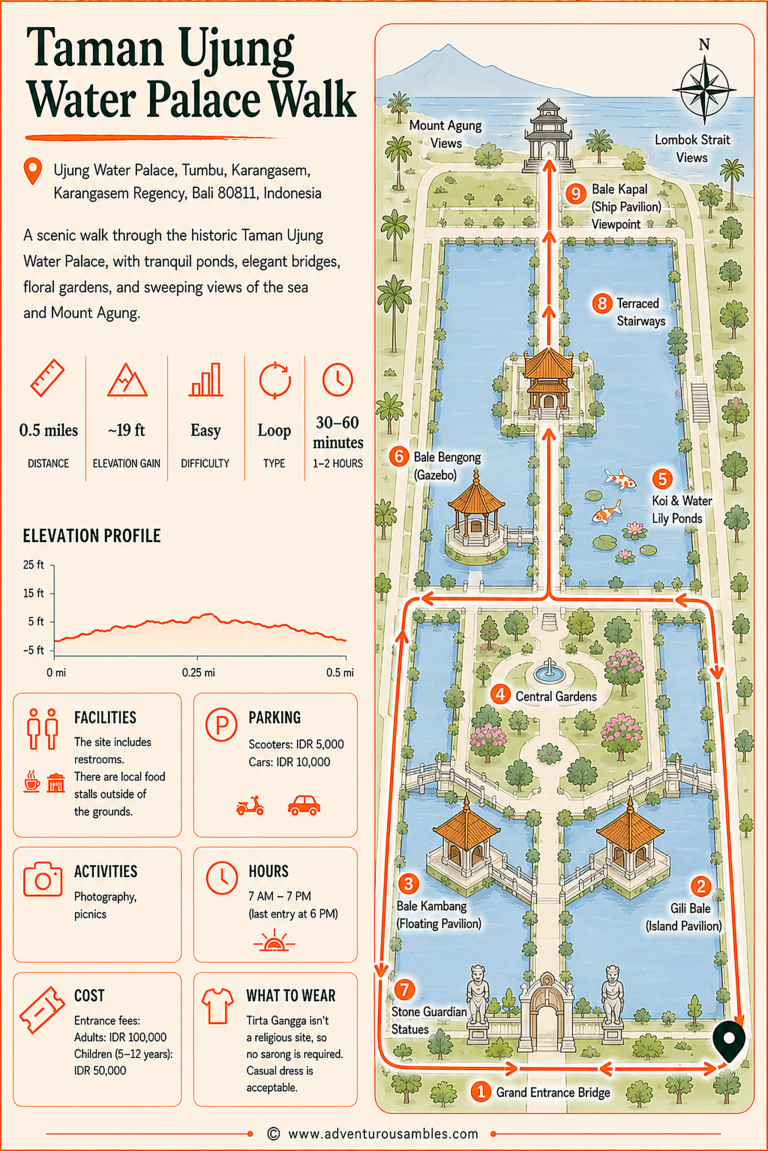
Save this Taman Ujung Water Palace map before your visit. Cross elegant bridges, wander royal gardens, and explore the floating pavilions of this historic East Bali landmark. Use this printable guide to follow the walking route, discover the palace’s highlights, and enjoy one of Bali’s most scenic self-guided walks.
Some places in Bali seem made for slow wandering, and Taman Ujung Water Palace was one of those places for us. Also known as Ujung Water Palace or Taman Soekasada Ujung, its name is often translated as “Garden at the End” It appears to be a fitting description for this peaceful royal retreat near Amlapura, where Bali’s eastern coastline seems to dissolve into sea and sky.
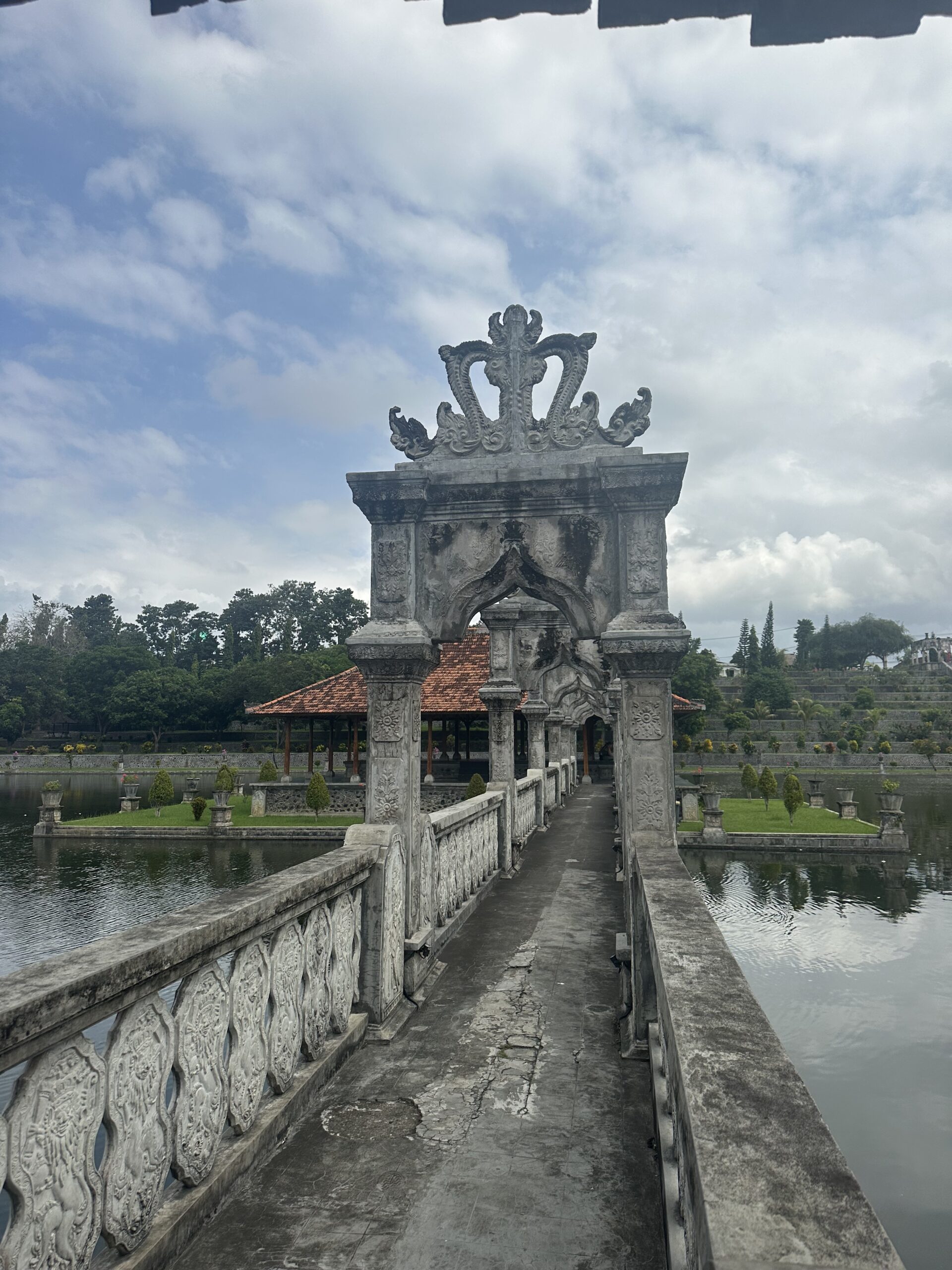
Spread across nearly 30 acres, the palace unfolds through manicured gardens, enormous reflecting ponds filled with koi and water lilies, and graceful white pavilions that appear to float on the water. Ornate bridges connect the buildings, creating a setting that feels elegant, dreamlike, and wonderfully removed from the busier parts of the island.
The palace was designed in 1909 by the King of Karangasem, Anak Agung Anglurah Ketut Karangasem. It served as a place of leisure, diplomacy, and royal ceremony. It was intended as a retreat where the royal family could welcome foreign dignitaries and important guests in suitably impressive surroundings.
What immediately caught my attention was the palace’s distinctive mix of architectural styles. Traditional Balinese design blends with Dutch colonial elegance and Chinese decorative details, giving the estate a character entirely its own. White archways rise above still pools, pavilions rest like islands on the water, and stone guardians quietly watch over the grounds.
Taman Ujung has survived a difficult history. It was badly damaged by the eruption of Mount Agung in 1963 and again by a major earthquake in 1979. Careful restoration has since returned much of its former beauty, and today it remains one of East Bali’s most graceful historical landmarks.
Our walk began at one of the palace’s most memorable features: a grand bridge stretching across the lotus ponds. Crossing it immediately gave the visit a sense of ceremony.
To the right stood Gili Bale, or Island Pavilion, the elegant white building that once served as the residence of the King of Karangasem. Its symmetry and peaceful position over the water made it one of my favorite places to photograph.
On the opposite pond was Bale Kambang, the Floating Pavilion. Its design felt more open and welcoming, which suited its original purpose. This was where the king received guests, held meetings, and dined with visiting dignitaries.
Farther south, we found Bale Bengong. This small gazebo sits quietly in the middle of a pool, tucked behind lush greenery. Slightly hidden and wonderfully peaceful, it feels like one of the palace’s secret corners.
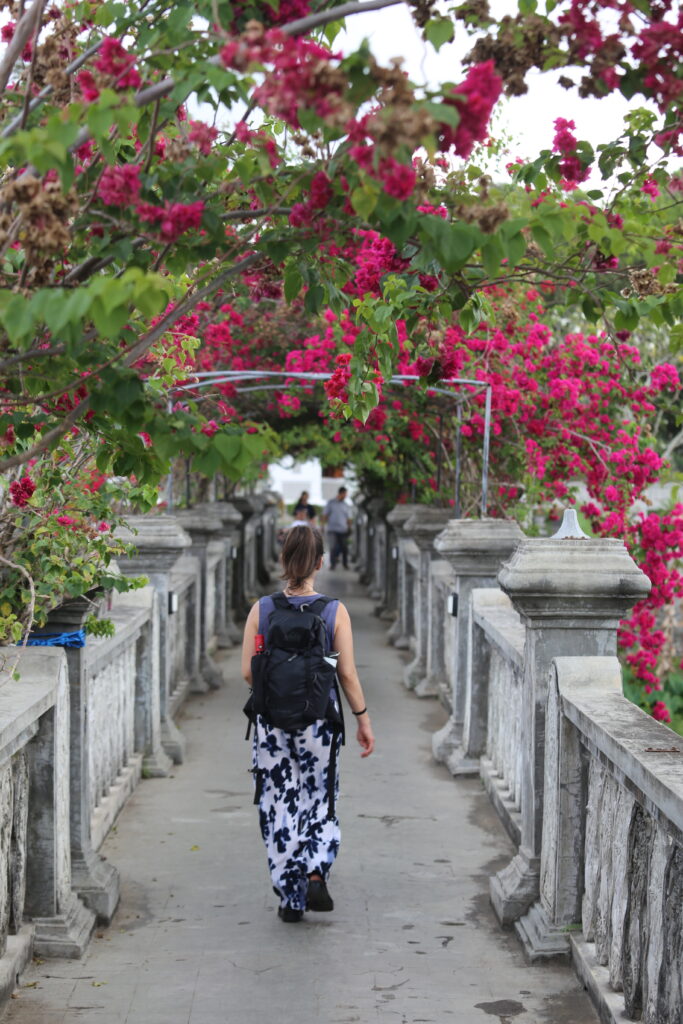
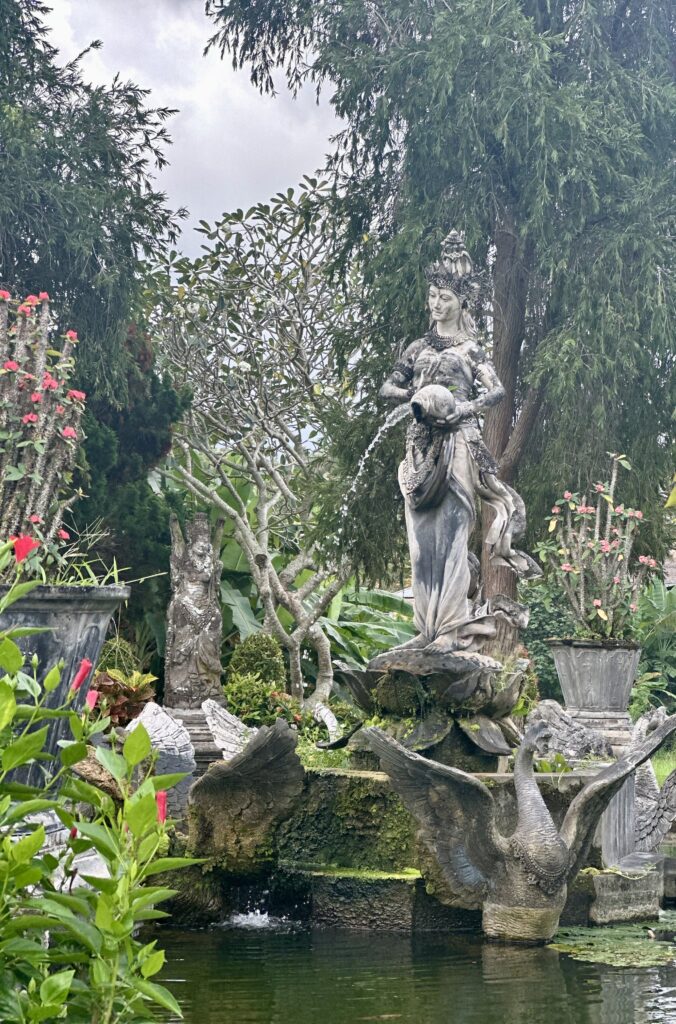
From there, we followed pathways lined with flowering frangipani, vivid bougainvillea, hibiscus, and beautifully maintained gardens. Koi moved beneath the surface of the ponds in flashes of color, weaving between clusters of water lilies and mirrored reflections. Along the water’s edge, sculptures of gods, guardians, and mythical creatures added to the palace’s dreamlike atmosphere.
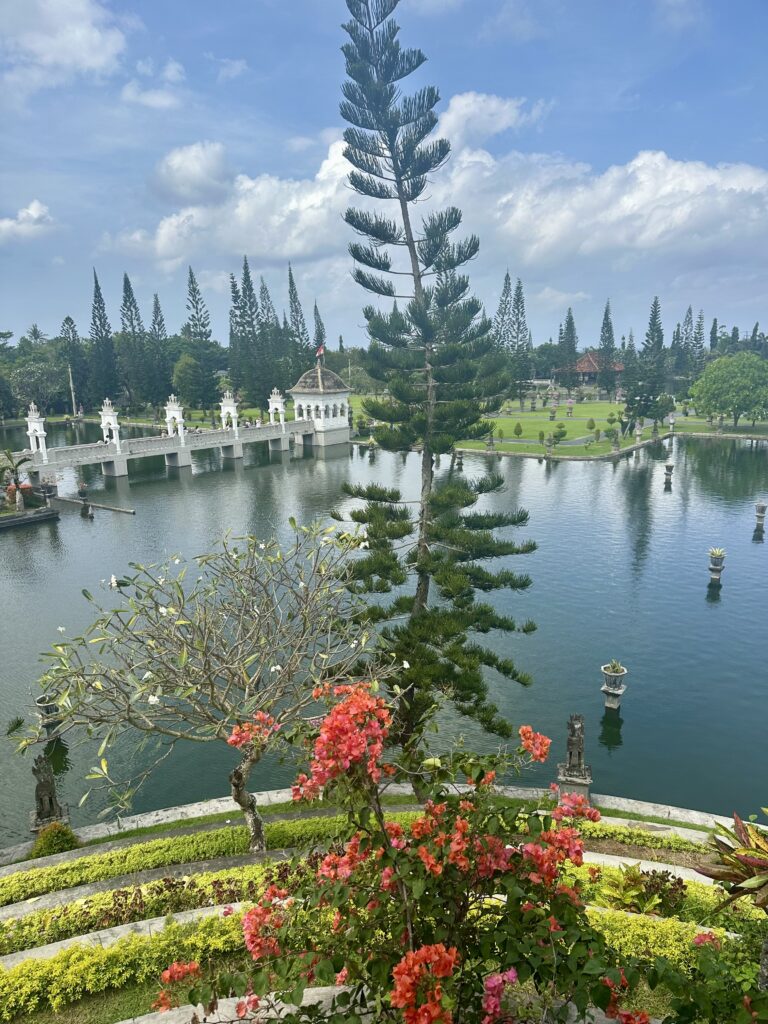
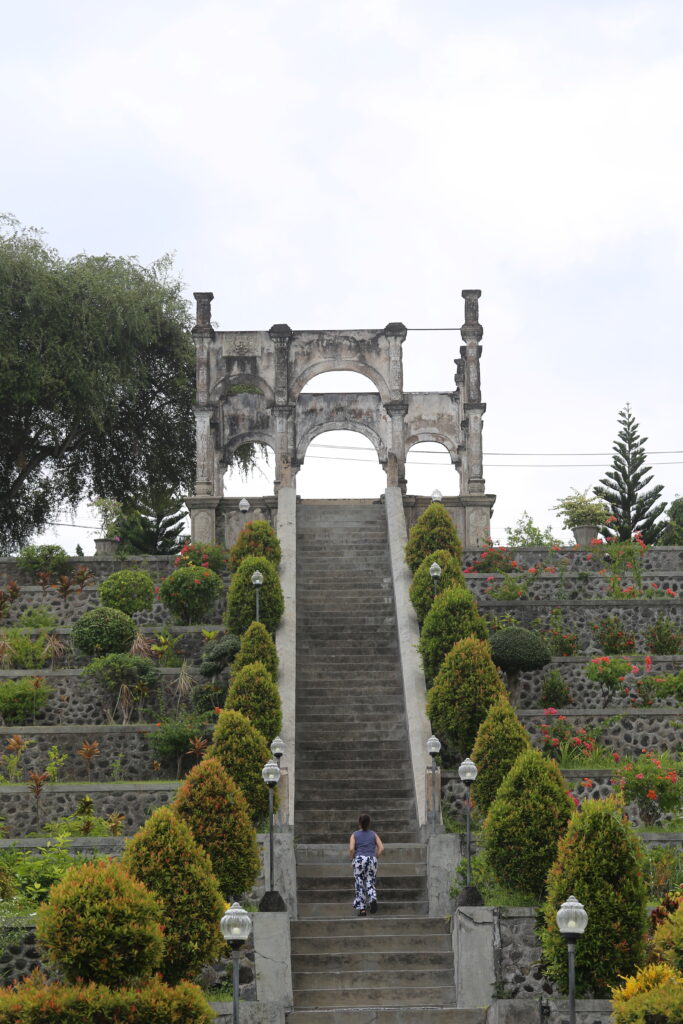
Eventually, we began climbing the terraced stairways above the main grounds. With every level, the view changed. The geometric shapes of the ponds became clearer, the pavilions appeared smaller below us, and the surrounding landscape opened farther into the distance.
Our favorite spot was Bale Kapal, the Ship Pavilion, which stands in ruins at the highest point of the complex. There was something especially moving about its weathered stone arches opening directly to the sky. From there, the entire palace stretched out beneath us, with the blue Lombok Strait shimmering on one side and Mount Agung rising in the distance on the other.
It was timeless and breathtaking.
Taman Ujung is incredibly photogenic. Between the symmetrical bridges, glassy reflections, sweeping staircases, tropical flowers, and bright white palace walls, nearly every corner made me want to stop and reach for my camera. Because it was quieter than many of Bali’s better-known attractions, we had the space to linger, find the right angle, and simply enjoy the stillness.
Some places encourage you to see as much as possible in the shortest amount of time. Ujung Water Palace invites exactly the opposite.
It made me want to cross each bridge slowly, pause at the top of the stairs, and look out for just a little longer. It encouraged me to notice the flowers, the shifting reflections, the koi beneath the lilies, the weathered carvings, and the clouds moving across the water.
For me, visiting Taman Ujung wasn’t about checking another landmark off a list. It was about stepping into a softer rhythm for an afternoon.
And perhaps that is exactly what a royal retreat was always meant to offer.
Written by Jacqueline Miller, founder of Adventurous Ambles. Jacqueline specializes in self-guided walking adventures, urban strolls, destination reading, and hiking experiences around the world. All articles are based on firsthand travel experiences and are accompanied by original photography, with all written content and images protected by copyright.
More Adventurous Ambles in Bali
Everything you need to plan
a Bali adventure
Bali Indonesia
Stories that reveal the
soul of Bali
Bali Reading List
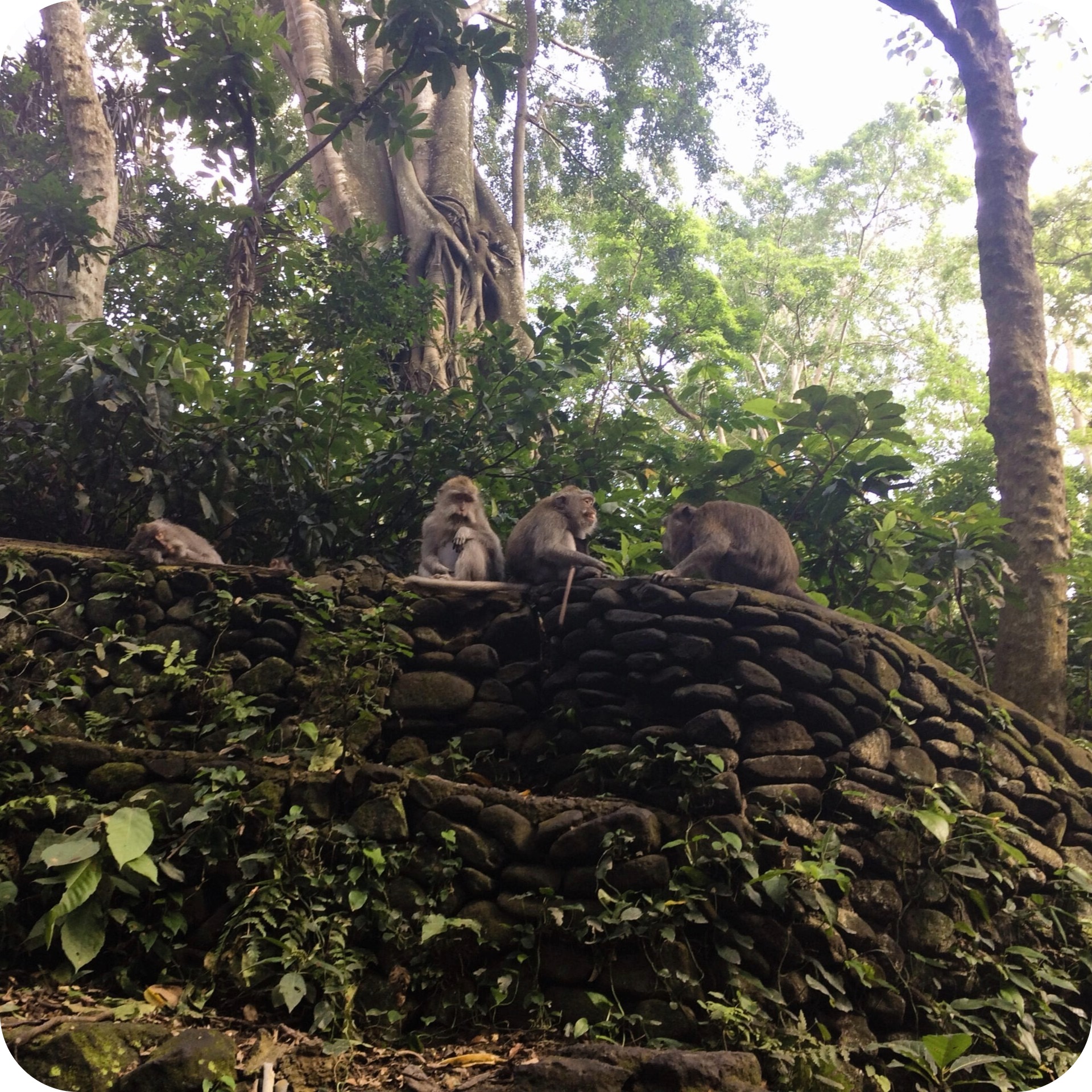
Bali’s most mischievous
walking trail
Sacred Monkey Forest Sanctuary
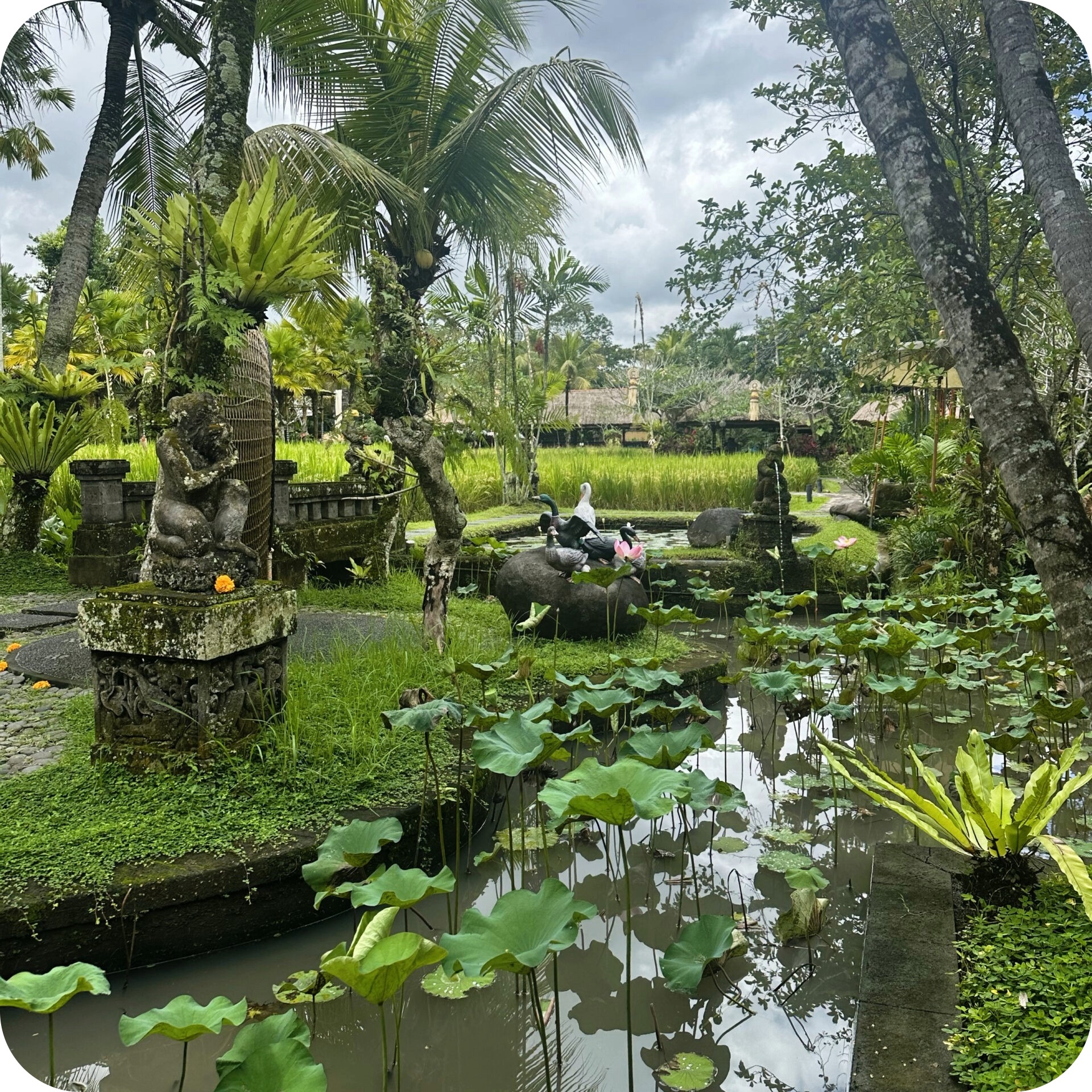
One of Ubud’s most enchanting restaurant settings
Bebek Tepi Sawah Restaurant in Ubud
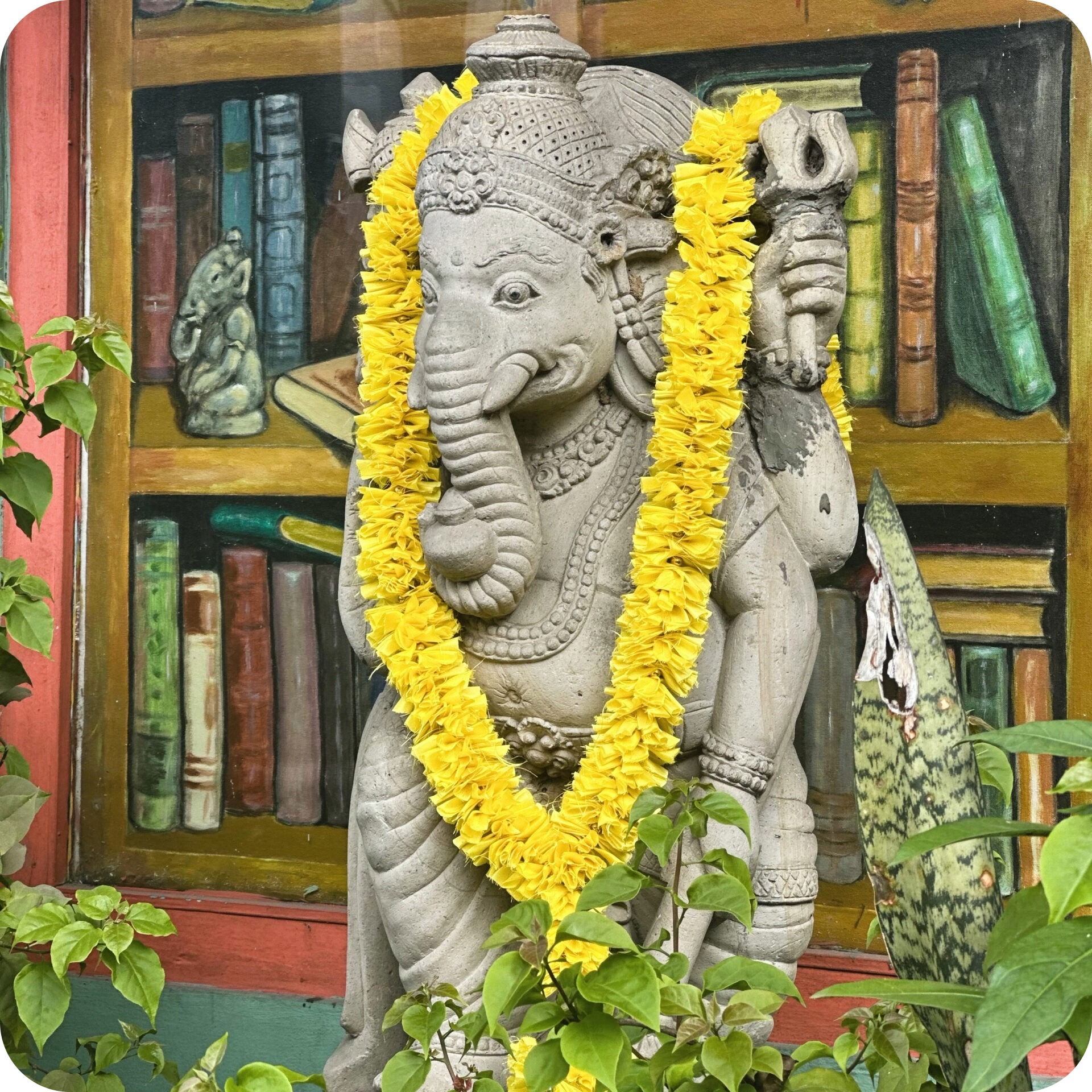
The kind of bookstore
travelers never forget
Ganesha Book Shop
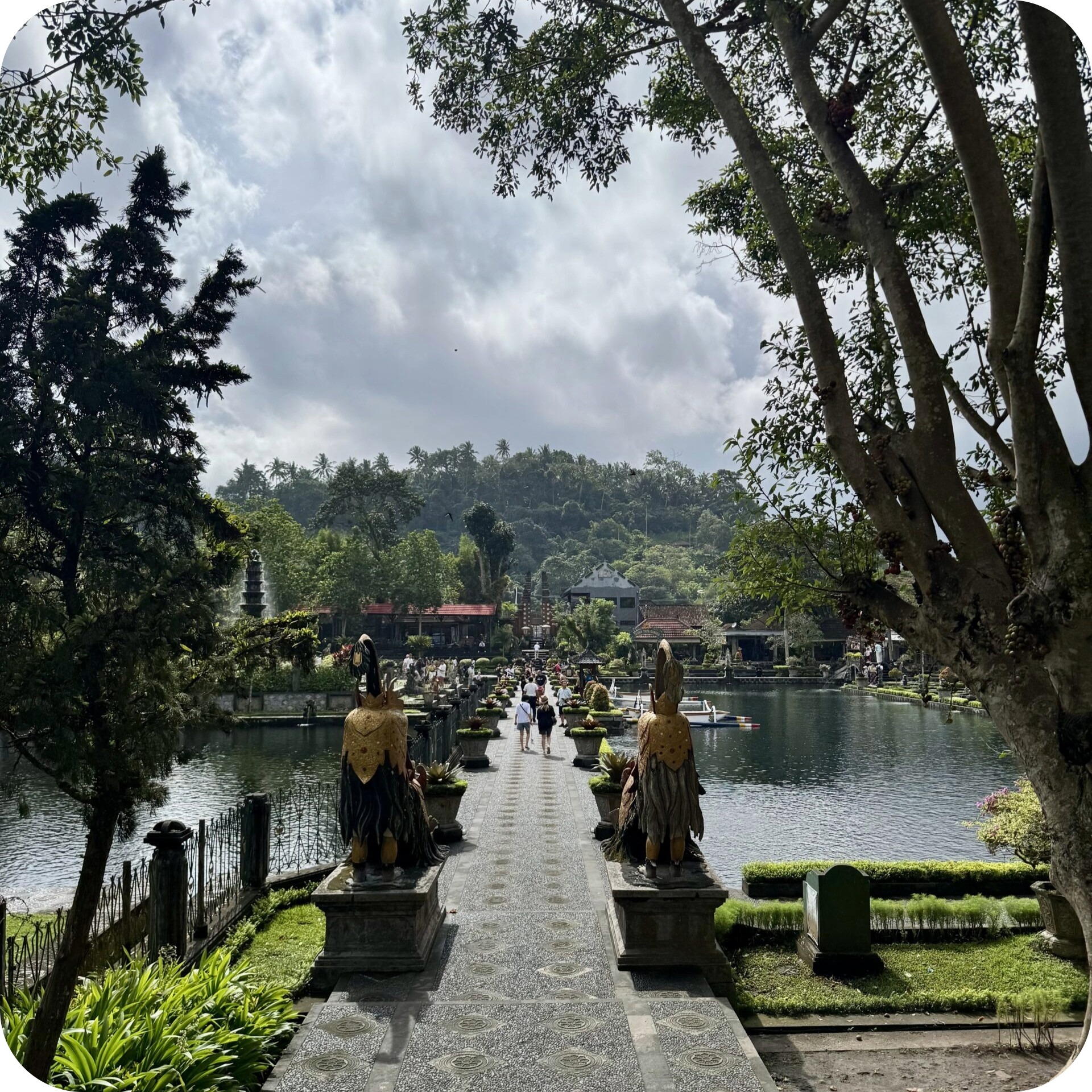
Walk across Bali’s floating
stone paths
Tirta Gangga Water Palace and Gardens