WANDER THROUGH SEATTLE’S MOST FAMOUS MARKET
Pike Place Market
Bookshop Crawl
Most Visitors
Never Find the
Lower Level Shelves
TIME
1-3 hours
DIFFICULTY
Easy
DISTANCE
1 mile
ELEVATION
Quick Trail Notes
Location
Pike Place Market, 85 Pike St, Seattle, WA 98101
The Market is a multi-tiered historic complex, but elevators connect its main levels with Western Avenue, the parking garages, and the waterfront. Some older passages and individual shops are narrow, so use the official interactive map to find the most accessible route.
Facilities
Four public restrooms are located throughout the Market; three are ADA accessible. Public seating is available in several buildings and on the MarketFront deck.
Water Availability
Drinking fountains are located throughout the Market, and cafés and restaurants sell beverages.
Cell Service
Generally reliable, although signals may drop inside the concrete lower-level arcades.
Seasonal Closures
Open daily year-round and closed only on Thanksgiving Day and Christmas Day. Merchant buildings generally operate from 9 a.m. to 7 p.m., although individual business and restaurant hours vary.
The Pike Place Market Garage has more than 800 stalls, with entrances at 1531 Western Ave, 1901 Western Ave, and 1530 Alaskan Way.
Dogs
Pets are not allowed inside Market buildings or the covered Main Arcade. Trained service animals are permitted.
Free to explore; budget for food, flowers, books, and unexpected finds.
What to Bring:
Comfortable shoes, a reusable shopping bag, a light jacket for Seattle’s changeable weather, and an appetite.
Read Along the Route
Pair this walk with No-No Boy by Seattle-born author John Okada. Set in postwar Seattle, the novel follows a Japanese American man returning to a community fractured by wartime incarceration. Its searching portrait of displacement, loyalty, and belonging deepens the history remembered in the Market’s Song of the Earth mural and feels especially fitting for a walk through Seattle’s fiercely independent bookshops.
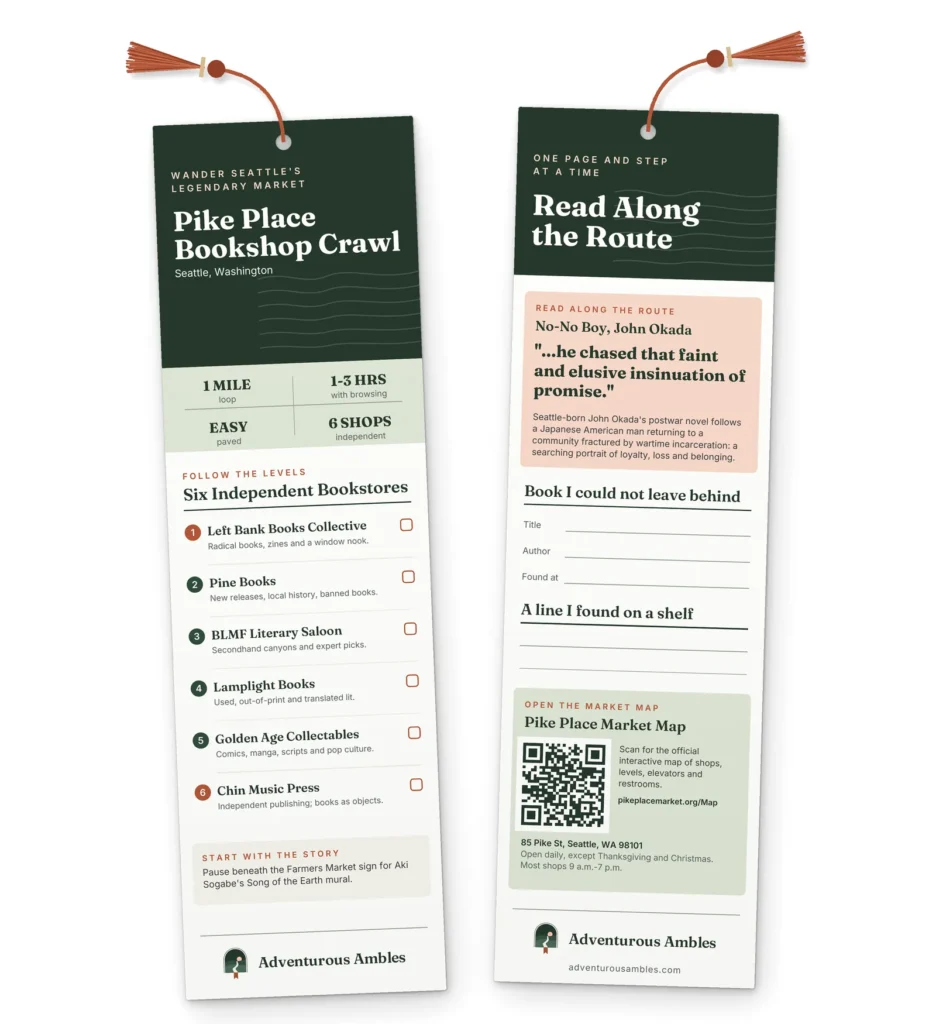
FREE PRINTABLE BOOKMARK
Follow the shelves beneath
Seattle’s most famous market.
Save or print this Pike Place Market Bookshop Crawl bookmark before you go. Begin beneath the Farmers Market sign with Aki Sogabe’s Song of the Earth mural, then follow the Market’s ramps, stairways, and lower-level passages to six independent bookshops: Left Bank Books Collective, Pine Books, BLMF Literary Saloon, Lamplight Books, Golden Age Collectables, and Chin Music Press. Check off each stop as you explore, record the book you could not leave behind, and pair the walk with John Okada’s No-No Boy. A QR code connects you to the official Market map, making this printable bookmark both a compact route companion and a keepsake for your next great read.
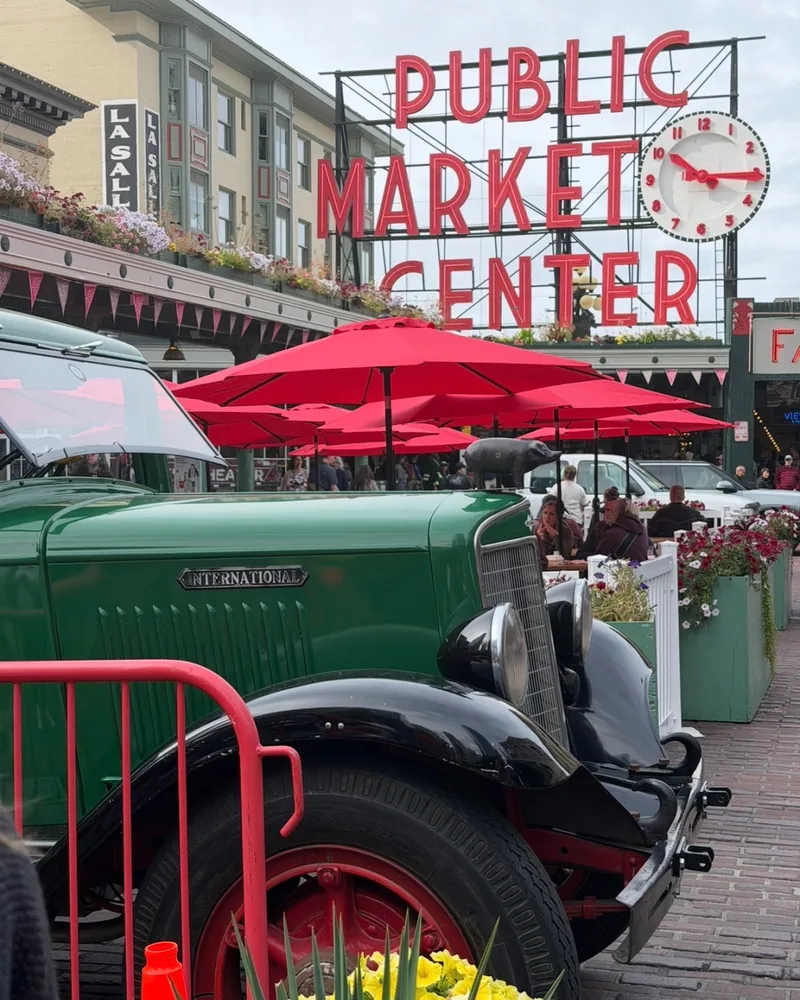
There is the red neon clock, the fish flying through the air, and the crowd gathered beneath a sign that has welcomed shoppers since 1937. But the famous entrance is only the beginning. The Market unfolds over ten levels and nine acres, descending toward Elliott Bay through ramps, stairways, and corridors filled with small independent businesses.
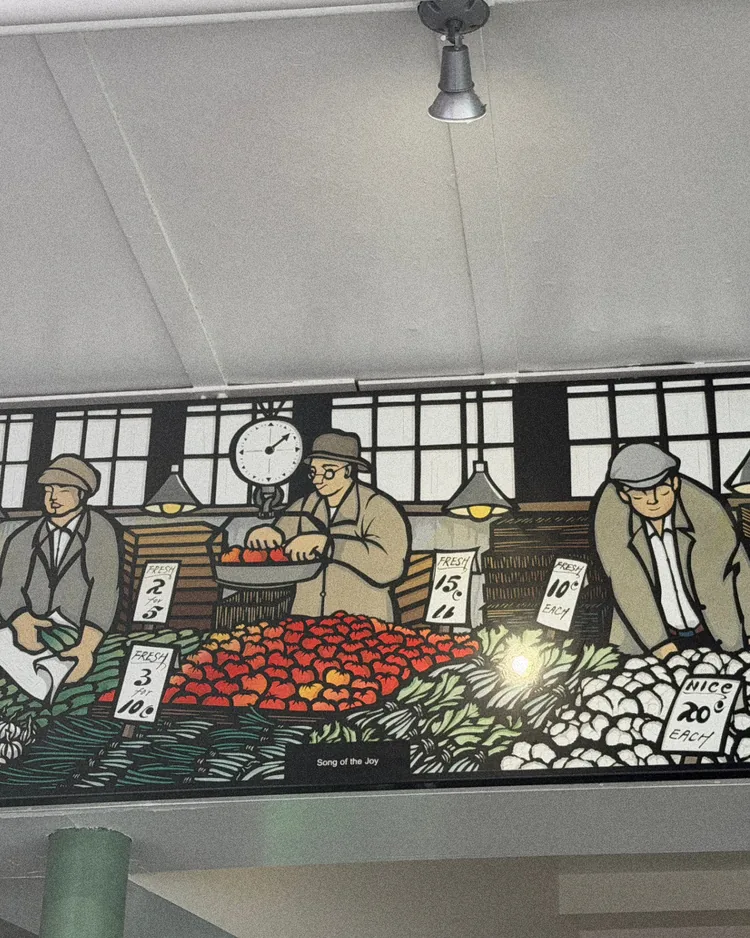
Before stepping into the arcade, we looked up. Mounted beneath the Farmers Market sign is Song of the Earth, a five-panel mural created in 1998 by Japanese-born artist Aki Sogabe. Using kirie, the Japanese art of papercutting, Sogabe traced the story of Japanese American farmers from clearing the land and tending crops to selling their harvest at the Market. Before World War II, Japanese Americans occupied a majority of Pike Place’s farm stalls. In 1942, their forced removal and incarceration devastated that community, and many never returned. The mural’s porcelain-enamel panels are quietly placed above one of Seattle’s busiest doorways, but once we understood what they represented, they became impossible to pass without pausing.
The Market itself opened on August 17, 1907, after Seattle created a place where farmers could sell directly to shoppers instead of relying on price-gouging middlemen. Only a handful arrived with wagons that first morning, and they sold out by lunchtime. More than a century later, Pike Place remains one of the country’s oldest and largest continuously operating public markets.
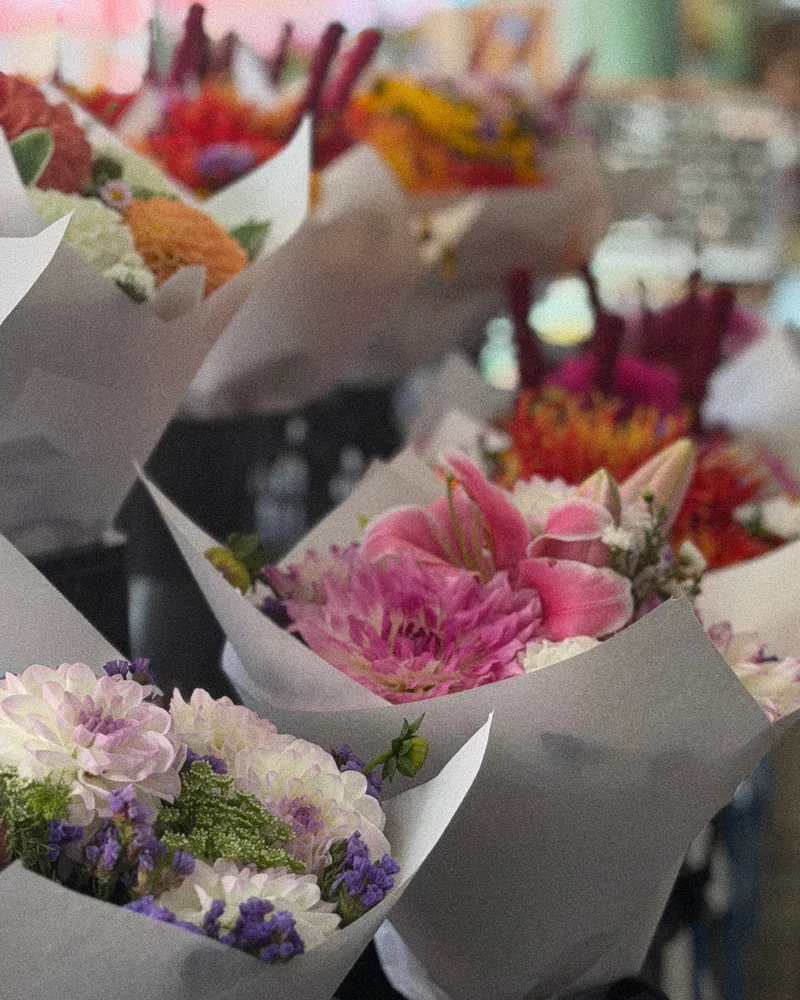
We entered beside Pike Place Fish Market, where salmon, halibut, crab, and shellfish rested on crushed ice while the fishmongers called to one another across the counter. The famous toss happens when a customer buys a fish, so there is no set performance time. We continued past produce stands and bouquets of dahlias, lilies, and sunflowers. Many of the flower stalls are run by Hmong farming families whose roots in the Market reach back to the Indochinese Farm Project, established in 1982 to help refugee families lease land and rebuild agricultural livelihoods in Washington.
The flowers and flying fish may draw the largest crowds, but we came with another plan: to find all six of the Market’s independent bookshops.
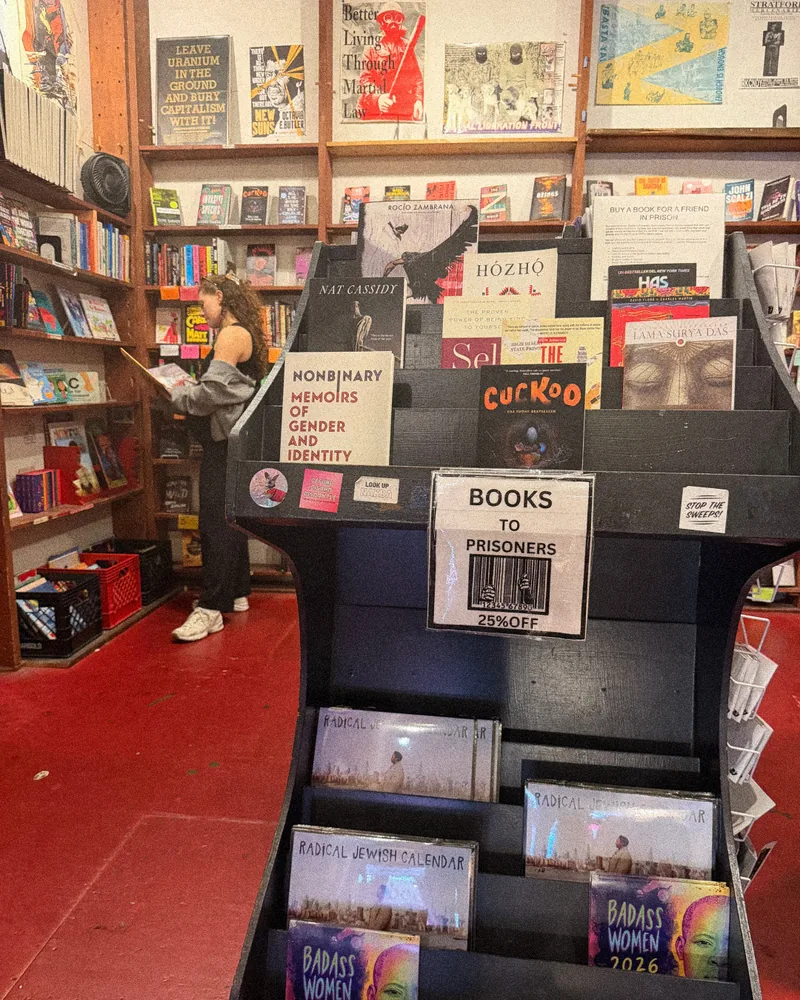
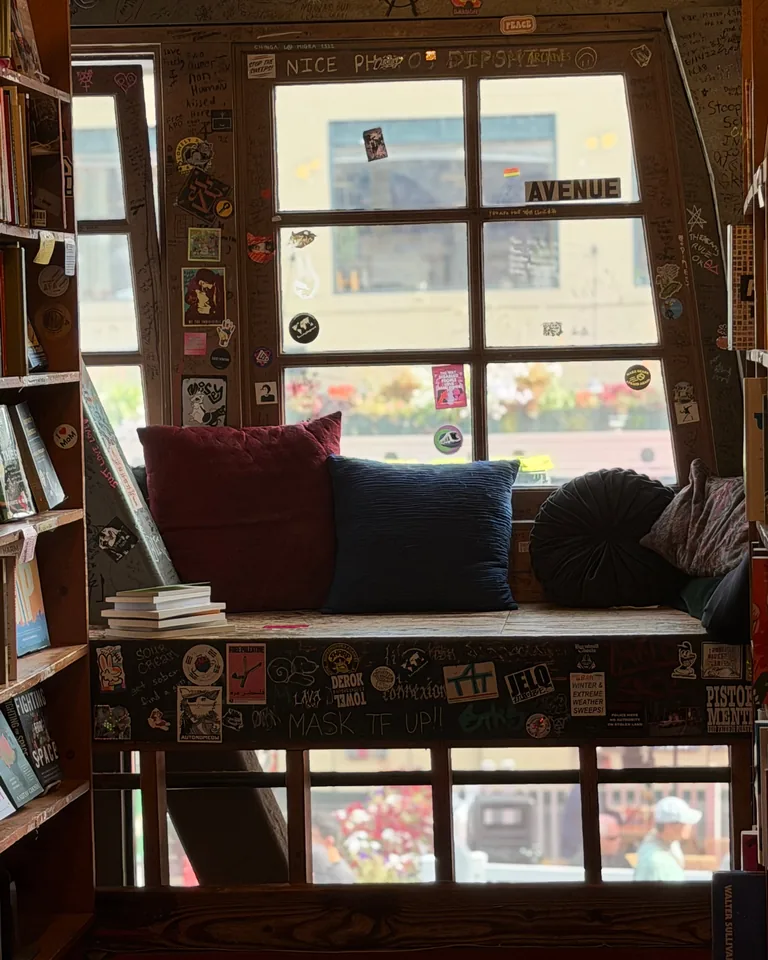
We began at Left Bank Books Collective, founded in 1973 as an anarchist bookstore and still operated collectively. Its shelves hold more than 10,000 new and used books devoted to radical politics, labor, feminism, queer studies, poetry, fiction, periodicals, and zines. A cozy nook on the second level overlooks Pike Street, while musicians and tarot readers outside give the storefront the feeling of a tiny public square.
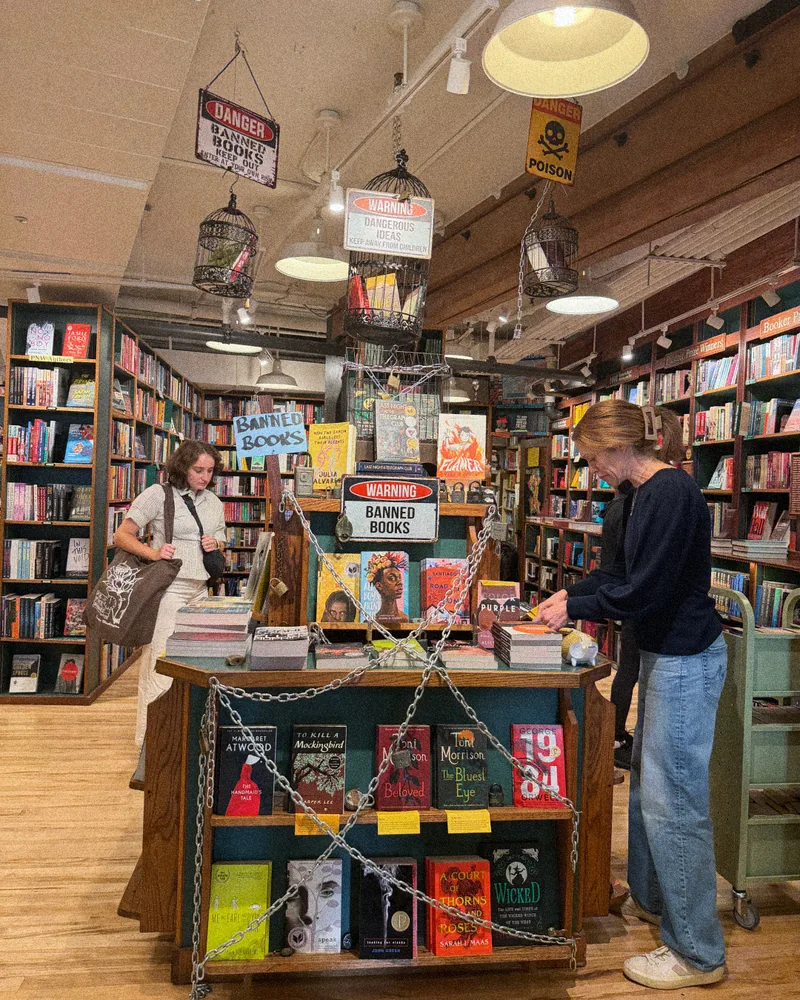
Near City Fish, we followed the ramp down to Pine Books. A bookstore has occupied this spot since 1961, although Pine Books is its newest chapter and its owner the sixth caretaker. Warm wooden shelves carry fiction, children’s books, poetry, philosophy, and local history. The chained banned-books display made the shop feel engaged with the wider world rather than tucked away from it.
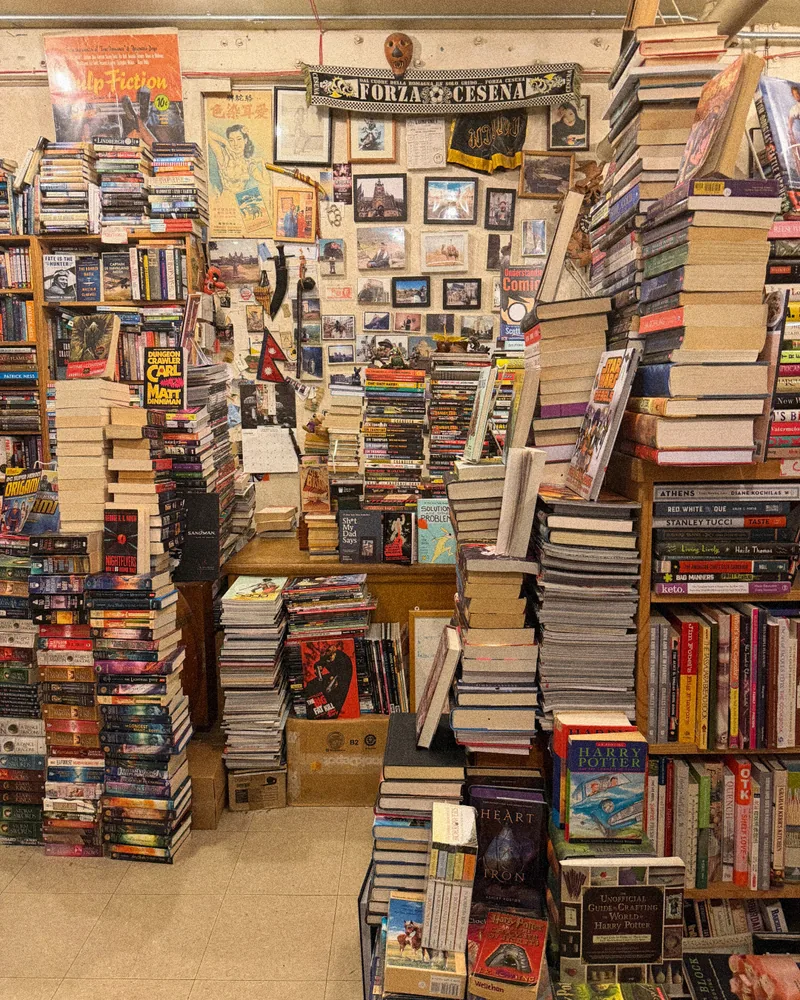
Deeper in the DownUnder, the ceilings lowered, old pipes crossed overhead, and the crowd thinned. BLMF Literary Saloon appeared almost as a landscape made from books. They filled the windows, climbed the walls, crowded the floor, and formed narrow canyons around the checkout counter. Owner JB has spent decades buying and selling books here, and this is the place to ask for a recommendation, especially if you are searching for something as specific as poems written by cats or a guide to surviving a sharknado.
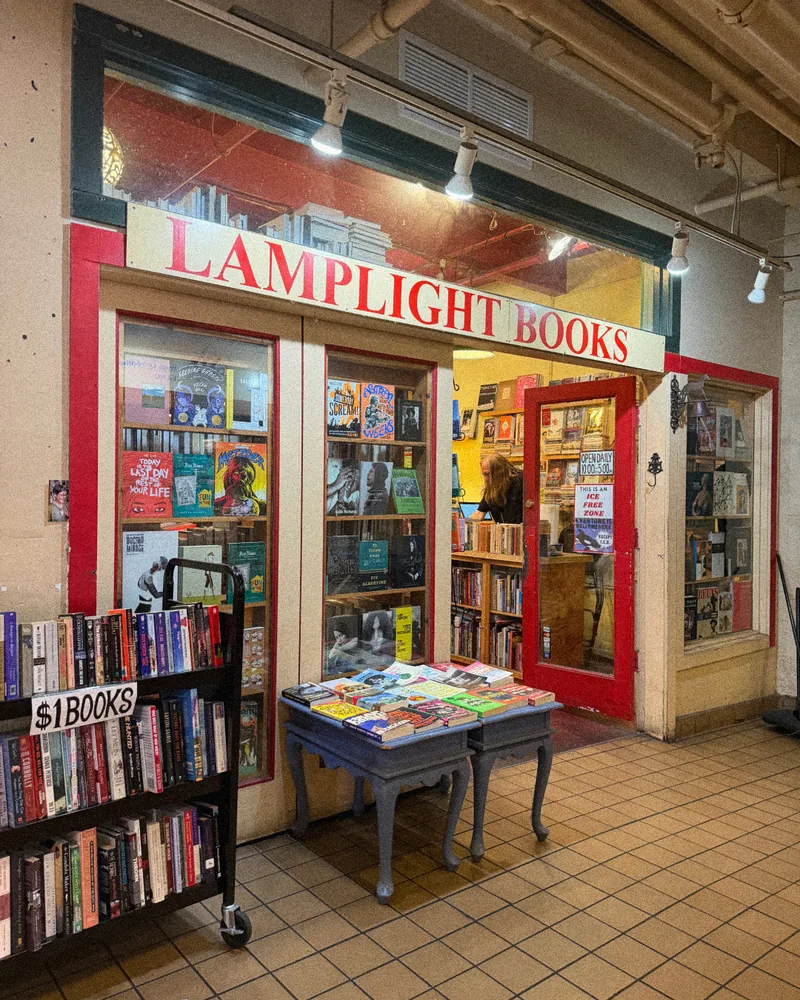
At Lamplight Books, used books spilled onto tables and rolling carts outside the red-trimmed storefront. The shop has specialized in used and out-of-print books since 2003, with a particular interest in literary translations alongside fiction, nonfiction, classics, and vintage children’s books. It was compact, eccentric, and very easy to browse longer than planned.
Golden Age Collectables shifted the mood from literary treasure hunt to pop-culture archive. Founded in 1961 and described by the Market as the world’s oldest comic bookstore, it carries new and vintage comics, manga, film and television scripts, figurines, games, posters, and collectibles. Even without a serious collector among us, the shelves invited a slow wander through decades of familiar characters and wonderfully obscure finds.
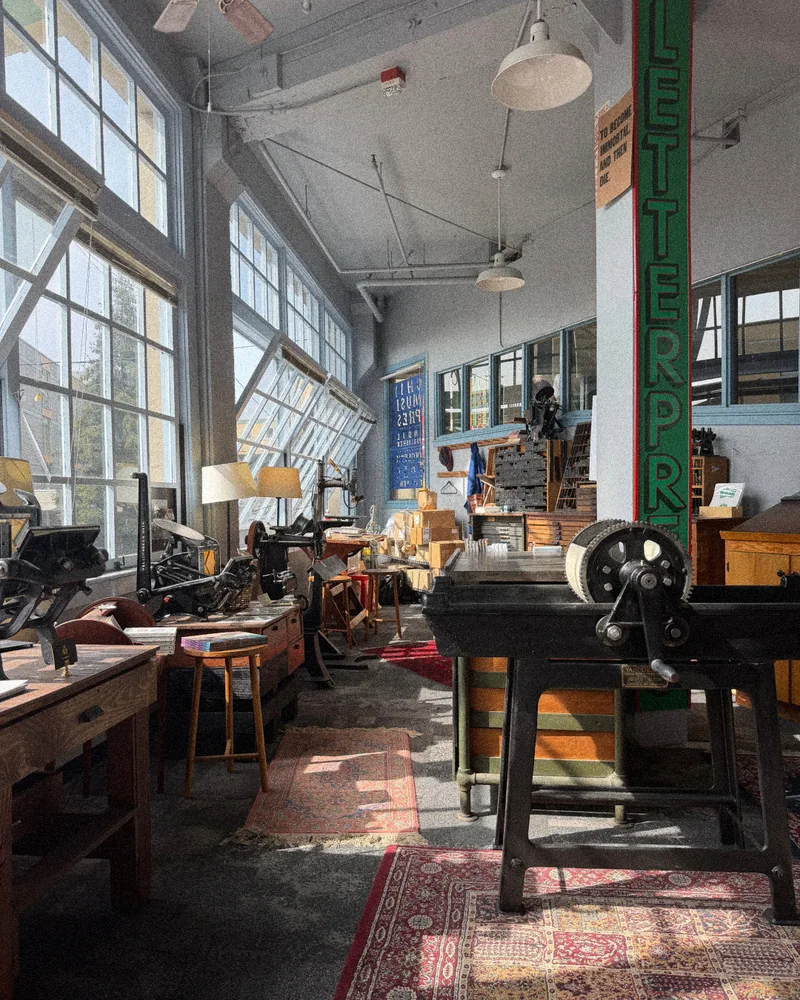
Our final bookish stop was Chin Music Press on Level 3. Sunlight streamed through broad windows onto richly patterned rugs and old printing presses, giving the space the calm of a studio and gallery. Chin Music is an independent publisher as well as a shop, producing carefully designed, tactile books and often championing first-time authors. After the exuberant stacks elsewhere, we enjoyed having room to notice the paper, artwork, and physical craft of each book.
By then, we were ready for lunch. Near Ghost Alley Espresso, we found the breezeway and followed the stairs down to Lonely Siren, a Portuguese-inspired tavern tucked beside the Hillclimb. We settled into its dark, lively bar for cocktails and shareable petiscos, setting down our bags and comparing our finds beneath a screen playing an old movie.
The entire loop covers only about a mile, but the walking is almost beside the point. Pike Place kept slowing us down with fishmongers, flower farmers, a moving piece of public art, and six bookshops that ranged from polished to gloriously overstuffed. The best part of the Market was not simply what waited beneath the famous clock.
John Okada, No-No Boy
THOUGHTFULLY RESEARCHED
Written by Jacqueline Miller, founder of Adventurous Ambles. Through firsthand travel, original photography, and detailed route research, Jacqueline creates walking guides, hiking resources, destination reading lists, and travel inspiration for curious travelers. Unless otherwise noted, all content and photography on Adventurous Ambles are original works protected by copyright.
More Adventurous Ambles in Seattle
DESTINATION GUIDE
Seattle, Washington, US
READING LIST
FREE WALKING TOUR
One Shark-Eating Octopus