WATERFRONT PATHS, FOREST TRAILS & PACIFIC NORTHWEST STORIES
Seattle,
Washington
mountain views in a city where nature is never far away.
SEATTLE TRAVEL GUIDE
A Practical Guide
to Exploring
the Emerald City
A Brief History of Seattle
Seattle is the kind of city that rewards anyone willing to take the long way around.
From the waterfront, stairways climb toward busy markets and gleaming towers, while ferries glide quietly across Elliott Bay. Beyond the city center, neighborhood streets lead to pocket parks, independent bookstores, inviting coffee shops, and sudden mountain views that seemed hidden only moments before.
However, Seattle’s story began long before its modern skyline appeared. This land and its waterways were, and remain, the home of Coast Salish peoples, including the Duwamish and Suquamish. Their enduring presence, cultures, and relationships with the region are inseparable from the city’s history.
During the nineteenth century, Seattle grew rapidly as a port, timber center, and gateway to the Klondike Gold Rush. In the decades that followed, aviation, maritime industries, music, and technology transformed the city again and again. Despite all that reinvention, Seattle has remained closely connected to the water, hills, and forests that first shaped it.
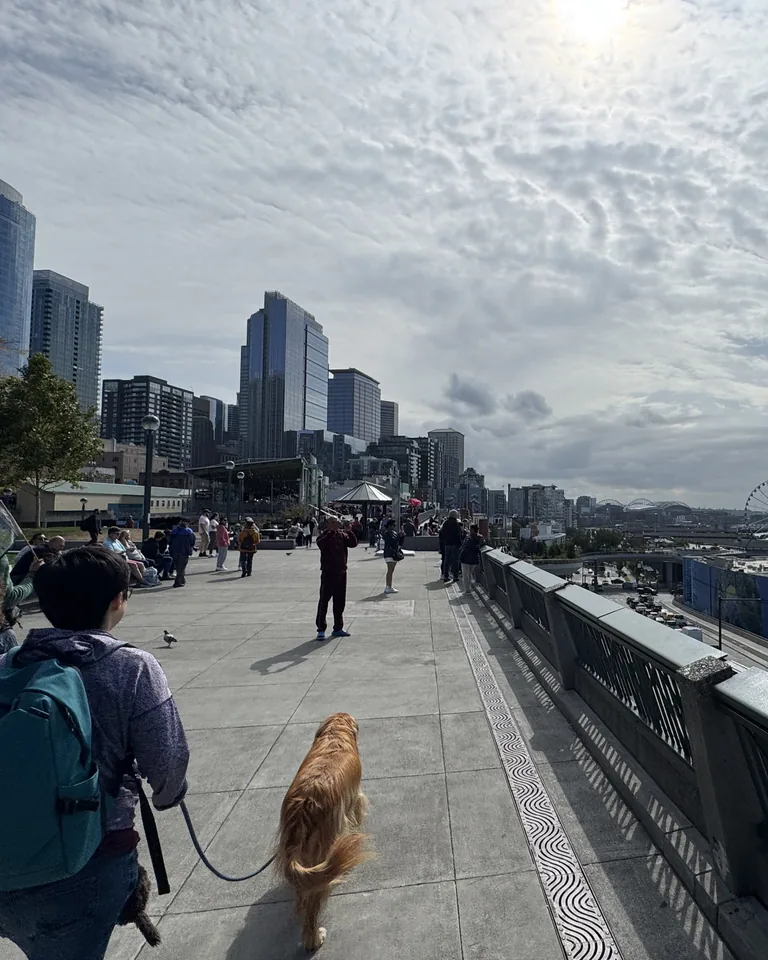
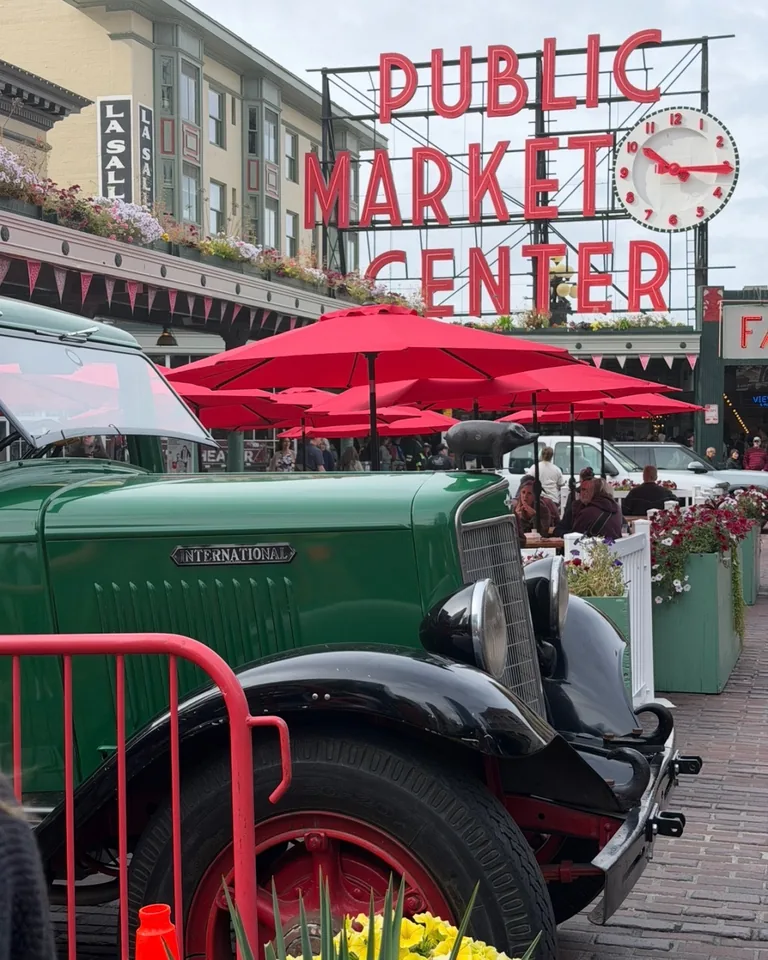
That relationship with the landscape is still one of the best ways to experience the city. Begin the morning among the stalls of Pike Place Market, then follow the shoreline toward Olympic Sculpture Park. Later, board a ferry simply to watch the skyline recede before trading the city streets for a quiet forest trail without ever leaving Seattle.
Ultimately, this is a place best explored slowly, one neighborhood, one shoreline, and one unexpected staircase at a time.
What to Know
Before You Go
01 | ARRIVAL
Getting to Seattle
By Air
Most visitors arrive at Seattle-Tacoma International Airport, about 14 miles south of downtown. Link light rail reaches downtown in approximately 38 minutes. Taxis, rideshares, shuttles, and rental cars are also available.
By Train
Amtrak arrives at King Street Station in Pioneer Square. Amtrak Cascades connects Seattle with Portland and Vancouver, B.C., while the Coast Starlight continues south toward California. Light rail and bus connections are available nearby.
By Car
Interstate 5 approaches Seattle from the north and south, while Interstate 90 enters from the east. A car is useful for regional adventures but generally unnecessary in central Seattle, where traffic and parking can be challenging.
By Cruise Ship
Seattle’s Alaska cruises use Pier 66 and Pier 91. Confirm your terminal before arranging transportation or accommodation.
Arrival information
02 | WHEN TO GO
Best Time to
Visit
Seattle changes beautifully with the seasons, but June through September offers the longest days and the most dependable weather for walking.
Cherry blossoms, smaller crowds, & regular showers
Long daylight hours, outdoor festivals, & the driest weather
Crisp walking conditions, fewer crowds, & gradually increasing rain
Cool, wet, and quiet, with lower accommodation prices
Summer note: Check the weather forecast and regional wildfire-smoke conditions before longer walks or hikes
Mountain note: Snow can remain on higher trails well into summer, even when Seattle itself feels warm
Seattle receives most of its rainfall between autumn and early spring. The city is better known for frequent light rain and gray skies than dramatic downpours. July and August are typically the driest months.
Seasonal weather planning
03 | IN YOUR BAG
What to Pack
Seattle is casual, practical, and wonderfully forgiving about rainwear. Layers work better than one heavy coat because temperatures can shift between the waterfront, shaded parks, and sunny hills.
✓ A lightweight waterproof jacket with a hood
✓ Comfortable, water-resistant walking shoes
✓ Sweater, fleece, or packable insulating layer
✓ Small daypack
✓ Reusable water bottle
✓ Portable phone charger
✓ Sunglasses and sunscreen, even on cloudy days
✓ Compact umbrella, if you prefer one
✓ Hiking shoes with traction for unpaved trails
✓ Warm hat and gloves from late fall through early spring
✓ Reusable tote for market and bookstore discoveries
✓ N95 or KN95 mask during possible wildfire-smoke season
✓ Swimsuit for summer beaches or hotel pools
For mountain day trips, bring more than city weather appears to require. Conditions can change quickly, and snow may remain on higher trails well into summer.
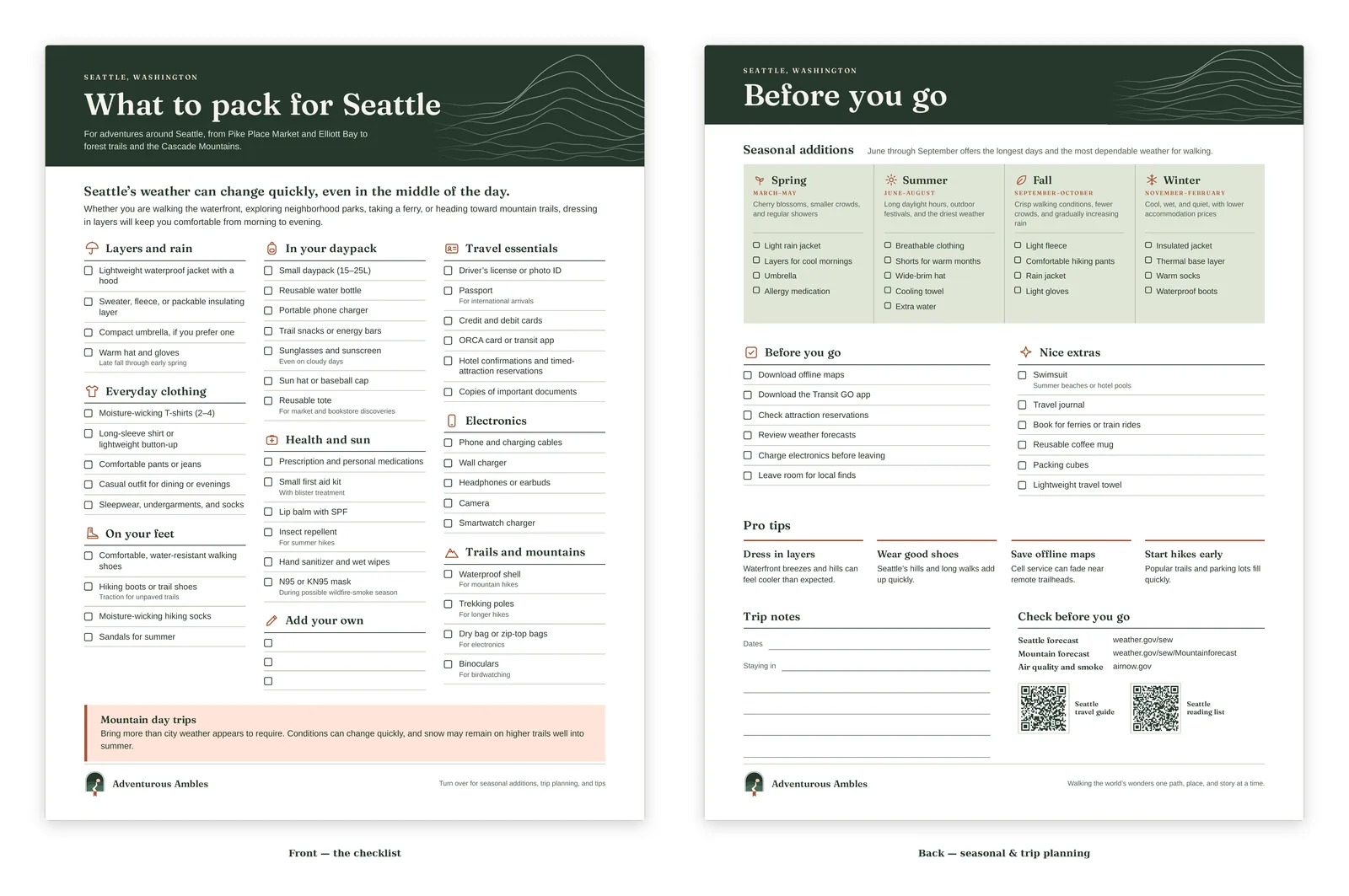
Heading to Seattle? From waterfront strolls and ferry rides to Puget Sound and the Cascades, this complete packing checklist covers the clothing, footwear, rain gear, travel essentials, and hiking gear you’ll need. Prints on one Letter sheet, front and back. Save it, print it, and pack with confidence!
04 | BUDGET
Average Costs
Seattle is easy to reach from across the United States, but flights and hotels become more expensive during summer, cruise season, and major events.
USD, per night
For convenient sightseeing, stay downtown, in Belltown, or near Seattle Center. Capitol Hill offers restaurants and nightlife, while the University District may provide better value.
Always check the complete booking price for taxes and additional fees. Seattle’s combined lodging tax is 15.7%. Participating downtown hotels also charge a 2.3% tourism assessment, bringing mandatory taxes and assessments to approximately 18% at those properties. Parking, destination, and short-term-rental cleaning fees may cost extra.
Compare travel & stays
05 | ON THE MOVE
Seattle’s hills can make distances feel longer than expected, but walking and public transportation make it easy to explore the city.
Sound Transit Link connects SEA Airport with downtown, Capitol Hill, the University District, and neighborhoods farther north and south.
King County Metro serves neighborhoods throughout Seattle. Streetcars connect downtown with South Lake Union and First Hill.
Washington State Ferries travel to Bainbridge Island and Bremerton, while the Water Taxi connects downtown with West Seattle and Vashon Island.
Bicycles and scooters are useful along the waterfront and Burke-Gilman Trail. Check the Seattle bike map before riding.
A car is rarely necessary within central Seattle but useful for Mount Rainier, Olympic National Park, and more distant trailheads.
Adult Link and Metro fares are currently $3 per ride. Pay with an ORCA card, contactless bank card, mobile wallet, or the Transit GO Ticket app.
06 | THE BEST WAY
On foot
Browse the stalls of Pike Place Market, follow the waterfront toward Olympic Sculpture Park, or wander through the historic streets of Pioneer Square. Beyond downtown, forest trails, lakeside paths, gardens, and beaches reveal a quieter side of the city.
In Seattle, the journey between landmarks is often part of the adventure.
USEFUL LINKS
Walks, trails &
destinations
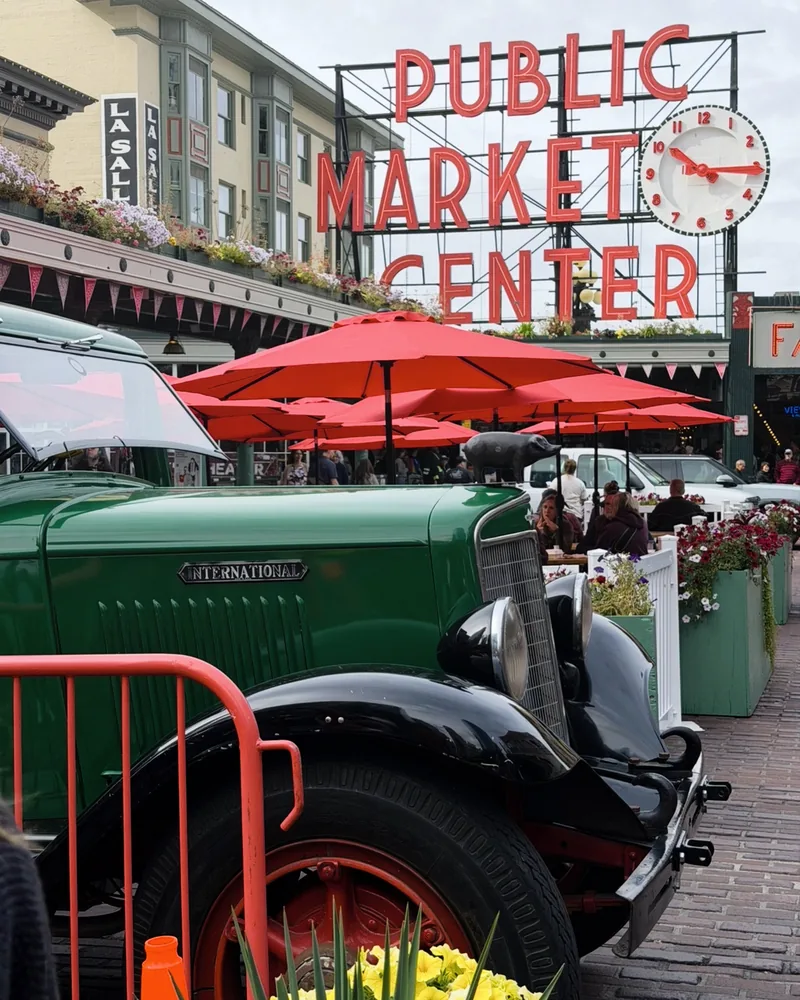
Pike Place Market ↗
07 | GOOD TO KNOW
Frequently Asked Questions
Where Is the best area to stay in Seattle?
Downtown is the most convenient choice for first-time visitors because it is close to Pike Place Market, the waterfront, and public transportation. Belltown works well for restaurants and nightlife, while Lower Queen Anne provides easy access to Seattle Center.
For a neighborhood atmosphere, consider Capitol Hill, Ballard, or Fremont. Staying near a Link light rail station makes exploring without a car much easier.
Do I need a car in Seattle?
Not for a city-centered visit. Link light rail, buses, streetcars, ferries, water taxis, and walking cover most major visitor areas.
A car is helpful for national parks, mountain trails, the Olympic Peninsula, and itineraries involving several distant destinations. Consider exploring Seattle without one and renting only for the days you leave the city.
Does it rain all the time in Seattle?
No. Seattle’s reputation comes from many cloudy or drizzly days rather than an extraordinary annual rainfall total. Summer is usually comparatively dry, especially in July and August.
From autumn through spring, carry a waterproof layer and expect showers. The weather is often mild enough that locals simply zip their jackets and keep walking.
Can I Visit Mount Rainier as a Day Trip from Seattle?
Yes. Mount Rainier National Park is approximately two to three hours from Seattle, depending on traffic, weather, and which park entrance you use.
Begin early and focus on one area, such as Paradise or Sunrise. Check current road conditions, entrance requirements, and trail closures before leaving Seattle. A rental car or organized tour is usually the simplest option.
What is the best Seattle experience for a first-time visitor?
Begin at Pike Place Market before it becomes crowded, walk downhill to the waterfront, and continue north toward Olympic Sculpture Park. Later, board a Bainbridge Island ferry or West Seattle Water Taxi and watch the city rearrange itself across the water.
Seattle’s landmarks are worth seeing, but its real character appears in the journey between them: gulls above the piers, ferries crossing the bay, evergreens beside glass towers and Mount Rainier rising quietly beyond the city.
Walk through Pike Place Market before the crowds arrive. Follow the waterfront toward Olympic Sculpture Park, board a ferry across Elliott Bay, and wander a little farther whenever a staircase, garden, or forest path catches your attention.
Seattle has a way of making the journey between destinations feel just as memorable as the places themselves.
Garth Stein, The Art of Racing in the Rain
THOUGHTFULLY RESEARCHED
Written by Jacqueline Miller, founder of Adventurous Ambles. Through firsthand travel, original photography, and detailed route research, Jacqueline creates walking guides, hiking resources, destination reading lists, and travel inspiration for curious travelers. Unless otherwise noted, all content and photography on Adventurous Ambles are original works protected by copyright.
KEEP WANDERING
More Adventurous Ambles in Seattle
READING LIST
FREE WALKING TOUR
One Shark-Eating Octopus
CITY WALK