WALK THROUGH THE SACRED VALLEY
Pisac Market
Stroll
Move between colorful market stalls, sacred traditions, and Andean views
in the historic heart of Pisac.
CITY WALK
A Walk Through
the Heart of
the Sacred Valley
Trail at a Glance
TIME
1-3 hours
With shopping &/or dining
DIFFICULTY
Easy
Cobbled streets
DISTANCE
~1 km(0.6 miles)
Loop
ELEVATION
Less than 5 meters
Approximate gain
Quick Trail Notes
Location
Historic downtown Pisac, Sacred Valley, Cusco Region, Peru.
Mostly accessible, though some sidewalks are narrow and feature historic, uneven cobblestones. Wheelchairs and strollers may require extra caution.
Facilities
Numerous cafes and restaurants line the route. Public restrooms are available near the market area for a small fee (usually 1 or 2 Soles). Pack toilet paper and hand sanitizer in your daypack, as most public stalls rarely provide them and throw refuse into the bin afterwards.
Water Availability
Bottled water is readily available for purchase at small convenience stores (tiendas) and cafes along the entire walk.
Cell Service
Excellent. Strong 4G/5G mobile coverage throughout the town center.
Seasonal Closures
Open year-round. The market operates daily, but it is largest and most vibrant on Sundays, Tuesdays, and Thursdays. If attending on a Sunday, arrive by mid-morning for the best chance of seeing a community procession associated with mass at San Pedro Apostol. Timing may vary according to the religious calendar.
Best Time to Go
Early Morning (8:30 AM – 9:00 AM): Arrive right as vendors finish setting up to beat the large tour groups from Cusco. Avoid arriving much before 8:30 AM, as stalls will still be closed.
Dogs
Allowed, but expect many free-roaming community dogs along the streets and square. Keep pets on a short leash due to pedestrian traffic.
What to Bring
Cash in small denominations (Peruvian Soles) for market vendors, a sun hat, sunscreen, a light jacket (weather changes quickly), and a reusable shopping bag.
Free
Altitude Note
Pisac sits at approximately 2,970 meters (9,744 feet), so newly arrived visitors should walk slowly and stay hydrated.
Read Along the Route
Pair this walk with The Peru Reader, edited by Orin Starn, Carlos Iván Degregori, and Robin Kirk. Its collection of historical accounts, essays, and stories offers deeper insight into Peru’s layered cultural identity, enriching the traditions and everyday Andean life encountered throughout Pisac Market.
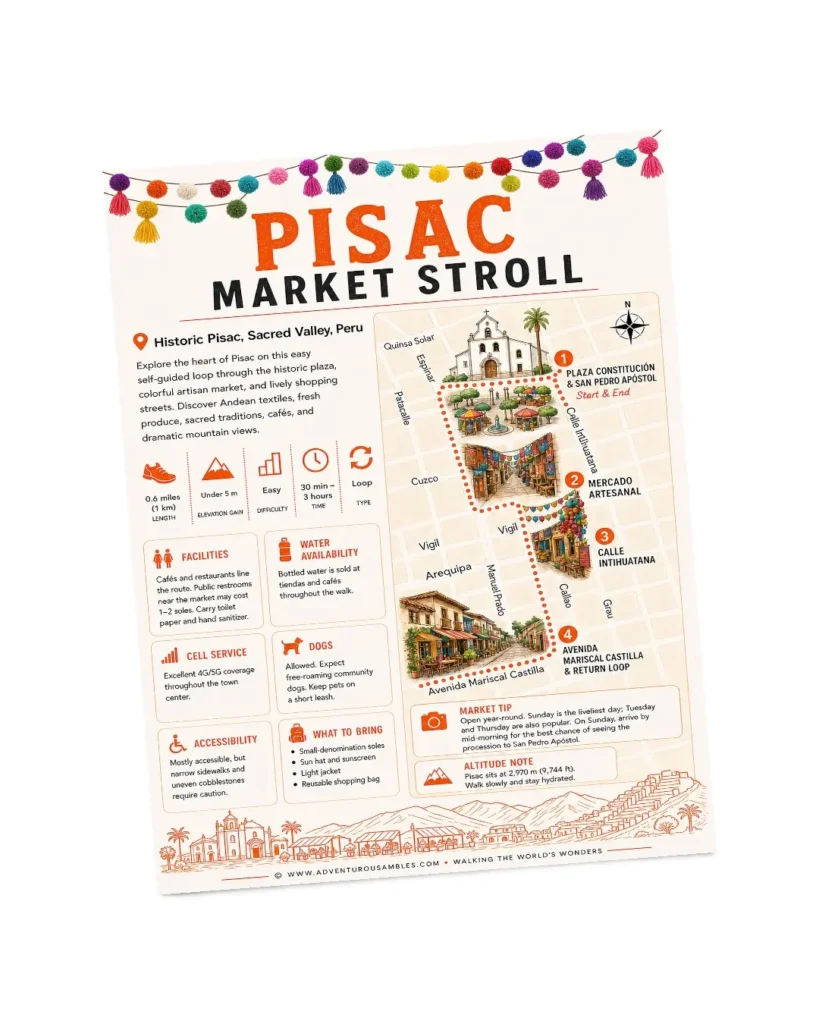
FREE PRINTABLE GUIDE
Take the market stroll with you.
Save or print this Pisac Market Stroll map for an easy self-guided loop through Plaza Constitución, the colorful artisan market, and the historic streets of Peru’s Sacred Valley. Use this printable guide to plan your route, find local landmarks, browse traditional textiles and handcrafted goods, and experience the vibrant culture and mountain scenery that make Pisac one of the region’s most memorable destinations.
We arrived in Pisac on a Sunday, when the historic center bursts into color and the town’s famous market is at its biggest and liveliest.
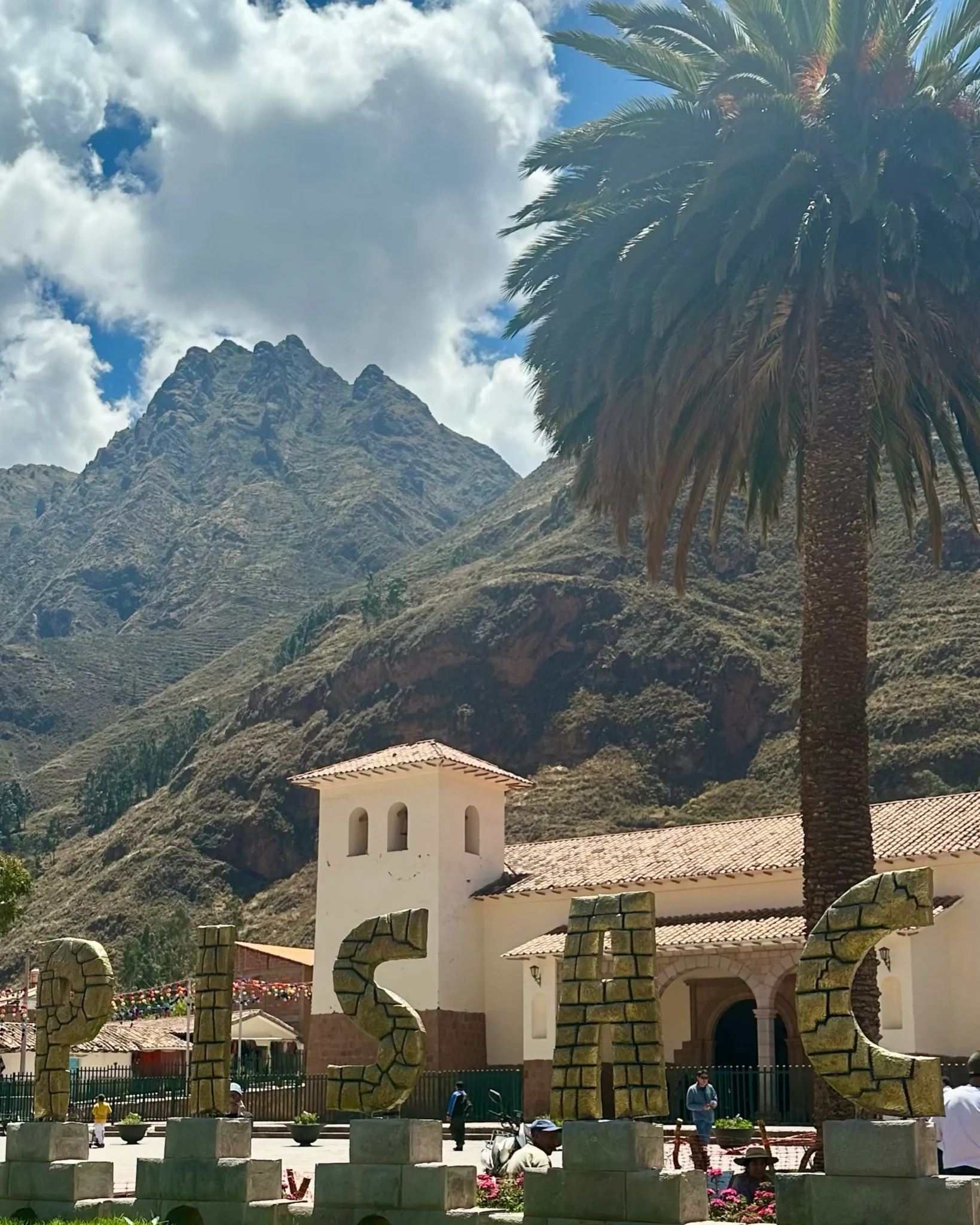
Beneath canvas umbrellas, vendors arranged piles of tomatoes, carrots, corn, peppers, garlic, fruit, and herbs while traditionally dressed villagers moved through the square. Behind it all, the steep mountains of the Sacred Valley rose dramatically above the tiled roofs.
Our walk began in Plaza Constitución, also known as the Plaza de Armas. The whitewashed Iglesia de San Pedro Apóstol anchors one side of the square, facing produce stalls, palms, gardens, and the monument honoring Bernardo Tambohuacso Pumayalli, an eighteenth-century cacique of Pisac remembered as a martyr and precursor of American independence.
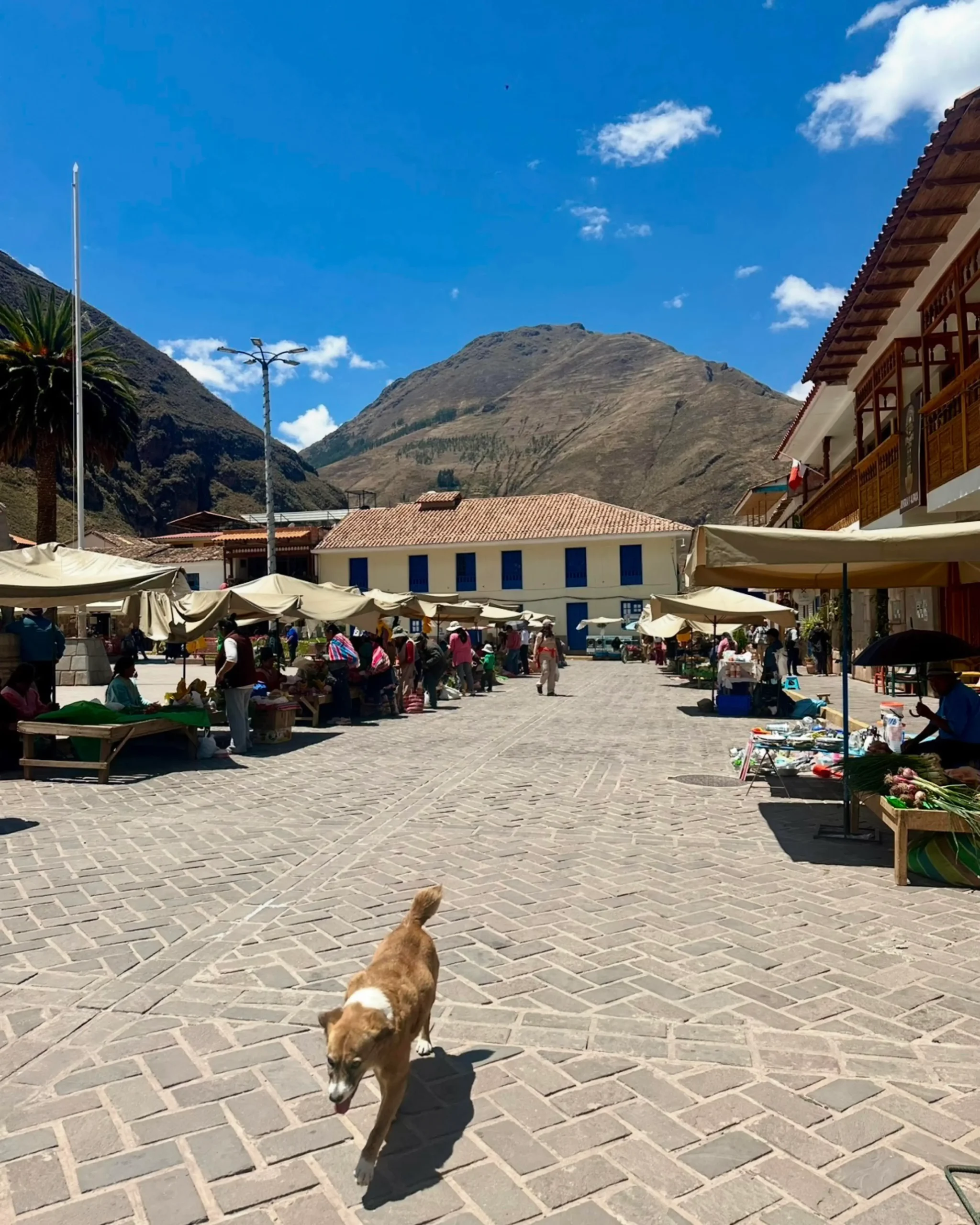
The plaza market operates in some form throughout the week, but Sunday is its most vibrant day. Farmers and villagers from surrounding communities come into town with fresh produce and other goods, continuing a market tradition deeply connected to the agricultural and cultural life of the Sacred Valley.
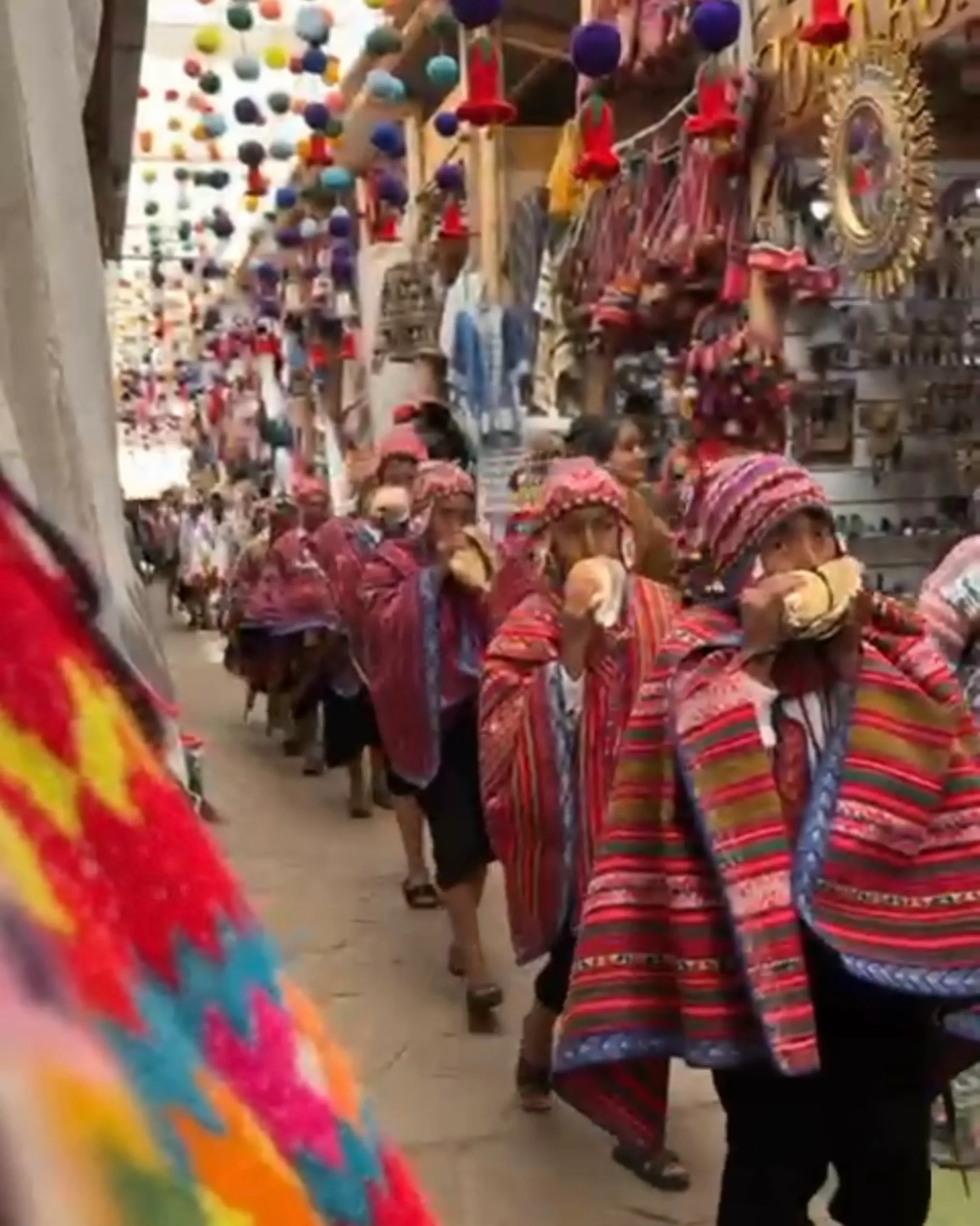
We were also fortunate to witness one of Pisac’s most moving Sunday traditions. Traditionally dressed community members gathered in richly patterned ponchos and embroidered headwear, some carrying ceremonial staffs, before making their way toward mass at San Pedro Apóstol. At certain Sunday observances, children blowing conch shells help announce the procession.
Watching this beautiful tradition unfold beside the busy market offered a glimpse into Pisac’s spiritual heart. One moment, the lanes were filled with lively conversation and commerce; the next, a centuries-old expression of faith and community passed through. It was a reminder that Pisac Market is far more than a shopping destination, it is part of a living town.
From the plaza, we continued along Calle Intihuatana and entered the Mercado Artesanal. Narrow passages overflowed with woven blankets, alpaca garments, patterned bags, hats, musical instruments, dolls, pottery, and silver jewelry. Colorful woolen pom-poms and tassels stretched overhead while sunlight filtered through the market awnings.
Every turn revealed another inviting stall. Stacks of textiles climbed the walls, embroidered belts hung beside handwoven bags, and glimpses of the mountains appeared between the rooftops. Although the market is compact, its maze of colorful passages makes it easy and enjoyable to lose all sense of direction.
Take time to look closely and speak with the vendors. Many Andean textile patterns are connected to local landscapes, animals, agriculture, and community traditions. Bargaining is common, but it should remain friendly and respectful. These handmade pieces reflect an artisan’s skill, materials, time, and inherited knowledge.
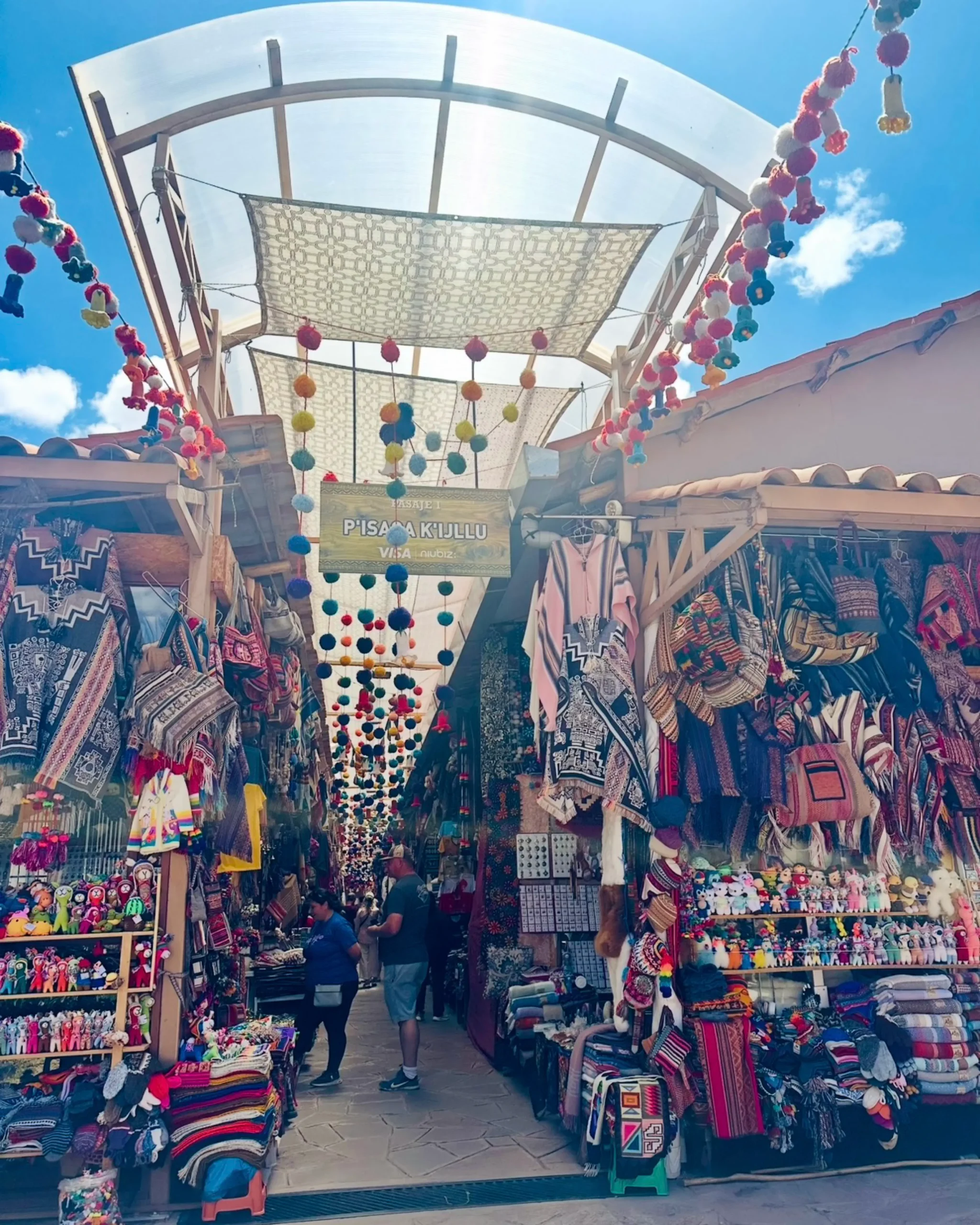
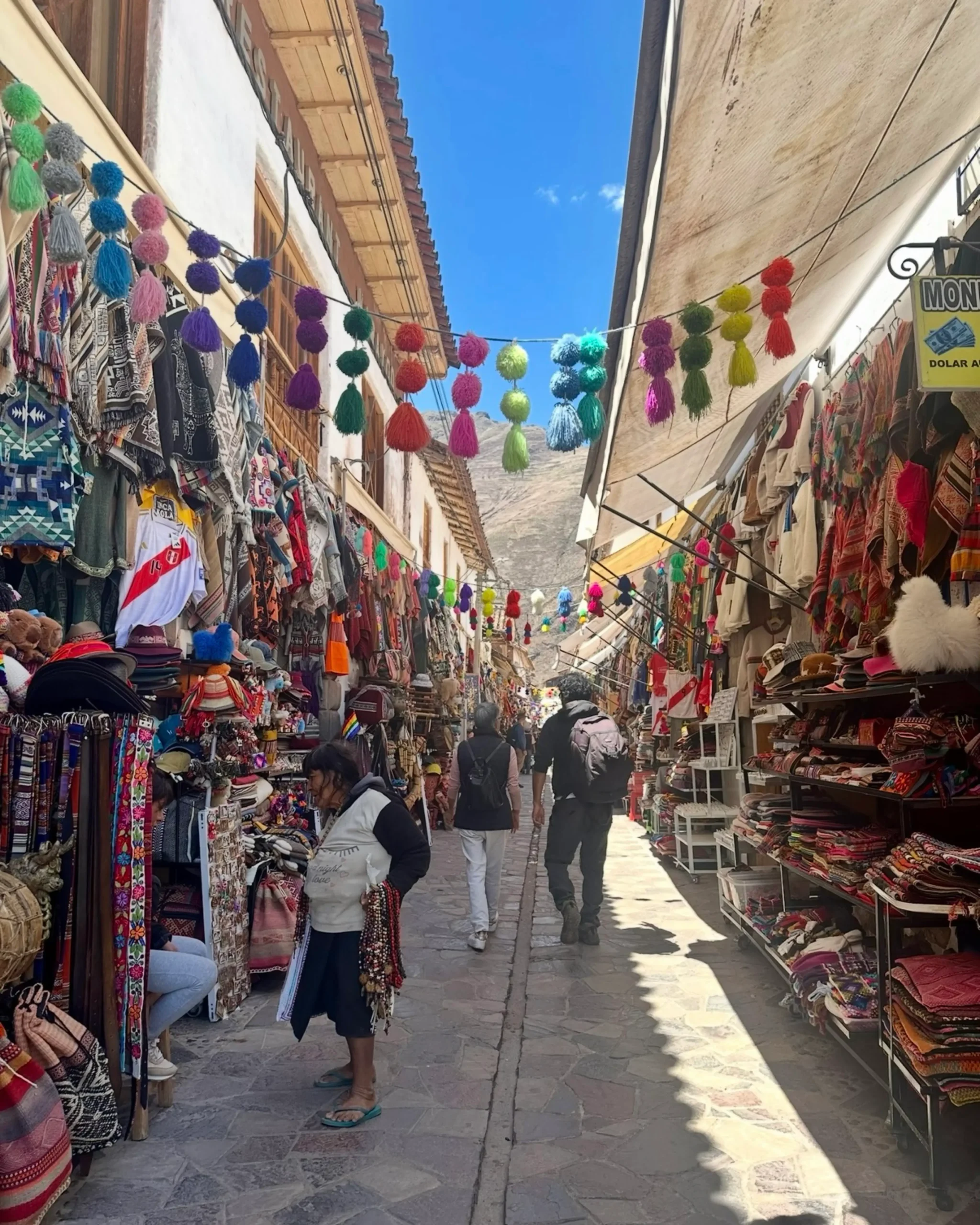
After exploring the market, we worked our way toward Avenida Mariscal Castilla. This lively, pedestrian-friendly street is lined with independent boutiques, craft shops, cafés, and restaurants. It offers a pleasant final stretch before looping back to Plaza Constitución.
By the time we returned, the sunlight had shifted across the church and new vendors and visitors had arrived. Community dogs wandered between the umbrellas, farmers continued selling their produce, and the mountains still towered above it all.The Pisac Market Stroll may cover only a kilometer, but it holds an extraordinary amount of color, culture, and Sacred Valley life.
Come prepared to shop, but leave time simply to observe the mountain light, the stone streets, the vivid textiles, and the traditions that continue to make Pisac feel so deeply alive.
“I am a Peruvian who, like a cheerful demon, proudly speaks in Christian and in Indian, in Spanish and in Quechua.”
José María Arguedas, The Peru Reader
THOUGHTFULLY RESEARCHED
Written by Jacqueline Miller, founder of Adventurous Ambles. Through firsthand travel, original photography, and detailed route research, Jacqueline creates walking guides, hiking resources, destination reading lists, and travel inspiration for curious travelers. Unless otherwise noted, all content and photography on Adventurous Ambles are original works protected by copyright.
KEEP WANDERING
More Adventurous Ambles in Peru
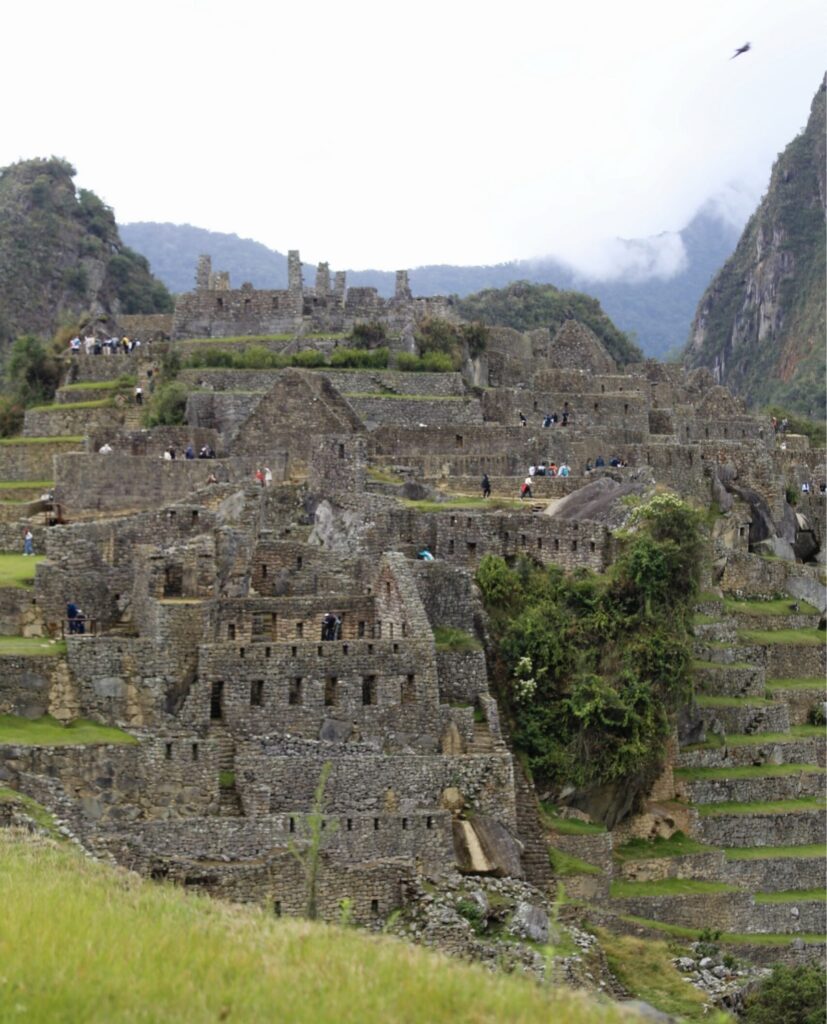
DESTINATION GUIDE
The Ultimate Peru Travel Starter Guide
Peru, South America
READING LIST
Read Your Way Through the Andes and Beyond
Peru, South America
Destination Reads
FREE WALKING TOUR
HIKING GUIDE
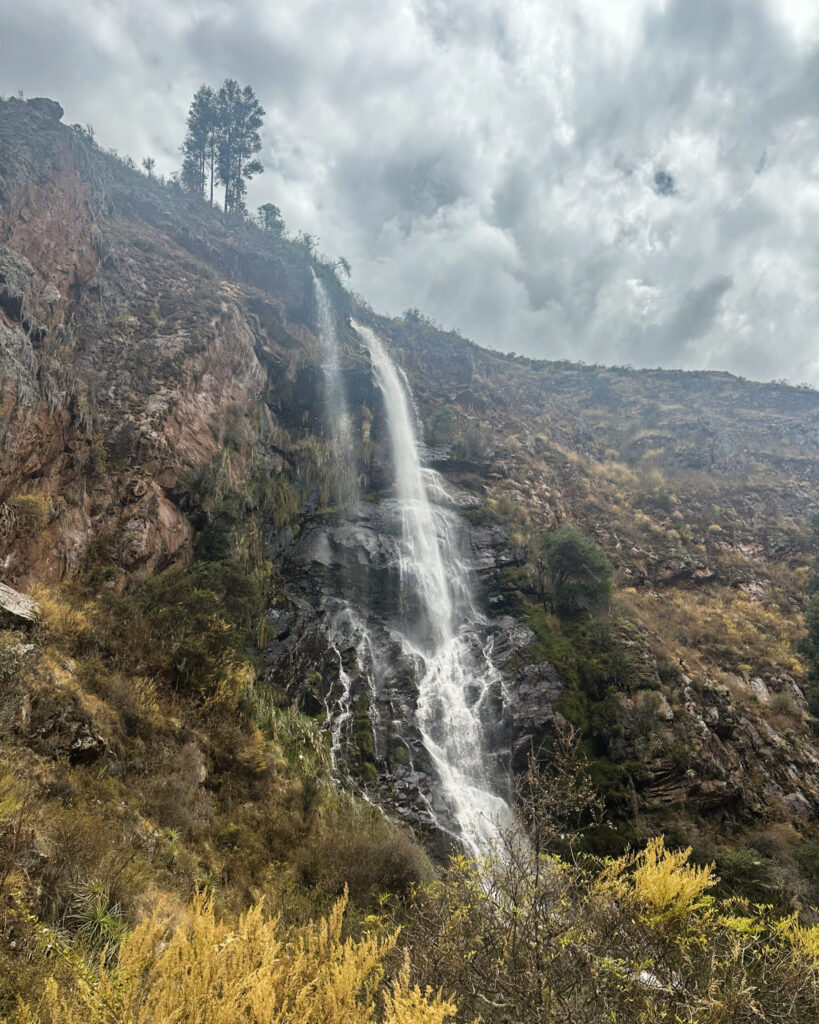
Arin Waterfalls: A Short Hike with Powerful Sacred Valley Energy
Arin, Sacred Valley, Peru, South America
HIKING GUIDE