FOLLOW AN ANCIENT PATH INTO THE SACRED VALLEY
Ñaupa Iglesia Hike
and a sacred site hidden beneath the mountains.
Walk into the mystery of Choquequilla
TIME
DIFFICULTY
Easy – Moderate
DISTANCE
ELEVATION
Quick Trail Notes
Sitio Arqueológico Ñaupa Iglesia; Near the community of Pachar, between Ollantaytambo and Urubamba in the Sacred Valley, Cusco, Peru
Facilities
Water Availability
Cell Service
Seasonal Closures
Dogs
What to Bring:
Read Along the Route
Read The White Rock by Hugh Thomson alongside this hike. Thomson blends Inca history with journeys to remote archaeological sites, making it a fitting companion for Ñaupa Iglesia’s secluded ruins, enigmatic stonework, and enduring sense of discovery.
FREE PRINTABLE GUIDE
Take the Ñaupa Iglesia hike with you.
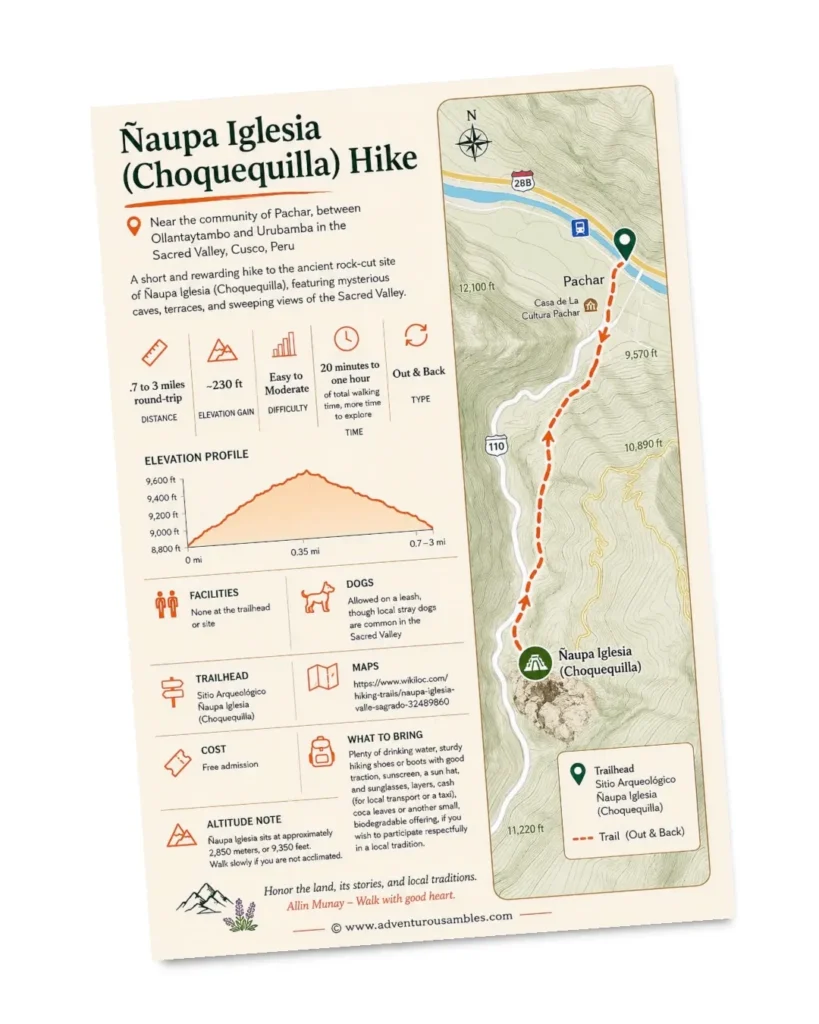
Save or print this Ñaupa Iglesia Hike map for an easy-to-follow guide to the ancient rock-cut site of Ñaupa Iglesia (Choquequilla) in Peru’s Sacred Valley. Use this printable guide to review the route, locate the trailhead, check distance and elevation, and find practical trail notes before setting out from Pachar to explore this mysterious archaeological site.
The water gathered in clear green pools between pale boulders, while eucalyptus trees and dense riverside shrubs formed a bright strip of vegetation along the canyon floor.
We followed the rough path toward the mountains, crossing the railroad tracks before beginning the climb. Trains may approach quickly here, so it is important to listen carefully, cross promptly, and avoid lingering on the tracks.
The landscape became drier as we moved away from the river. Golden grasses covered the slopes, prickly pear cactus grew beside the trail, and agave-like plants clung to the loose, rocky ground. Small birds and lizards inhabit these sunny Andean valleys, along with hummingbirds and the insects that pollinate flowering shrubs and cactus. We did not see much wildlife during our walk, but the rustling brush and occasional birdsong reminded us that the seemingly stark terrain was far from empty.
The trail soon reached a series of old terraces and stone stairs climbing directly up the mountainside. Some steps were broad and solid, while others were tilted, loose, or partly hidden beneath dry grass. The hike is less than a mile round trip, but the combination of steep stairs and high elevation made the brief ascent feel more substantial.
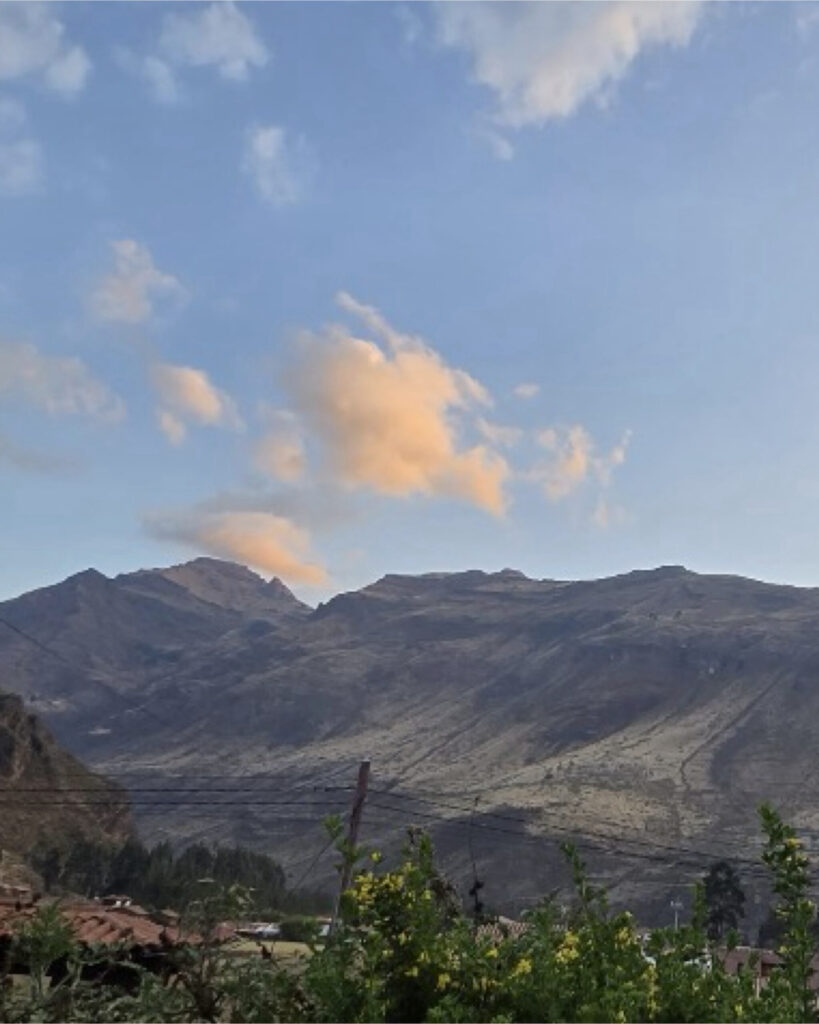
There was no reason to hurry. Each pause revealed another view across the canyon, where bands of red, gray, and green rock folded into one another beneath a brilliant blue sky. At the top, the mountainside seemed to open.
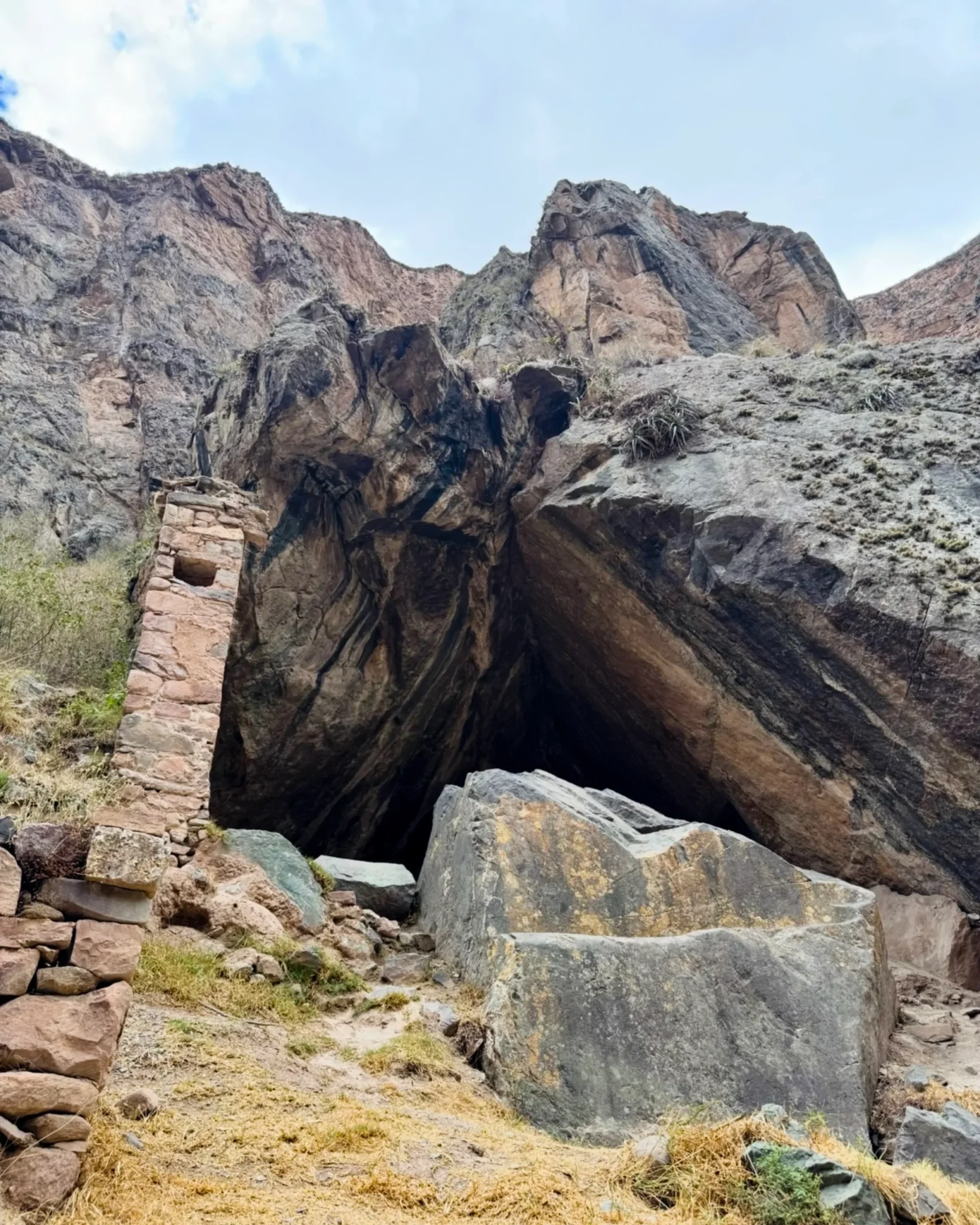
Ñaupa Iglesia sits beneath a massive natural rock overhang, hidden until you are almost upon it. Rough stone walls, small rooms, and rows of niches surround a dark ceremonial rock carved with astonishing precision. Its smooth surfaces and sharp geometric lines stand in dramatic contrast to the crumbling fieldstone structures around it.
Ñaupa Iglesia means “Old Church,” but this was not a church in the European sense. It was a huaca, a sacred place where the Incas recognized a powerful connection between the human and natural worlds. The central carved stone, known as Wacatrancana, contains stepped designs and recessed forms, while the surrounding enclosure includes trapezoidal double-jamb niches associated with important ceremonial spaces. The site has also been interpreted as a place used to observe solar events, including solstices and equinoxes.
Fresh and dried flowers rested at the foot of the altar during our visit. Their faded reds, purples, yellows, and greens stood out against the dark stone, evidence that Ñaupa Iglesia remains a place of reverence rather than simply an abandoned ruin.
Beyond the altar, we wandered carefully among the small stone rooms. Their doorways were so low that we had to crouch to pass through them. Looking through the niches and openings, we caught framed glimpses of the surrounding mountains, as though the landscape itself were part of the architecture.
The ruins are fragile, with eroded mortar and partially collapsed walls, so we avoided climbing or leaning on the structures. Instead, we sat quietly beneath the enormous rock shelter, watching clouds pass over the canyon and listening to the wind move through the dry grasses.
Although the walking portion of the outing can be completed quickly, Ñaupa Iglesia deserves more than a hurried visit. Between its secluded setting, mysterious carvings, high-Andean vegetation, and sweeping canyon views, the hike felt like far more than a short climb.
Hugh Thomson, The White Rock
THOUGHTFULLY RESEARCHED
Written by Jacqueline Miller, founder of Adventurous Ambles. Through firsthand travel, original photography, and detailed route research, Jacqueline creates walking guides, hiking resources, destination reading lists, and travel inspiration for curious travelers. Unless otherwise noted, all content and photography on Adventurous Ambles are original works protected by copyright.
More Adventurous Ambles in Peru
DESTINATION GUIDE
The Ultimate Peru Travel Starter Guide
Peru, South America
READING LIST
Read Your Way Through the Andes and Beyond
Peru, South America
Destination Reads
FREE WALKING TOUR
HIKING GUIDE
Arin Waterfalls: A Short Hike with Powerful Sacred Valley Energy
Arin, Sacred Valley, Peru, South America
CITY WALK