EXPLORE TORONTO’S CASTLE ON FOOT
Casa Loma Castle Walk
This Toronto Walk Comes With Chandeliers and Secret Passages
TIME
~2 – 3 hours
DIFFICULTY
DISTANCE
~2 miles
ELEVATION
Quick Trail Notes
Location
1 Austin Terrace, Toronto, ON M5R 1X8, Canada (Midtown Toronto, just north of the Annex neighborhood).
Facilities
Water Availability
Cell Service
Seasonal Closures
Digital floor plans and a multi-language multimedia audio guide app are included with admission. Audio is available in English, French, Spanish, and Chinese.
Dogs
What to Bring:
Read Along the Route
Pair your Casa Loma walk with Toronto: Biography of a City by Allan Levine. As you wander through grand rooms, climb tower stairs, and follow the underground tunnel, the book offers context for the growing city beyond the castle walls. It’s a chance to connect one family’s extraordinary home with Toronto’s much larger story.
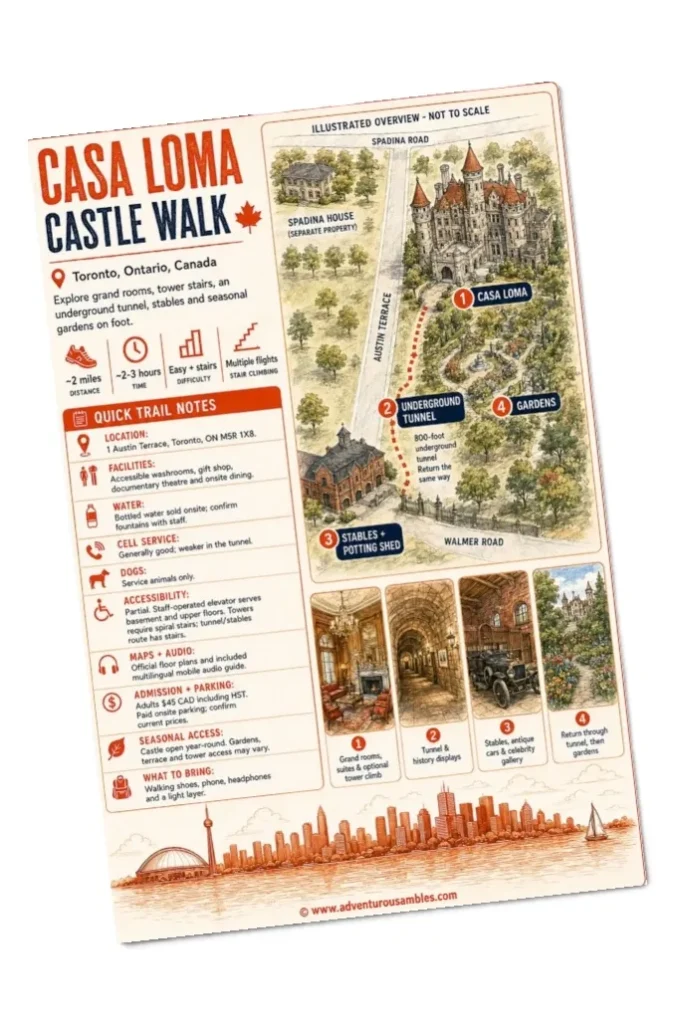
FREE PRINTABLE GUIDE
Take the castle walk with you.
Save or print this Casa Loma walking map before your visit. Explore Toronto’s iconic castle while discovering its grand rooms, tower stairs, underground tunnel, historic stables, seasonal gardens, and sweeping city views. Use this printable guide to plan your route, locate each featured stop, review helpful trail notes, and make the most of a memorable visit to Casa Loma.
Between the rooms, tower stairs, underground tunnel, stables, and gardens, our visit turned into quite a walk. We stopped often, doubled back for another look, and kept finding reasons to continue exploring. It was a good reminder that walking in a city doesn’t always mean following its streets.
There was plenty to admire before we even reached the entrance. Stone towers rose above the trees, while pointed rooftops and tall, arched windows drew our eyes upward. Casa Loma looked centuries older than the city around it, although this Gothic Revival mansion was built in the early 1900s.
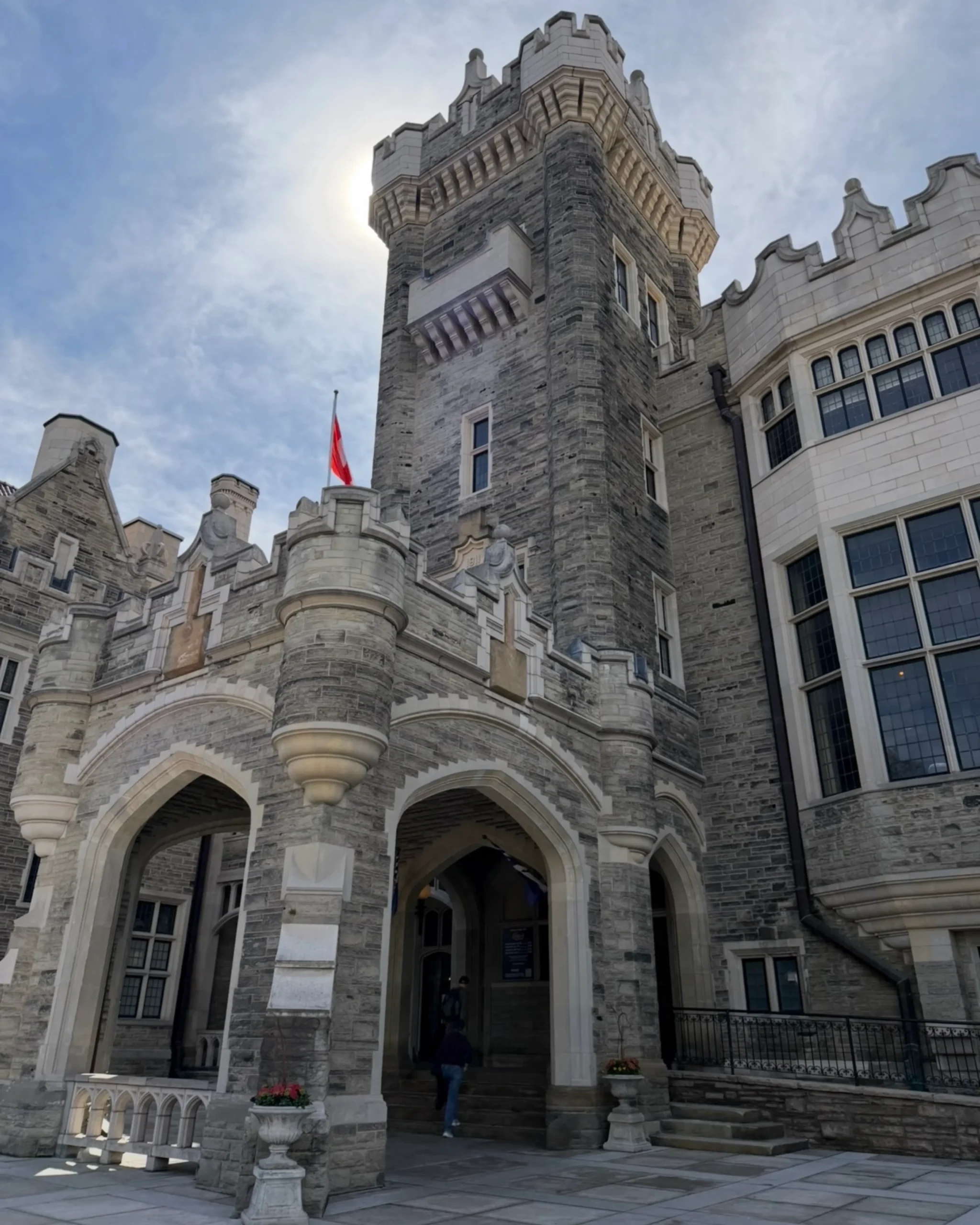
Sir Henry Pellatt commissioned architect E. J. Lennox to design the home, inspired by the architecture he had admired in Europe. Construction began in 1911 and took three years, costing approximately $3.5 million. Its name means “Hill House” in Spanish, which seemed a rather modest description of the building in front of us. Despite the expense, the Pellatts left in 1924 as debts and financial setbacks caught up with them. Toronto took ownership in 1933 over unpaid taxes.
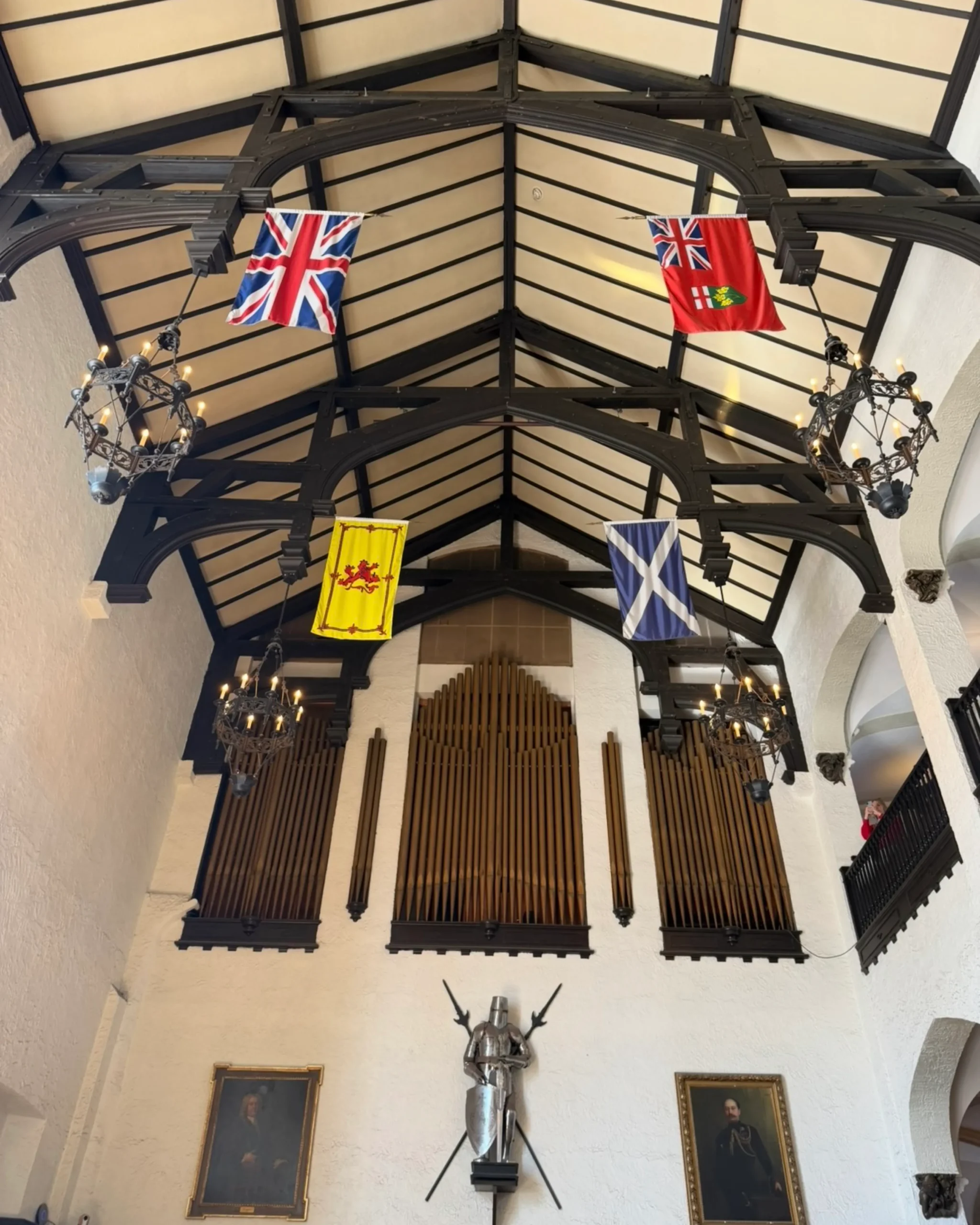
Knowing that history gave us something to think about as we stepped into the Great Hall. Timber beams crossed the soaring 60-foot ceiling, flags hung overhead, and enormous Wurlitzer organ pipes rose above a suit of armor. We stopped almost immediately to look up. It was difficult to picture this as someone’s entrance hall.
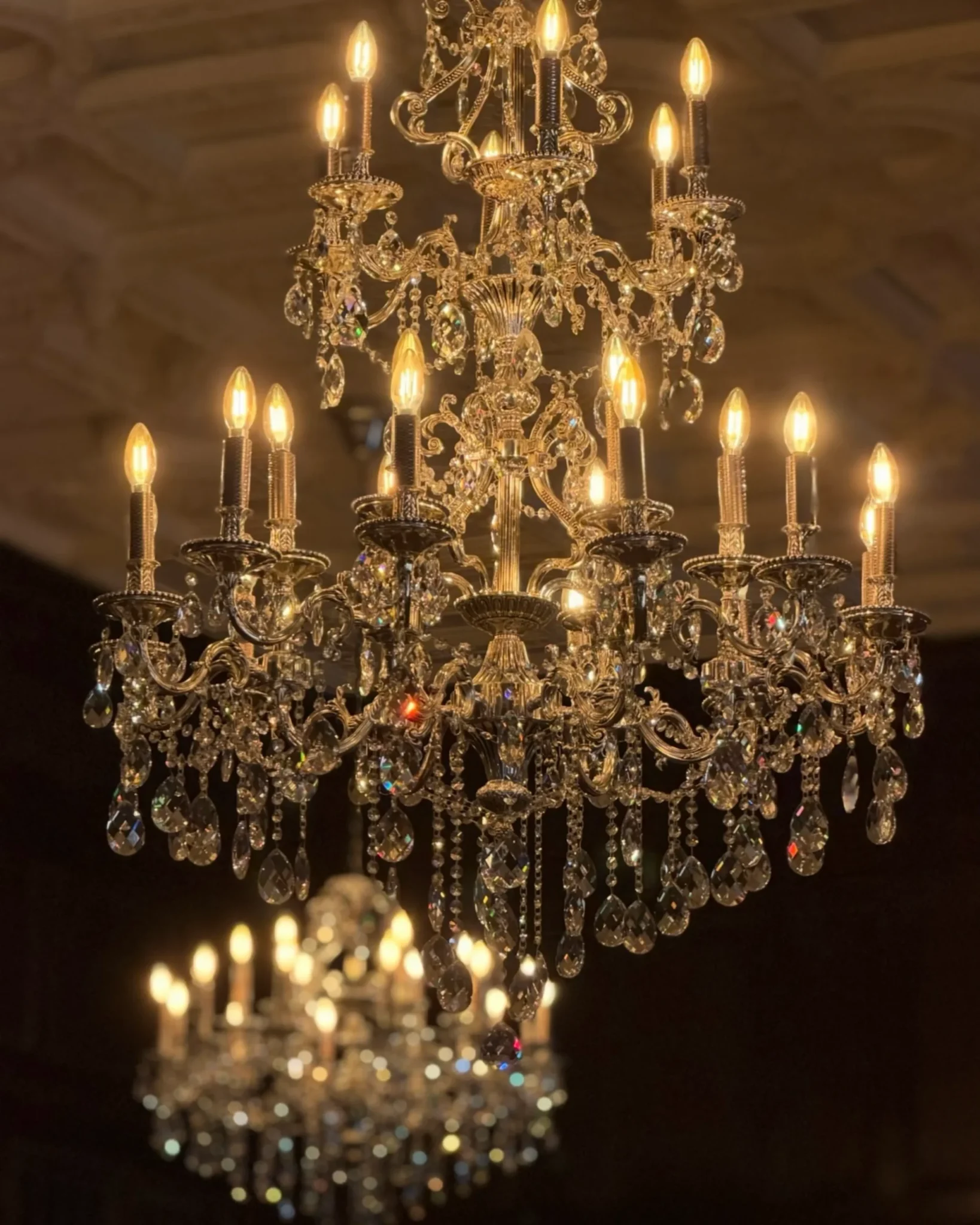
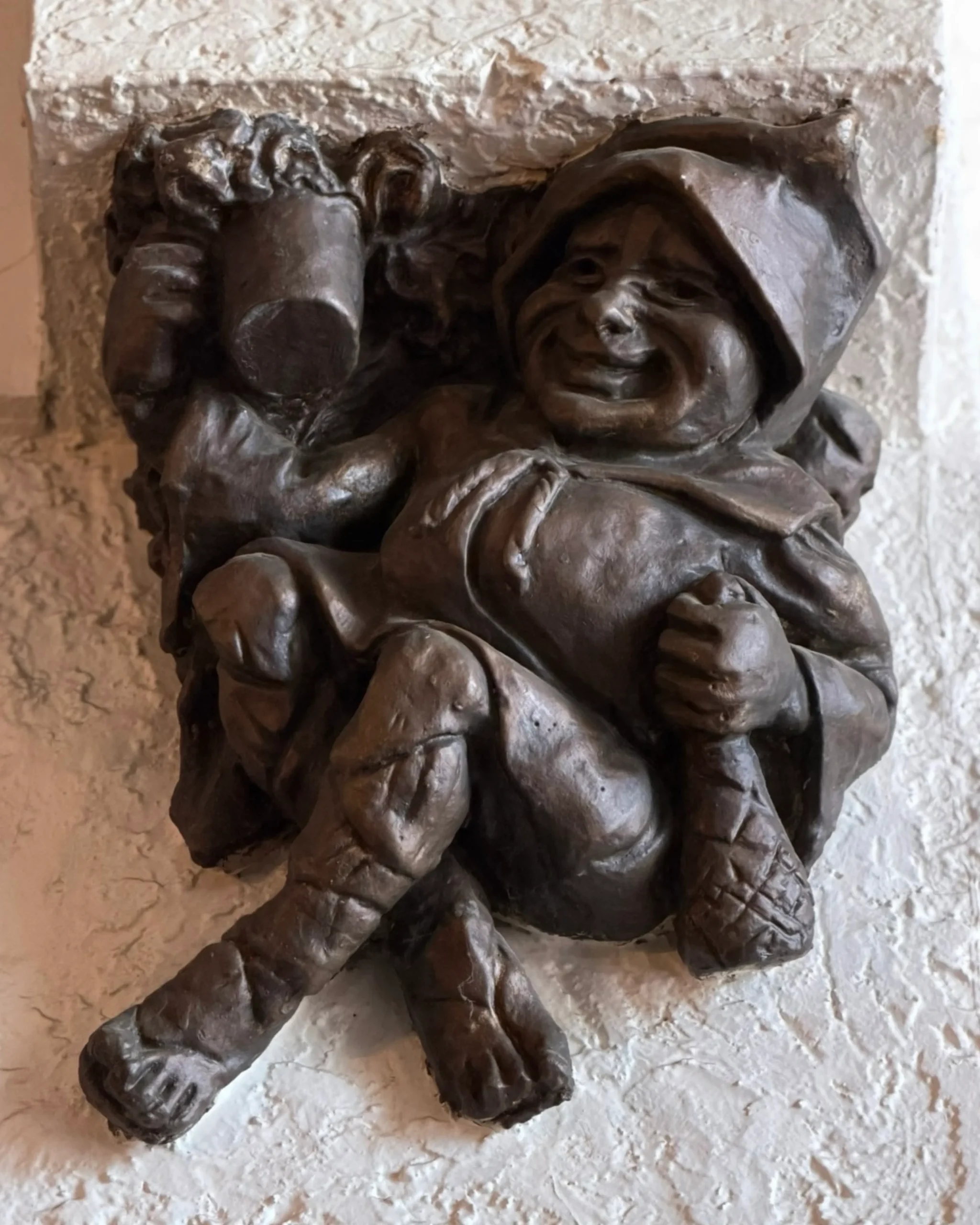
As we continued through the rooms, though, the smaller details began to hold my attention. Carved wood surrounded doorways and bookcases. Chandeliers reflected in glass. Little sculpted figures appeared on the walls, including one cheerful fellow holding a mug. More than once, I walked a few steps, noticed something, and turned back.
The included audio guide suited that kind of wandering. Hearing about the Pellatts’ lives helped us imagine what it might have been like to call Casa Loma home. We could pause to take a photo or examine a carving, then resume listening when we were ready. There was no need to keep up with anyone else’s pace.
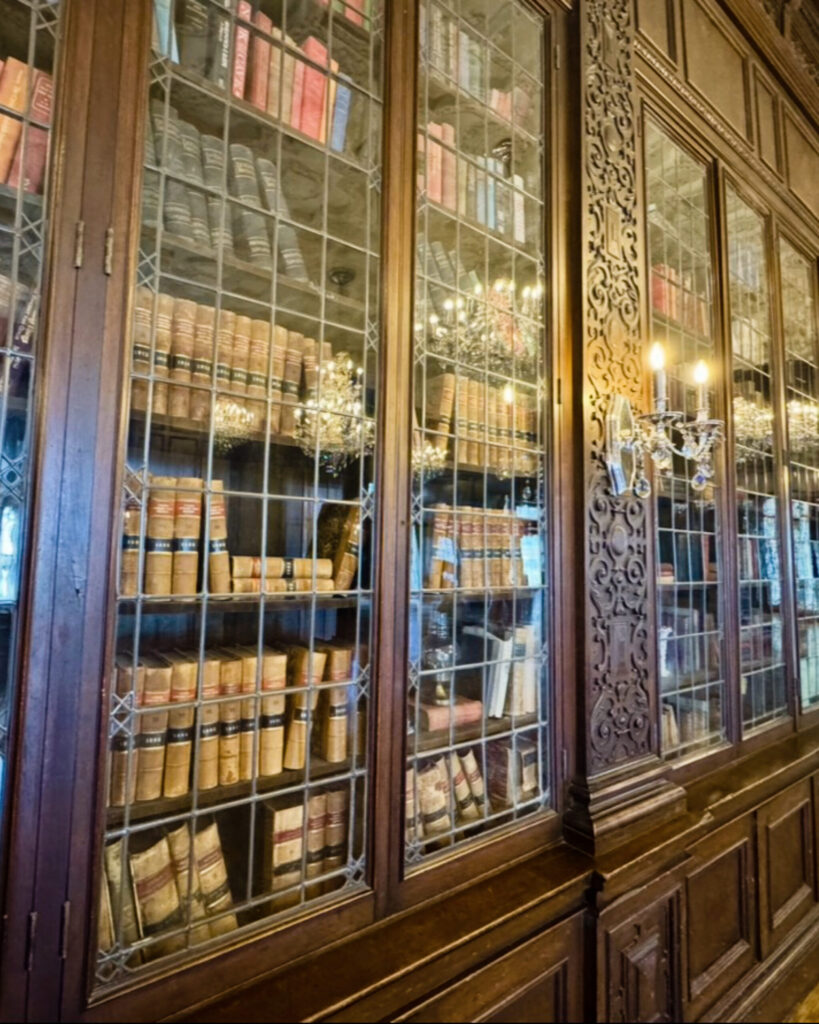
Naturally, I slowed down in the library because what bibliophile doesn’t love a room full of books? Tall, glass-fronted bookcases held rows of old books, with carved wood between them and glittering chandelier light reflected in the panes. It was a classic, fairytale library.
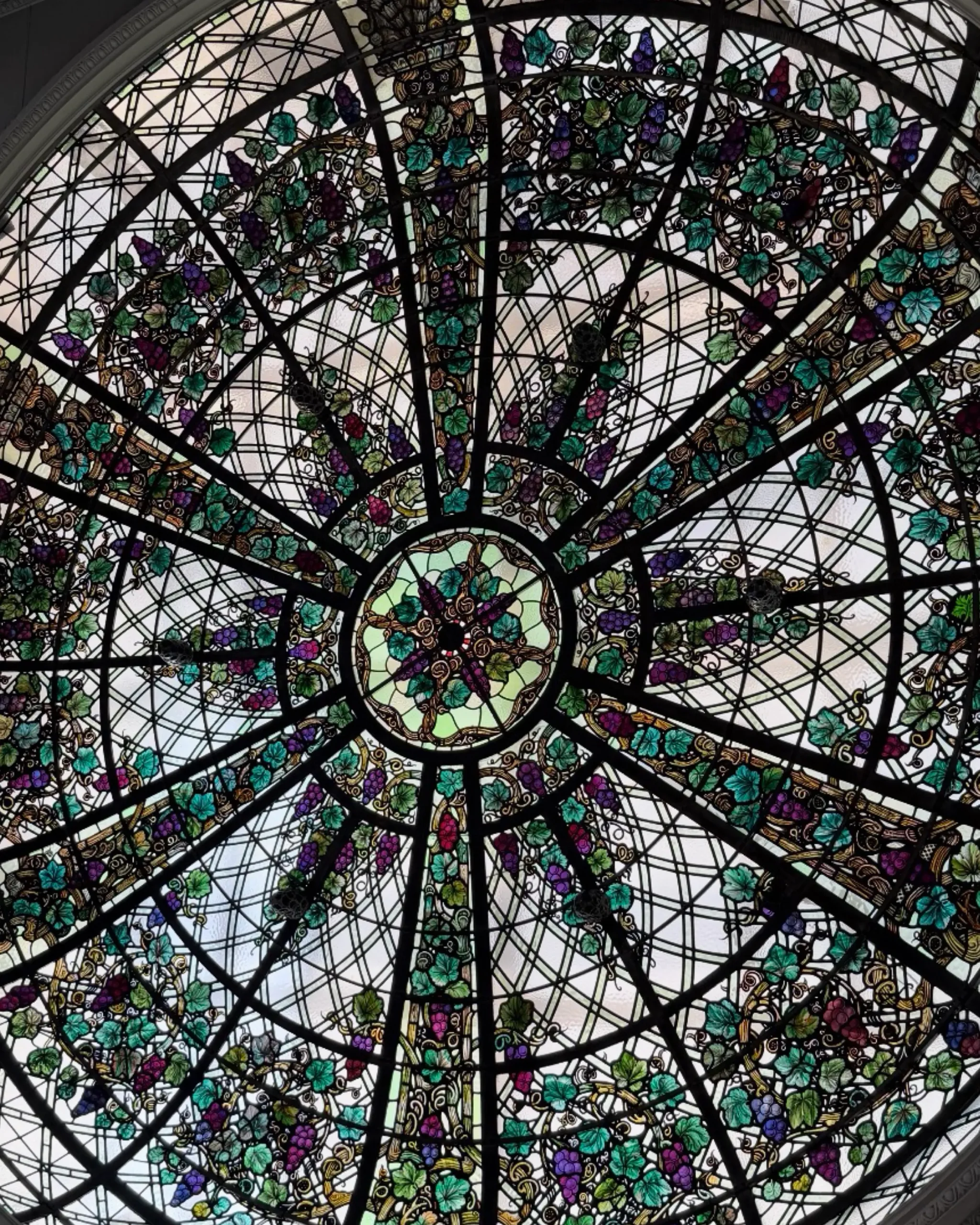
From there, the conservatory offered a fresh change. After the darker, wood-paneled rooms, it felt bright and open, with tall windows, lush greenery, and a fountain. The ornate Italian stained-glass ceiling gave us another reason to look up. Walking through the castle required paying attention in every direction, including above our heads.
Casa Loma also has less obvious connections between its floors. Concealed doors on either side of the study’s fireplace lead to passageways, one toward the upper floor and another toward the basement. Details like these made me curious about how the house worked, beyond the grand rooms visitors came to admire.
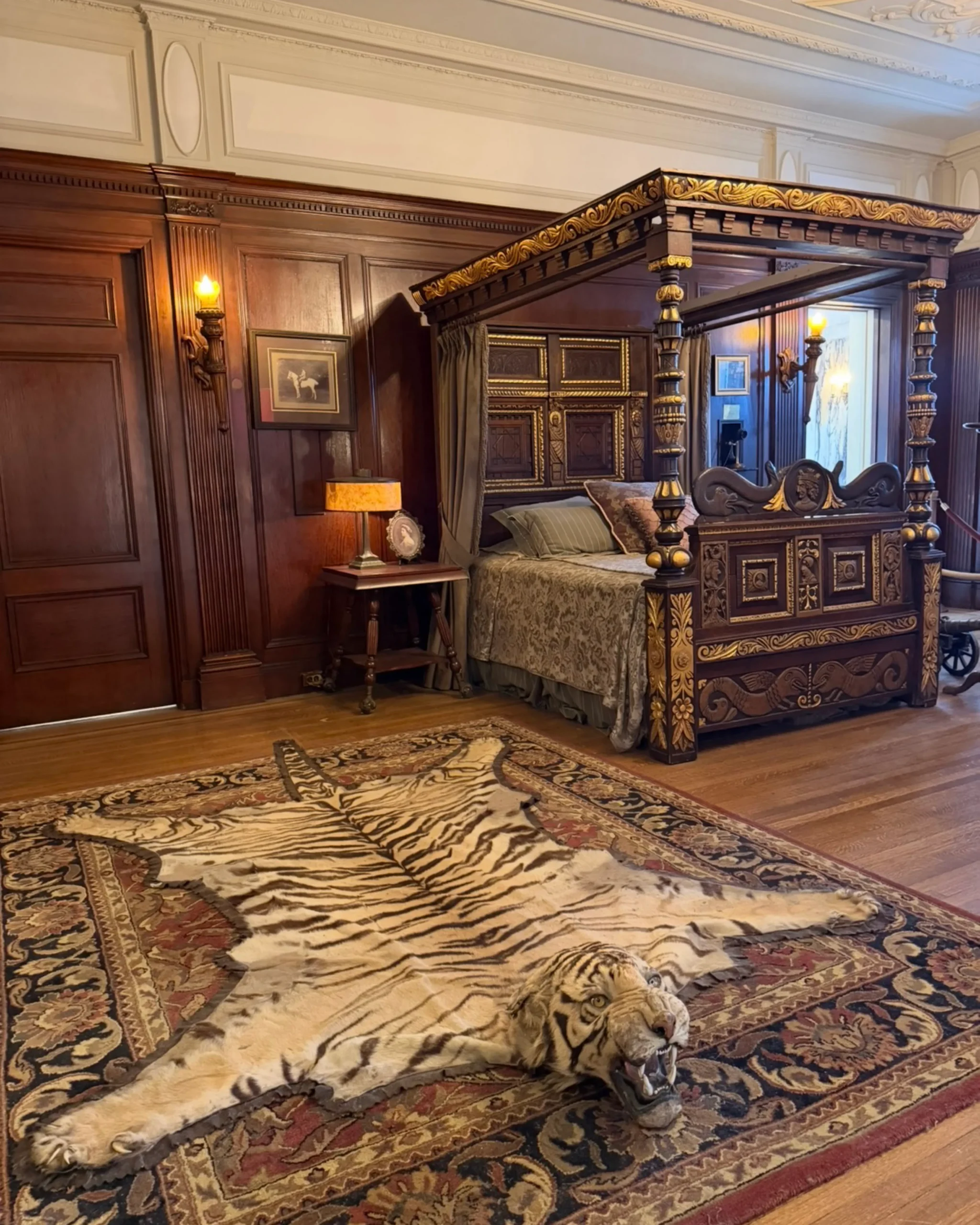
Upstairs, the bedrooms and sitting rooms felt more personal, although hardly ordinary. One room had an elaborately carved four-poster bed and very dramatic tiger-skin rug. Another had pale blue curtains and delicate furnishings. Behind a desk stood a gorgeous Chinoiserie lacquered screen covered in shimmering birds and flowers.
We started wondering about the practical side of living here. Which rooms did the Pellatts use most? How many people did it take to look after the house? And how far would you have to walk if you left something on the wrong floor?
We had time to consider that last question while climbing toward the towers. The spacious rooms gave way to narrower passages and steep stairs, so we took our time. This was the part of the visit where we were particularly glad we had worn comfortable shoes.
At the top, Toronto came back into view. We looked across the castle’s red rooftops and stone turrets toward trees and city buildings. After becoming absorbed in the interiors, it was useful to see where we were again. Looking down also helped us connect the rooms we had walked through with the shape of the building.
Next, we headed down to the underground tunnel leading to the stables. The passage runs for 800 feet, making the trip there and back a substantial part of the walk. Along the way, we paused at the photographs in Toronto’s Dark Side Exhibit, which shifted our attention from life inside the estate to the city’s wider history.
During our visit, red and blue lighting and orchestral music gave the corridor a slightly eerie atmosphere. It was quite a contrast to the conservatory’s bright windows. I hadn’t expected a house tour to take us so far underground, and following the passage made the estate feel much larger than it had from the entrance.
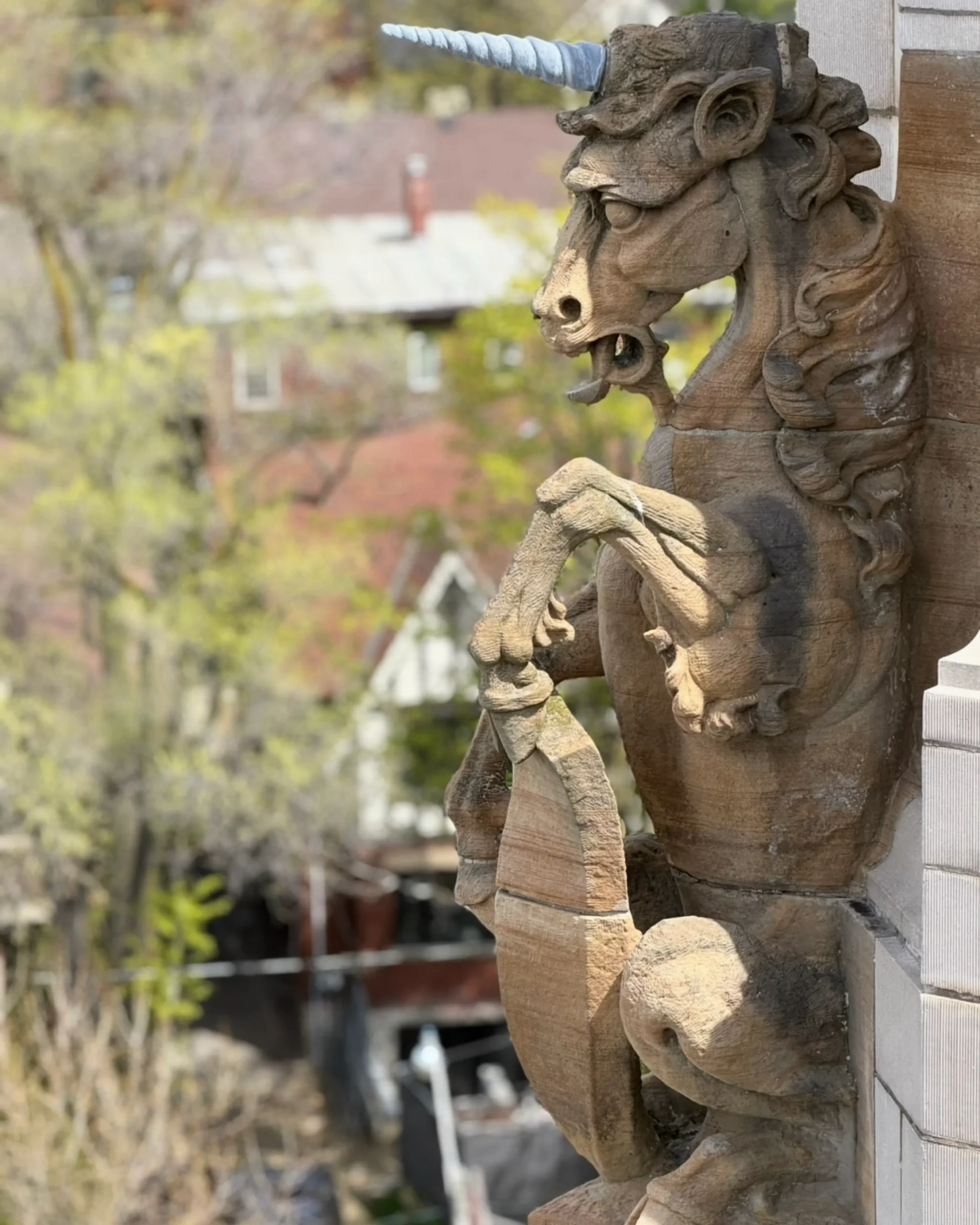
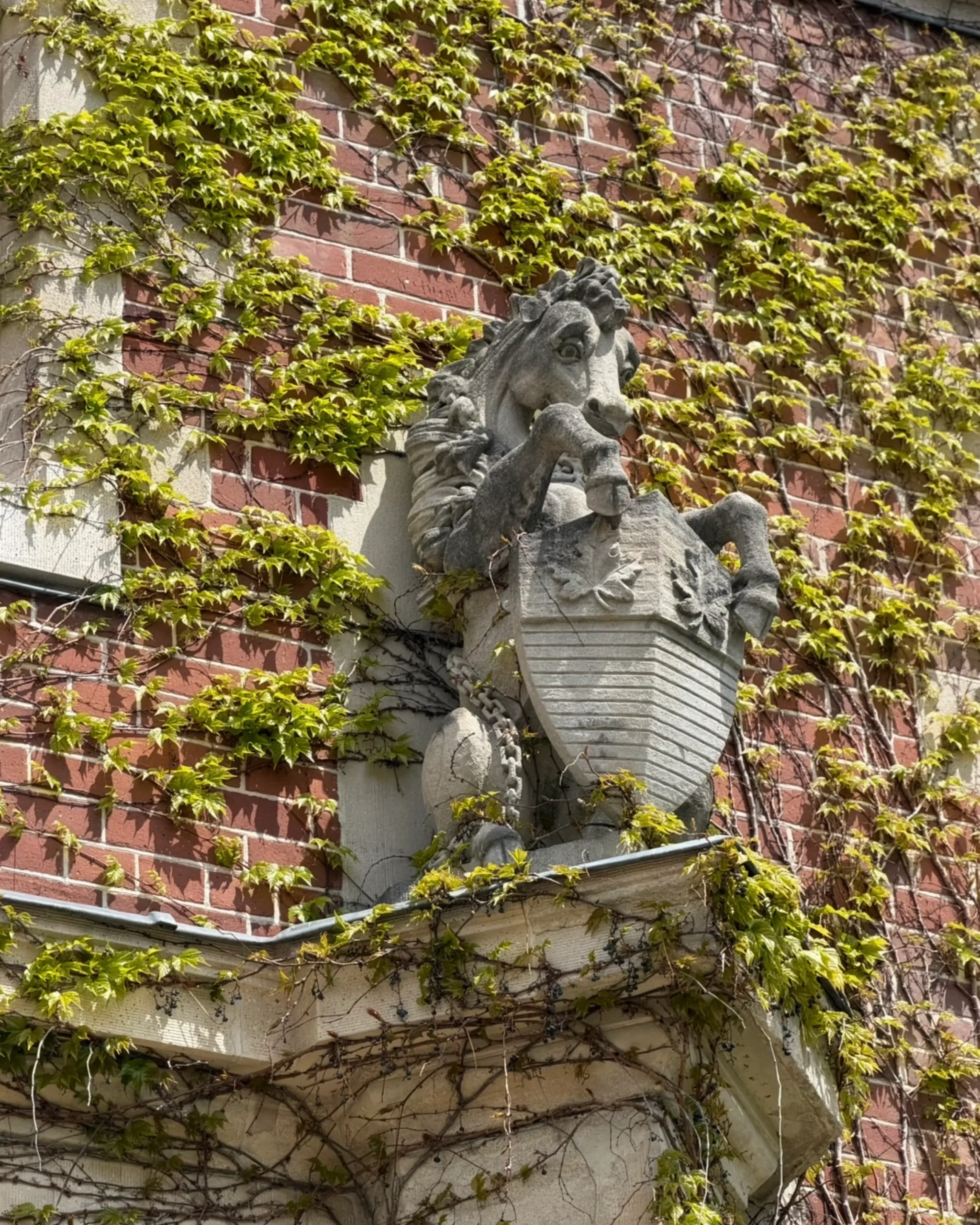
The stables were impressive in their own right. By then, perhaps we shouldn’t have been surprised that the horses had elaborate accommodations, too. Even outside, the details were worth a pause. A stone horse holding a shield stood against an ivy-covered wall, carrying the castle’s decorative touches into a very different part of the property.
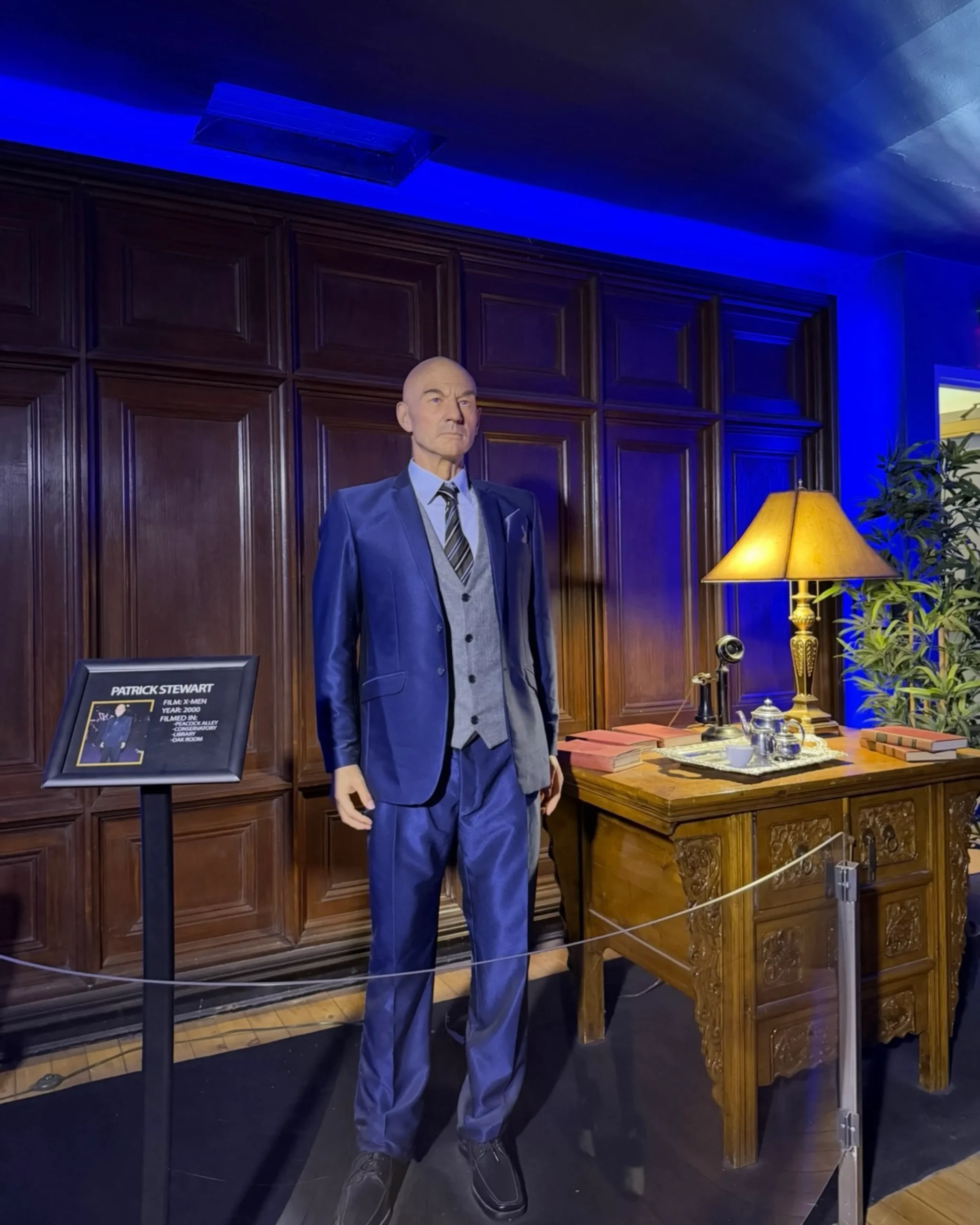
The film displays provided another unexpected stop. Casa Loma has served as a location for hundreds of productions including X-Men, Chicago, and The Handmaid’s Tale. The Backstage Celebrity Gallery features remarkably lifelike wax figures connected with its screen history. After walking through the rooms and passageways ourselves, we could understand why filmmakers would choose this landmark location.
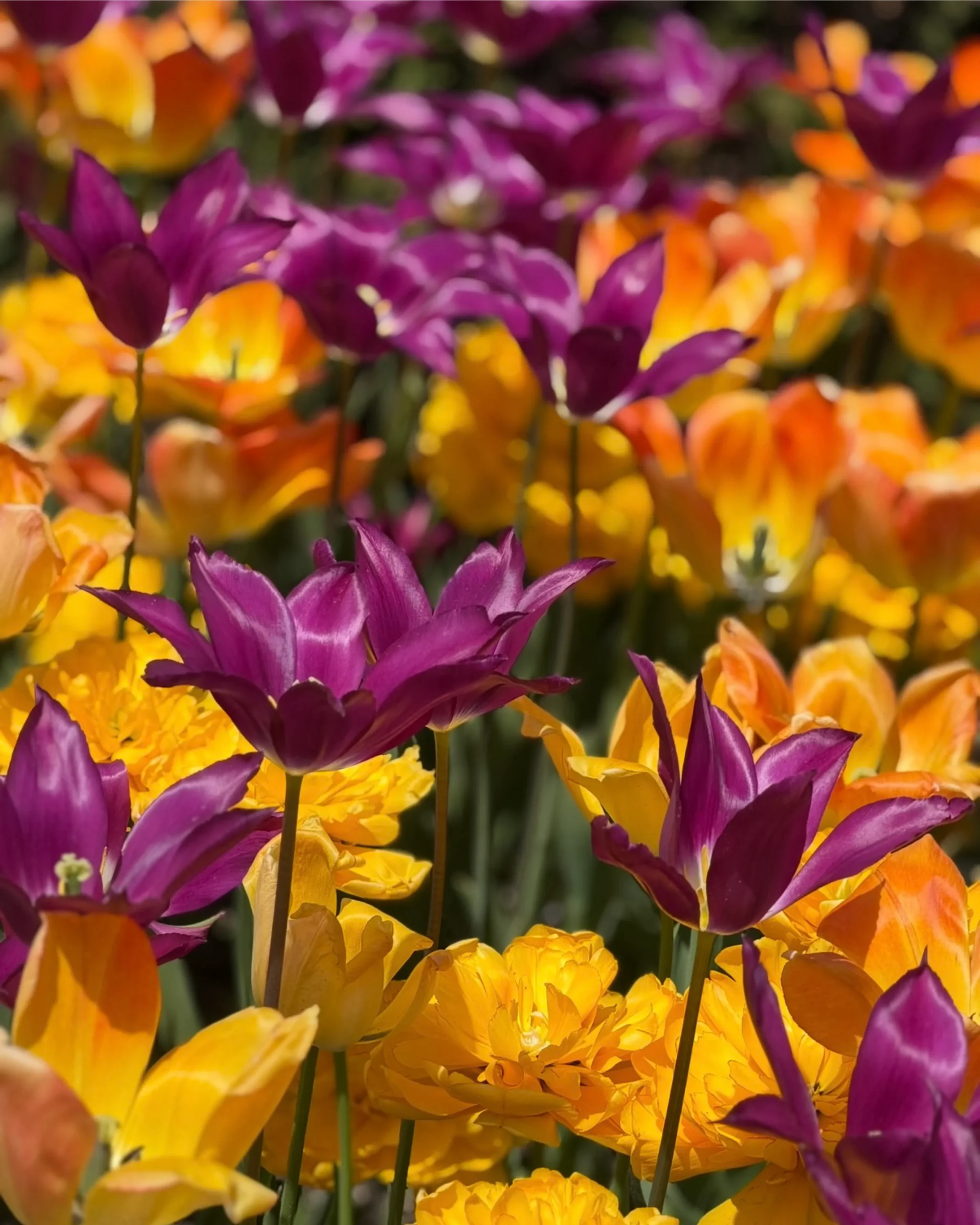
Eventually, we retraced our steps through the tunnel and spent some time in the gardens. Tulips added bright patches of color, and white narcissus stood above the green foliage. It felt good to be outside again, with room to stroll and look back at the castle from different angles.
Near the fountain, we paused to trace some of the places we had explored. We had been up among the rooftops, through the furnished rooms, and beneath the grounds. Seeing the building again after all that walking gave us a much better sense of its size.
By the time we finished, we had covered about two miles without setting out on a traditional trail. Some of that distance came from climbing and crossing the estate. Some came from simply being curious enough to go back for another look.
If you visit Casa Loma, wear comfortable shoes and give yourself time to explore beyond the main rooms. The tunnel, stables, and gardens add a great deal to the experience.
Allan Levine, Toronto: Biography of a City
THOUGHTFULLY RESEARCHED
Written by Jacqueline Miller, founder of Adventurous Ambles. Through firsthand travel, original photography, and detailed route research, Jacqueline creates walking guides, hiking resources, destination reading lists, and travel inspiration for curious travelers. Unless otherwise noted, all content and photography on Adventurous Ambles are original works protected by copyright.
More Adventurous Ambles in Toronto

DESTINATION GUIDE
READING LIST
FREE WALKING TOUR
Downtown Toronto, Ontario, Canada