DISCOVER CANADA’S URBAN HEART
Toronto,
Canada
Get to know Toronto through its distinctive neighborhoods, cultural landmarks,
lively streets, and lakefront views.
TORONTO TRAVEL GUIDE
Save This
Before
Visiting
Toronto
A Brief History of Toronto
There’s something wonderfully walkable about Toronto. One moment you’re wandering through historic brick laneways in the Distillery District, the next you’re picnicking beside Lake Ontario or browsing bookstores in Kensington Market. Toronto feels both international and deeply local at the same time. It’s a city where more than 200 cultures and languages shape the food, festivals, and everyday rhythm of life.
Long before Toronto became Canada’s largest and most diverse city, the area along the shores of Lake Ontario was home to Indigenous peoples including the Anishinaabe, Haudenosaunee, and Wendat nations. The name “Toronto” is believed to come from the Mohawk word tkaronto, often translated as “where there are trees standing in the water,” referring to fishing stakes once used in the region.
Because of its location along important trade and travel routes, the area became a key gathering and transportation corridor long before European settlement. In the late 1700s, the British established the Town of York here as the capital of Upper Canada. During the War of 1812, York was attacked by American forces before eventually rebuilding and growing into an important commercial center.
In 1834, the town officially became the City of Toronto. Over the next two centuries, waves of immigration from around the world helped shape the city into one of the most multicultural places on the planet. Today, Toronto blends historic neighborhoods, modern skyscrapers, vibrant cultural communities, waterfront trails, and expansive green spaces into a city that feels both global and distinctly Canadian.
What to Know
Before You Go
01 | ARRIVAL
Visas & Entry
Getting into Canada is usually straightforward, but entry requirements depend on your citizenship and how you arrive.
U.S. citizens generally need a valid passport but do not require a visitor visa or Electronic Travel Authorization. Depending on nationality, other visitors may need either a visitor visa or an eTA before flying into Canada. Carry proof of onward or return travel, and review current entry requirements before your trip.
02 | WHEN TO GO
Best Time to
Visit
03 | IN YOUR BAG
What to Pack
✓ Comfortable walking shoes
✓ Reusable water bottle
✓ Small daypack or backpack
✓ Portable phone charger
✓ Lightweight rain jacket or umbrella
✓ Sweater, fleece, or easy layers
✓ Sunglasses and sunscreen
✓ Hat for waterfront walks
✓ Breathable clothing for summer
✓ Bug spray for parks and islands
✓ Insulated winter coat
✓ Gloves, scarf, and warm winter boots
✓ Thermal base layers in winter
✓ Lip balm and moisturizer
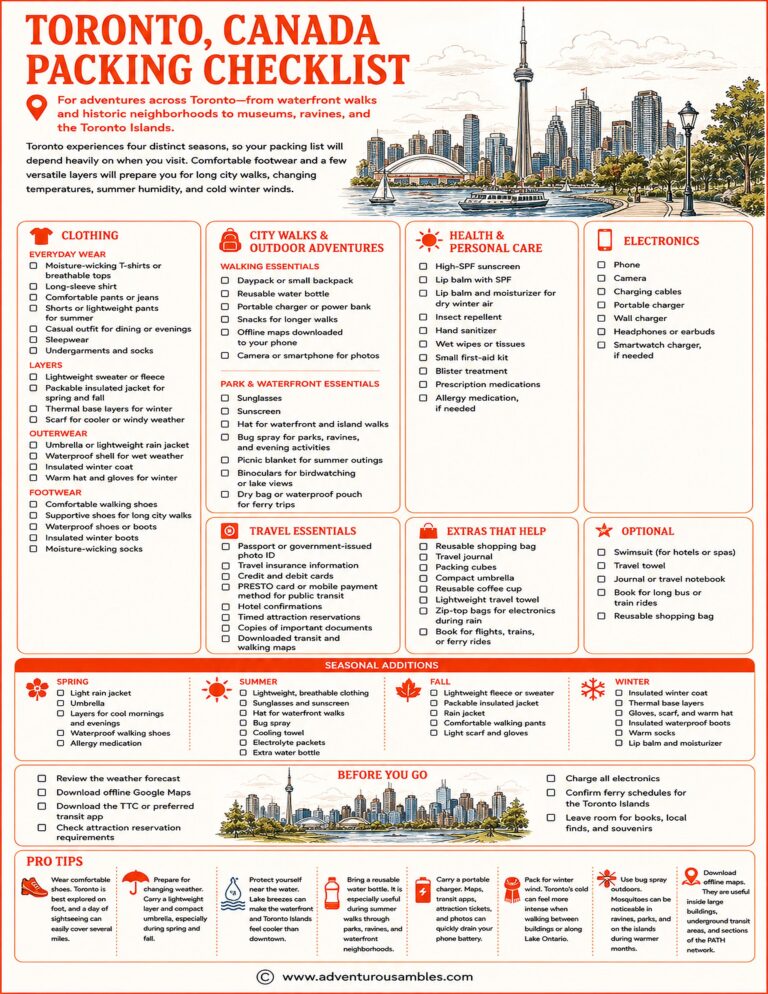
Planning a Toronto getaway? This printable Toronto, Canada Packing Checklist covers everything you’ll need for waterfront walks, city sightseeing, seasonal weather, and adventures around the Toronto Islands. Download, print, and pack confidently for your trip!
04 | BUDGET
Average Costs
Compare travel & stays
05 | ON THE MOVE
Getting
around
Toronto
06 | THE BEST WAY
On foot
Follow historic streets through Old Town, wander beneath glass towers along the PATH, browse independent shops in Kensington Market, or trace Lake Ontario along the Harbourfront. Then take the ferry to the Toronto Islands, where car-free paths trade downtown noise for skyline views and lake breezes.
USEFUL LINKS
Walks, trails &
destinations
07 | QUICK BASICS
Currency, language & time zone
CURRENCY
LANGUAGE
TIME ZONE
Eastern Time. The same time zone as New York City, Washington, D.C., and Montréal: EST or EDT, depending on the season.
Local essentials
08 | GOOD TO KNOW
Frequently Asked Questions
What is the best time of year to visit Toronto?
Late spring through early fall, particularly May through October, is a popular time to visit Toronto. The weather is generally comfortable for walking, outdoor dining, festivals, and waterfront activities. Fall brings colorful foliage and cooler temperatures, while winter offers holiday events and fewer tourists but can be cold and snowy.
Is Toronto a walkable city?
Yes. Many of Toronto’s central neighborhoods and attractions can be explored on foot. Walking is especially enjoyable around downtown, the Harbourfront, Kensington Market, Chinatown, the Distillery District, and Queen Street West. Because Toronto is a large city, visitors will usually want to combine walking with public transportation.
Do you need a car when visiting Toronto?
You generally do not need a car if you are staying in central Toronto. The city’s subway, streetcars, and buses connect downtown with many popular neighborhoods and attractions. Parking can be expensive, and traffic can make driving inconvenient. A car may be useful for excursions outside the city, although many popular day trips are also available through organized tours or regional transportation.
Can you visit Niagara Falls as a day trip from Toronto?
Yes. Niagara Falls is one of the most popular day trips from Toronto and is approximately two hours away, depending on transportation and traffic. Visitors can travel by car, regional train or bus, or organized tour. A full day allows time to see the falls and explore some of the surrounding attractions.
Are the Toronto Islands worth visiting?
Yes. The Toronto Islands provide beaches, walking and cycling paths, green spaces, and some of the best skyline views in the city. Ferries connect the islands with downtown Toronto. They are especially enjoyable during the warmer months, although ferry schedules and island services may be more limited outside the main visitor season.
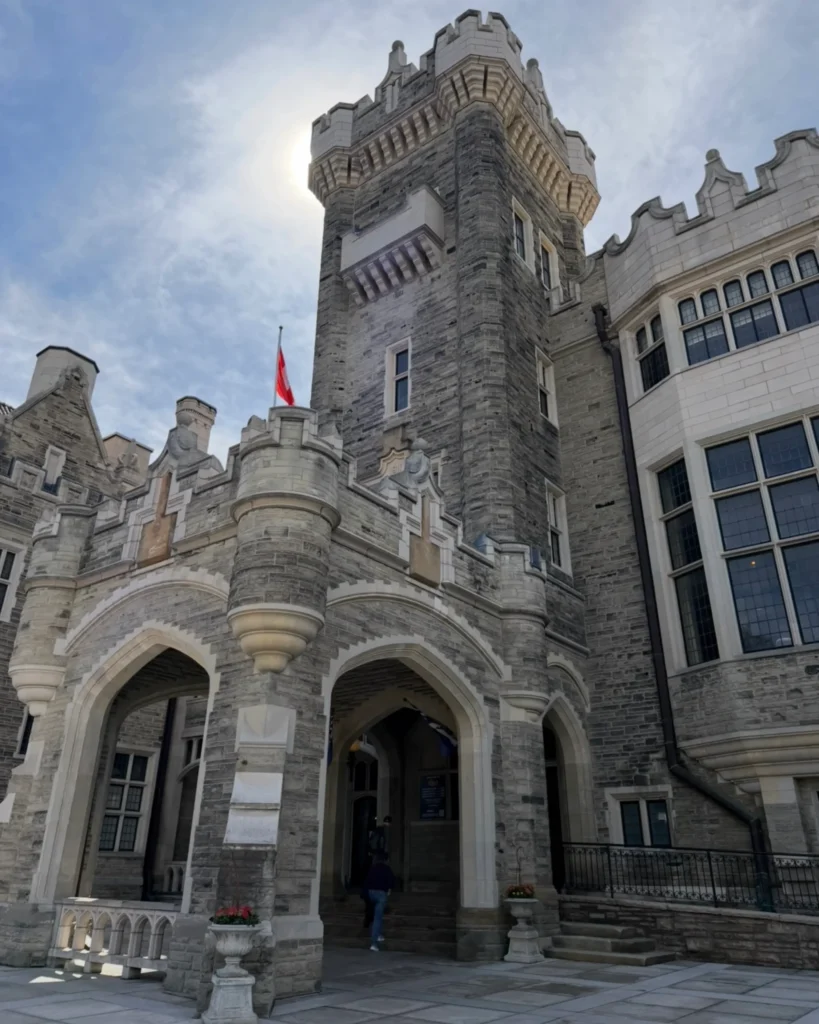
Wander beneath the towers, then look closer at the historic stonework hiding between them. Follow a waterfront path beside Lake Ontario, browse a neighborhood bookstore, and let the city’s streetcars carry you somewhere unexpected.
Toronto reveals itself through the people, neighborhoods, and small discoveries that turn an ordinary walk into part of the story.
Michael Ondaatje · In the Skin of a Lion
THOUGHTFULLY RESEARCHED
Written by Jacqueline Miller, founder of Adventurous Ambles. Through firsthand travel, original photography, and detailed route research, Jacqueline creates walking guides, hiking resources, destination reading lists, and travel inspiration for curious travelers. Unless otherwise noted, all content and photography on Adventurous Ambles are original works protected by copyright.
KEEP WANDERING
More Adventurous Ambles in Toronto

READING LIST
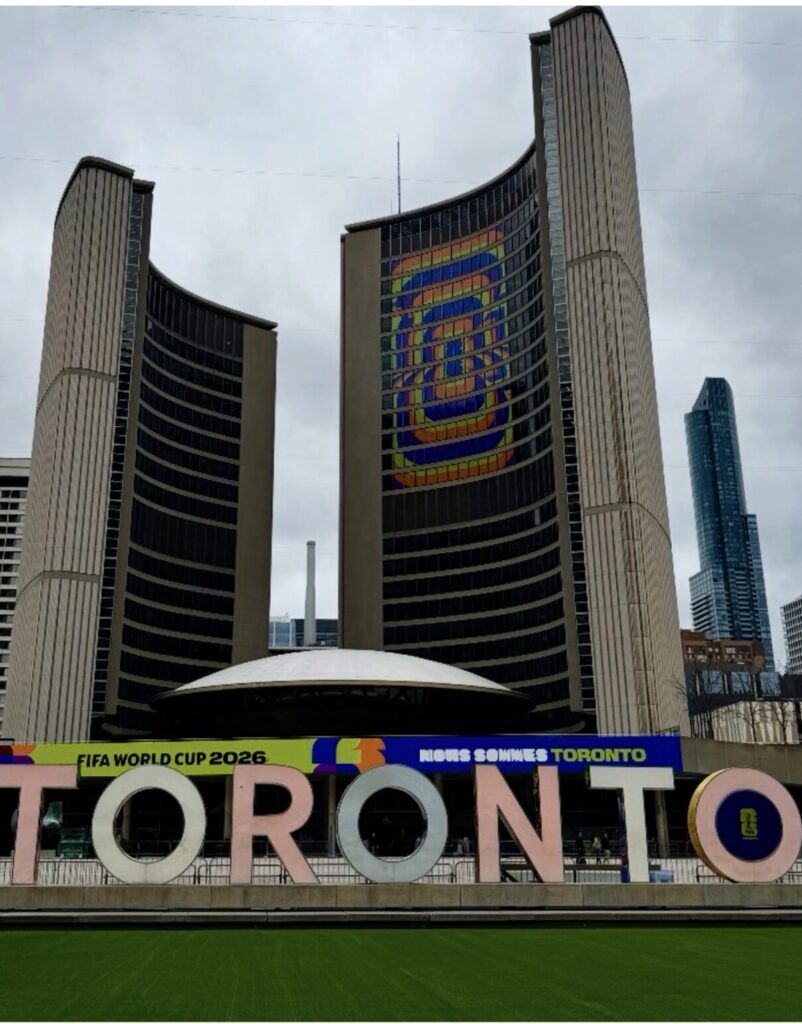
FREE WALKING TOUR
Downtown Toronto, Ontario, Canada
CITY WALK