Waterfalls, wildflowers, and sacred mountain paths
Arin Waterfalls Hike: A Short Hike with Powerful Sacred Valley Energy
Quick Trail Notes:
- Length: About 2 miles round trip
- Elevation Gain: Approximately 650 feet
- Difficulty: Easy to moderate — steady uphill sections at high altitude
- Time: 1.5–2 hours including time at the falls
- Trailhead: Munay Sonqo, Arín, Sacred Valley, Peru
- Accessibility: The trail is not considered wheelchair- or stroller-accessible.
- Facilities: No restrooms, trash bins, food service, or other visitor facilities are available along the trail. Facilities at Munay Sonqo are intended for its guests; confirm access in advance if you are not staying there.
- Water Availability: No potable water is available on the trail. Carry at least 1 liter per person, and do not drink untreated water from the stream or waterfalls.
- Cell Service: Coverage may be intermittent or unavailable as the trail climbs away from Arín. Download an offline map before setting out, share your plans with someone, and do not rely on your phone for emergency communication. Peru’s official OSIPTEL tool can be used to check current carrier coverage.
- Seasonal Closures: Temporary closures or unsafe conditions may occur during the rainy season (January to March) because of heavy rain, high water, mud, flooding, and landslide risk. Confirm access with Munay Sonqo or a local guide shortly before visiting.
- Best Season: May–September for dry weather and clear skies; December–March for fuller waterfalls and greener hillsides
- Activities: swimming, picnicking, meditating, or simply strolling and connecting with Andean nature.
- What to Bring: Sun protection, layers, sturdy shoes, water, rain jacket during wet season, and a respectful spirit for this sacred landscape
- Cost: Free
- Altitude Note: The trail sits at high elevation in the Sacred Valley, so walking slowly and acclimating beforehand is recommended.
- Read Along the Route: Read Deep Rivers alongside this hike for its lyrical portrayal of Indigenous Andean life, spirituality, and the emotional pull of the mountains that mirrors the sacred atmosphere of the Arín Waterfalls trail.

Save this trail guide. It includes the route, elevation profile, hiking details, and practical tips for the Arín Waterfalls Hike, making it an easy reference while exploring the Sacred Valley.
There is something deeply grounding about walking in Peru’s Sacred Valley. The mountains feel alive here, wrapped in stories, ceremony, and centuries of connection to the land. From the peaceful retreat grounds of Munay Sonqo, we set off on a short but beautiful hike to the Arín Waterfalls, a trail filled with wildflowers, sacred traditions, and sweeping valley views.
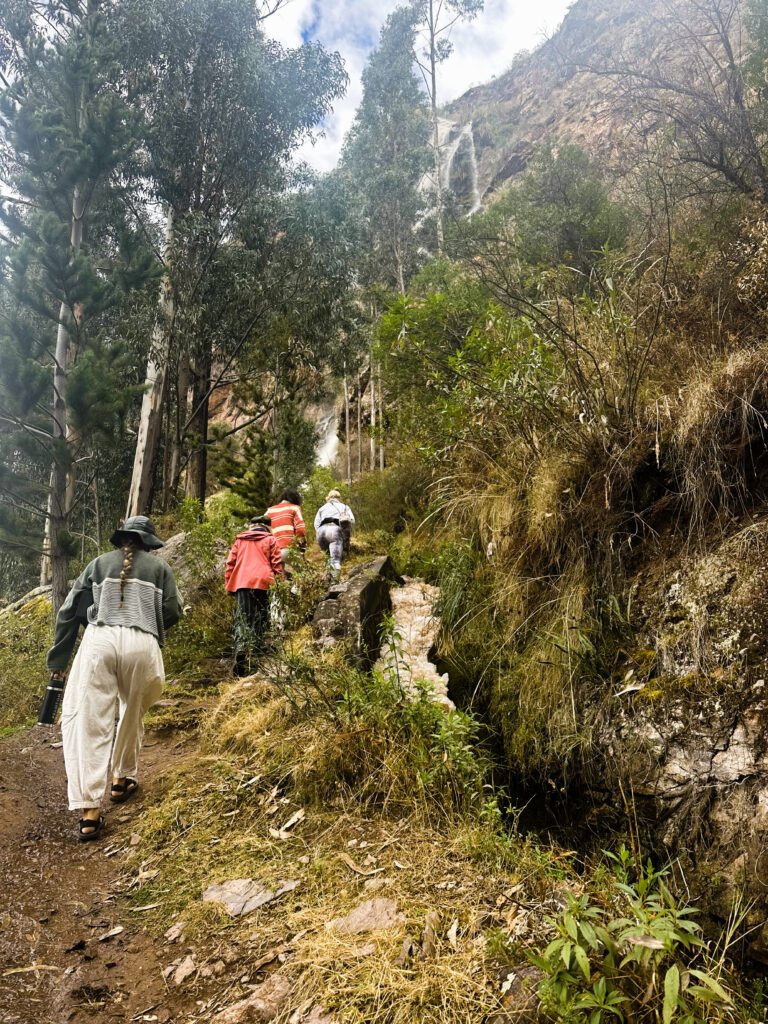
The path begins gently, climbing beside the river as cool mountain air drifts through the trees. The earthy scent of muña, a fragrant Andean herb often brewed into tea for altitude relief, mingled with eucalyptus. The soft rustle of queuña and molle trees were overheard. Even though the hike is relatively short, the Sacred Valley altitude makes it wise to walk slowly and savor the journey.
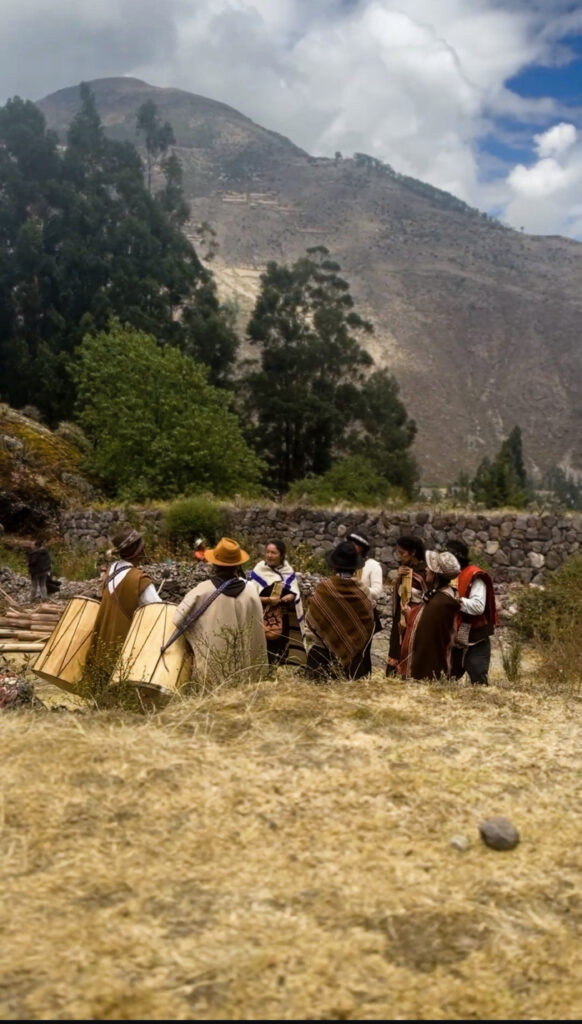
Along the trail, patches of yellow t’ola shrubs dotted the hillsides while hummingbirds flickered through clusters of purple and white wildflowers. At one bend in the path, the quiet sounds of nature gave way to the steady rhythm of drums echoing through the canyon walls. Soon we came upon a group of dancers dressed in beautifully handwoven garments, moving in ceremony beneath the mountains. Their music and movement felt woven into the landscape itself, a living expression of Andean culture and reverence for the apus, the sacred mountain spirits.
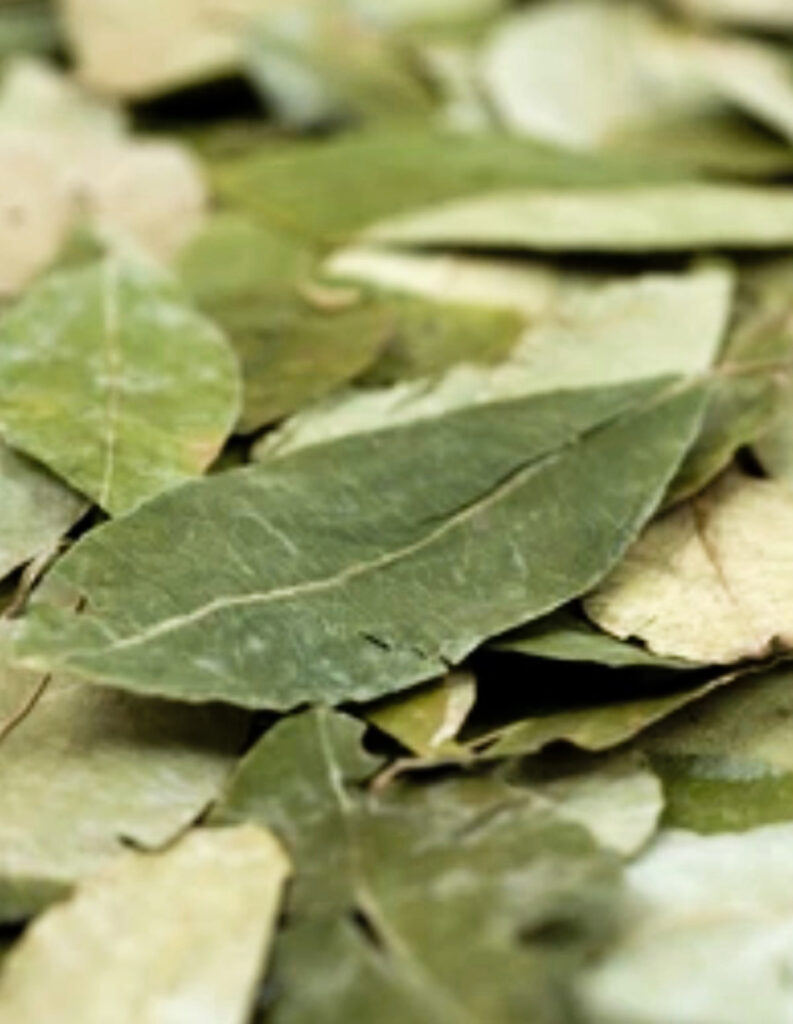
To honor Pachamama, Mother Earth, we paused along the trail and offered a k’intu of five coca leaves, a traditional Andean gesture of gratitude and respect. It was one of those travel moments that felt less like sightseeing and more like stepping gently into another worldview, one where the mountains, rivers, and sky are all part of a sacred relationship.
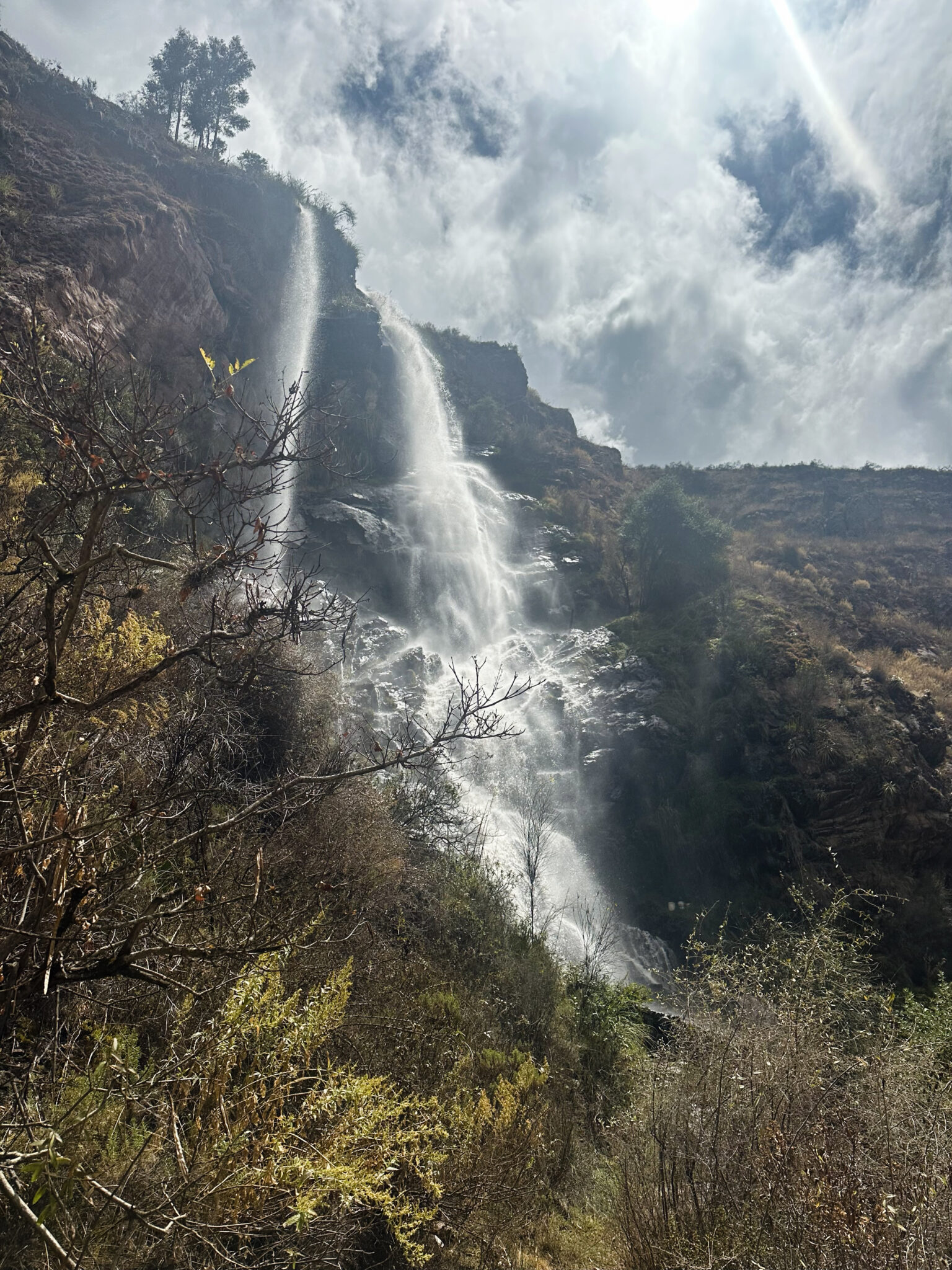
As the trail continued upward, the sound of rushing water grew louder until the twin cascades of Arín finally appeared through the trees. The waterfalls tumble side by side down the rocky cliff in a shimmering silver curtain, mist catching the sunlight as it drifts across the valley.
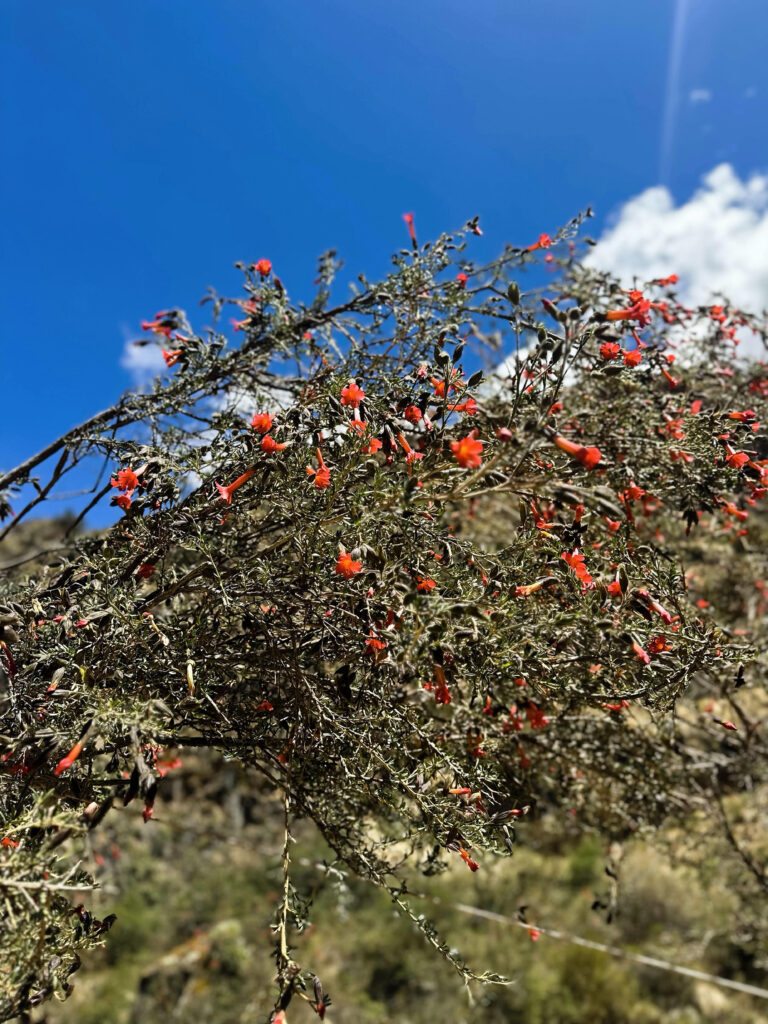
Local legend says the twin waterfalls were once two forbidden lovers during the time of the Inca Empire, a young aclla chosen to serve the Inca and a village man she secretly loved. Unable to be together openly, they fled to the mountains near Apu Pitusiray, where they disappeared into the rushing waters. Villagers say the roar of the falls still carries the woman’s voice calling for her beloved, while sacred red Kantu flowers blooming nearby symbolize their eternal love.
We lingered there for quite some time, listening to the roar of the water and gazing across the Sacred Valley below. Between the sacred traditions, high-Andean flora, and dramatic scenery, the Arín Waterfalls hike felt like far more than a simple walk. It was a beautiful reminder that in Peru, even a short trail can hold deep cultural meaning and a profound sense of place.
Written by Jacqueline Miller, founder of Adventurous Ambles. Through firsthand travel, original photography, and detailed route research, Jacqueline creates walking guides, hiking resources, destination reading lists, and travel inspiration for curious travelers. Unless otherwise noted, all content and photography on Adventurous Ambles are original works protected by copyright.
More Adventurous Ambles in Peru
Read your way through the
Andes and beyond
Peru Reading List
Cusco’s most beautiful streets
are found on foot
Cusco Free Walking Tour
A Walk through the Heart
of the Sacred Valley
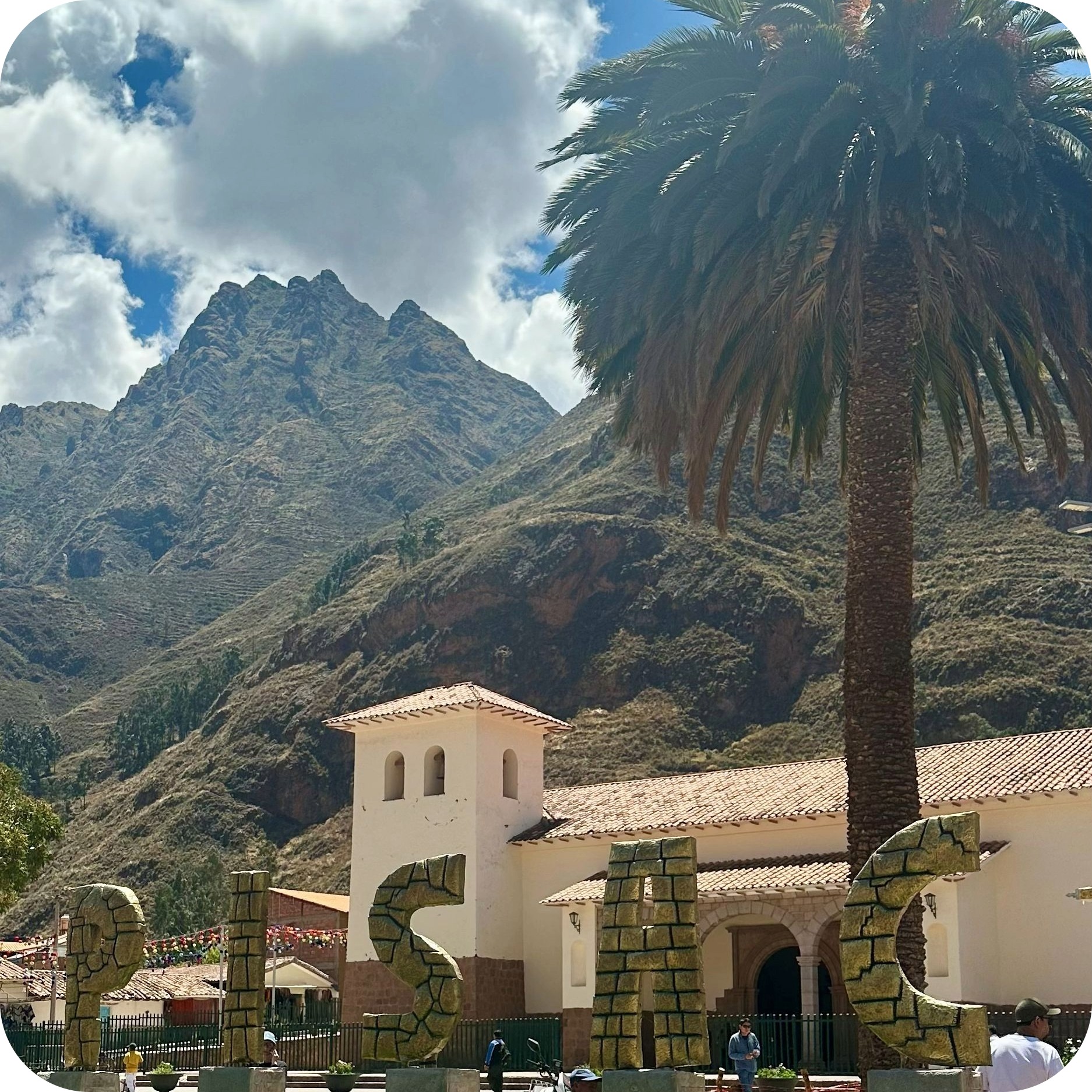
Pisac Market Stroll