Peru
The Ultimate Peru Travel Starter Guide
Peru: A Brief History
Peru is one of those destinations that feels almost mythical before you even arrive. You picture mist rising around Machu Picchu, colorful markets in Cusco, llamas grazing beneath snow-capped Andes peaks, and the Amazon stretching endlessly into the horizon. But Peru is much more than one postcard moment, it’s a country layered with history, culture, and landscapes that make every walk feel like an adventure.
Long before the Spanish arrived, Peru was home to remarkable civilizations like the Norte Chico, Moche, Nazca, and eventually the mighty Inca Empire, whose capital was centered in Cusco. The Incas built extraordinary stone cities, temples, and an extensive network of roads stretching across the Andes, many of which still shape hiking routes today. In the 1500s, Spanish conquest changed the country dramatically, blending Indigenous traditions with colonial architecture, religion, and cuisine. Today, Peru carries both histories side by side—Inca walls beneath Spanish cathedrals, ancient traditions woven into everyday life, and mountain trails that still feel sacred. Britannica notes Peru’s geography spans the coast, Andes, and Amazon, helping explain its incredible cultural and natural diversity.
For walkers, readers, and wanderers, Peru is a dream. It’s a place where you can spend the morning climbing ancient stone paths and the evening sipping pisco sours in a lantern-lit plaza.
Visitor Essentials: What to Know Before You Go
Visas and Entry
Good news—Peru is fairly easy for many travelers to visit.
For U.S. visitors:
- No tourist visa is usually required for stays under 90 days
- Your passport should be valid for at least 6 months beyond your arrival date
- You may be asked for proof of onward or return travel
- Immigration officers determine your final length of stay upon arrival
It’s always smart to double-check current entry rules before flying, especially if your trip includes other South American countries too.
Best Time to Go
The best time to visit depends on where your adventures are taking you.
For Machu Picchu, Cusco, and hiking the Andes:
- Best months: May to September
- Dry season with sunny days and clearer mountain views
- Cold mornings and chilly nights
For Lima and the coast:
- Best months: December to March
- Warmer weather and better beach days
For the Amazon:
- Best months: May to October
- Slightly drier conditions and easier jungle excursions
Personally, April, May, September, and October often feel like the sweet spot—fewer crowds and beautiful walking weather.
What to Pack
Peru is all about layers. You might start your day in sunny Lima and end it wrapped in a jacket in Cusco.
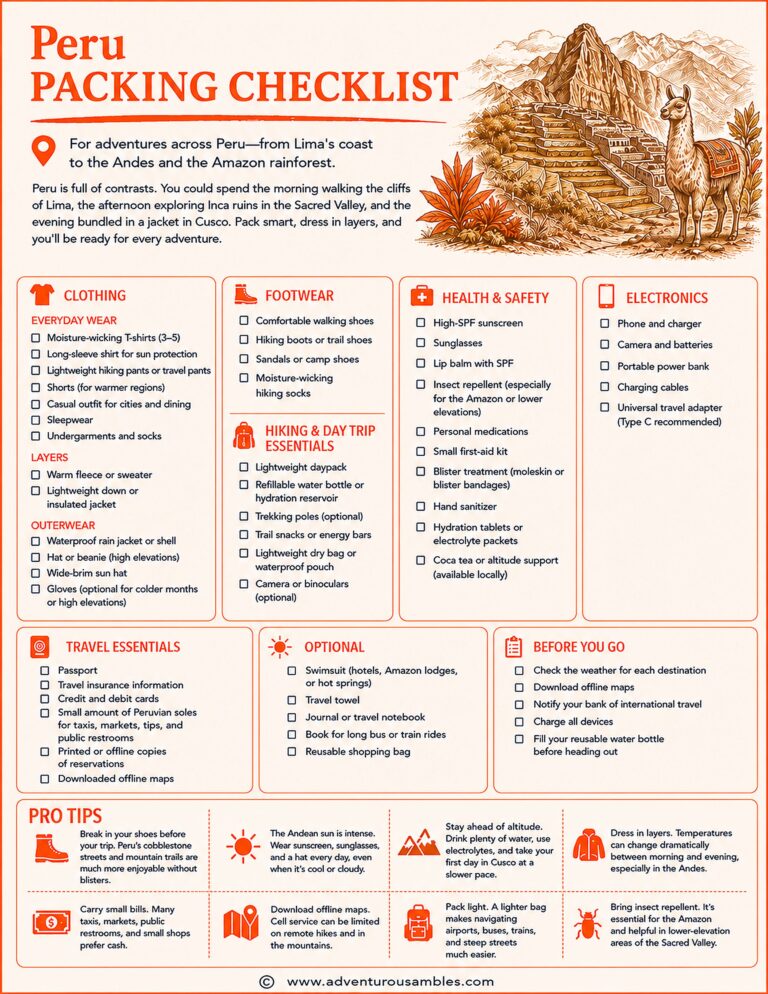
Heading to Peru? From Lima’s coast to the Andes and the Amazon, this complete packing checklist covers the clothing, footwear, travel essentials, health supplies, and gear you’ll need for every adventure. Save it, print it, and pack with confidence!
Average Costs
Peru can be surprisingly affordable, especially compared to many major travel destinations.
Flights
Roundtrip flights from the U.S. to Lima usually range from:
- Economy flights: $500–$900 USD
- Higher during holidays and peak trekking season
Domestic flights like Lima to Cusco are often worth it and save a lot of travel time.
Hotels
Average nightly prices:
- Budget hostels and guesthouses: $20–$50 USD
- Mid-range boutique hotels: $70–$150 USD
- Luxury hotels and Sacred Valley lodges: $200+ USD
Cusco and the Sacred Valley have some especially beautiful boutique stays that feel full of character.
Getting Around Peru
Peru is a big country, so how you get around really shapes your trip.
By Air
Flying is often the easiest way to cover long distances. Routes like Lima to Cusco, Arequipa, Juliaca (Lake Titicaca), or Puerto Maldonado save huge amounts of time.
Common airlines:
By Bus & Public Transportation
Public transportation in Peru, especially in Lima, can feel a little chaotic at first, but once you get the hang of it, it’s part of the adventure.
- Buses (often called micros or combis) run throughout cities and connect nearly every neighborhood
- The Metropolitano (bus rapid transit system) offers faster, more structured routes in Lima
- Lima also has a growing Metro system (Line 1) that connects key districts
- TuRuta app can help plan routes across buses, metro, and transit corridors
- Long-distance buses are comfortable and widely used for travel between cities
By Train
Some train journeys are part of the adventure. The most famous is the route to Aguas Calientes, the gateway town for Machu Picchu.
Main operators include:
The Sacred Valley views alone make this ride memorable.
By Taxi and Ride Shares
In cities like Lima and Cusco, taxis are common, but it’s best to use apps for safer pricing.
Popular apps include:
On Foot
This is where Peru really shines.
Walking in Peru means:
- Wandering the cobbled streets of Cusco
- Exploring the Sacred Valley ruins
- Hiking Rainbow Mountain
- Walking ancient Inca pathways
- Multi-day treks like the Inca Trail and Salkantay Trek
Some of the best travel memories here happen on foot, slowly, with no real rush.
Currency
Peru uses the Peruvian Sol (PEN).
Helpful tips:
- Cards are widely accepted in cities
- Smaller towns often prefer cash
- Markets and taxis usually need cash
- Keep smaller notes handy
ATMs are easy to find in major towns and cities.
Language
Spanish is the main language spoken throughout Peru, but you’ll also hear:
Especially in the Andes and highland communities, these Indigenous languages remain an important part of daily life.
Time Zone
Peru runs on: Peru Time (PET) — UTC -5
A nice bonus: Peru does not observe daylight saving time, so no seasonal clock confusion.
Frequently Asked Questions
How many days should I spend in Peru?
For a first visit, plan to spend 10–14 days in Peru. This gives you enough time to explore Lima, discover the colonial streets of Cusco, visit the Sacred Valley, and experience Machu Picchu. If you'd like to add destinations such as the Amazon Rainforest, Lake Titicaca, Arequipa, or longer hiking adventures, consider staying two to three weeks.
What is the best time to visit Peru?
Peru is a year-round destination, but the best time depends on where you're traveling. May through September is ideal for visiting Cusco, the Sacred Valley, Machu Picchu, and the Andes, thanks to the dry season and clear skies. Lima, on the Pacific coast, enjoys its warmest, sunniest weather from December through April, while the winter months are often cooler and overcast.
Do I need a visa to visit Peru?
U.S. citizens traveling to Peru for tourism typically do not need a visa for short stays. You'll need a valid passport, and immigration officials determine the length of your stay upon arrival. Always check the latest entry requirements before your trip.
Do I need to worry about altitude sickness in Peru?
It depends on where you're traveling. Lima is at sea level, so altitude isn't a concern there. However, Cusco (11,152 feet/3,399 meters), the Sacred Valley (approximately 9,400 feet/2,865 meters), and many Andean destinations are at high elevations, where some travelers experience altitude sickness.
To help your body adjust, take it easy on your first day, stay well hydrated, avoid excessive alcohol, and allow time to acclimate before strenuous activities. Many travelers also find coca tea or coca candies, which are commonly available in hotels and shops throughout Cusco and the Sacred Valley, helpful for easing mild symptoms. If you're concerned about altitude sickness or have experienced it before, talk to your healthcare provider before your trip about prescription medications such as Acetazolamide (Diamox), which can help prevent or reduce symptoms when taken as directed. If you develop severe symptoms, such as difficulty breathing, confusion, or trouble walking, descend to a lower elevation immediately and seek medical attention.
Is Peru a good destination for walking and hiking?
Absolutely. Peru is one of South America's premier destinations for exploring on foot. Wander through Lima's historic center and the oceanfront Malecón, stroll the cobblestone streets of Cusco, explore the villages of the Sacred Valley, or hike to waterfalls, alpine lakes, and ancient Inca ruins. Whether you're looking for leisurely city walks or challenging mountain treks, Peru offers unforgettable experiences for every type of traveler.
From ancient trails to cloud forest peaks, Peru is a place where every step feels like a story unfolding.
Peru is a place that encourages you to slow down.
Walk the old Inca stones. Pause for alpacas crossing the trail. Spend longer than planned in a tiny café overlooking a plaza. Read a Peruvian novel before your trip. Let the altitude force you to move a little slower and notice a little more.
Because in Peru, the best adventures rarely happen in a rush—they happen one step at a time.
More Adventurous Ambles in Peru
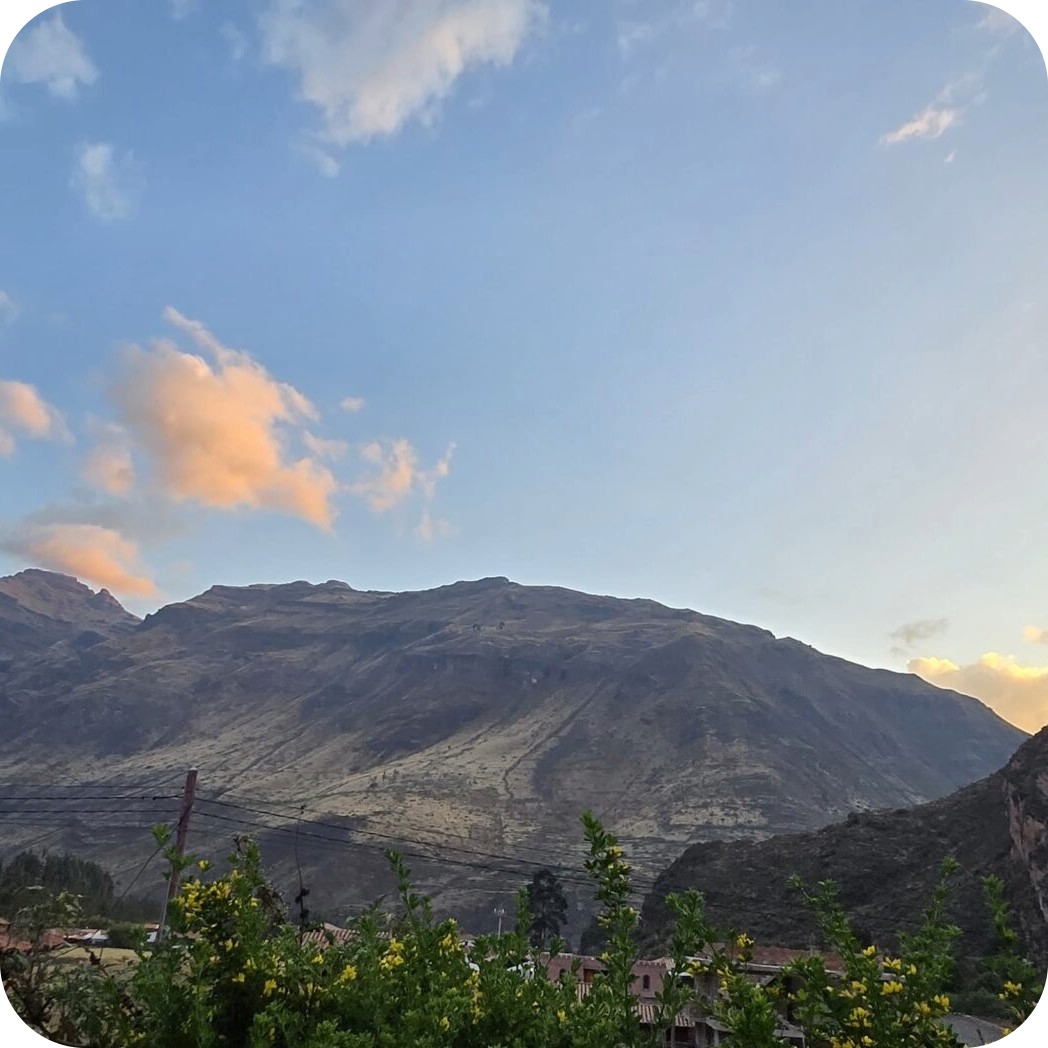
Read your way through the
Andes and beyond
Peru Reading List
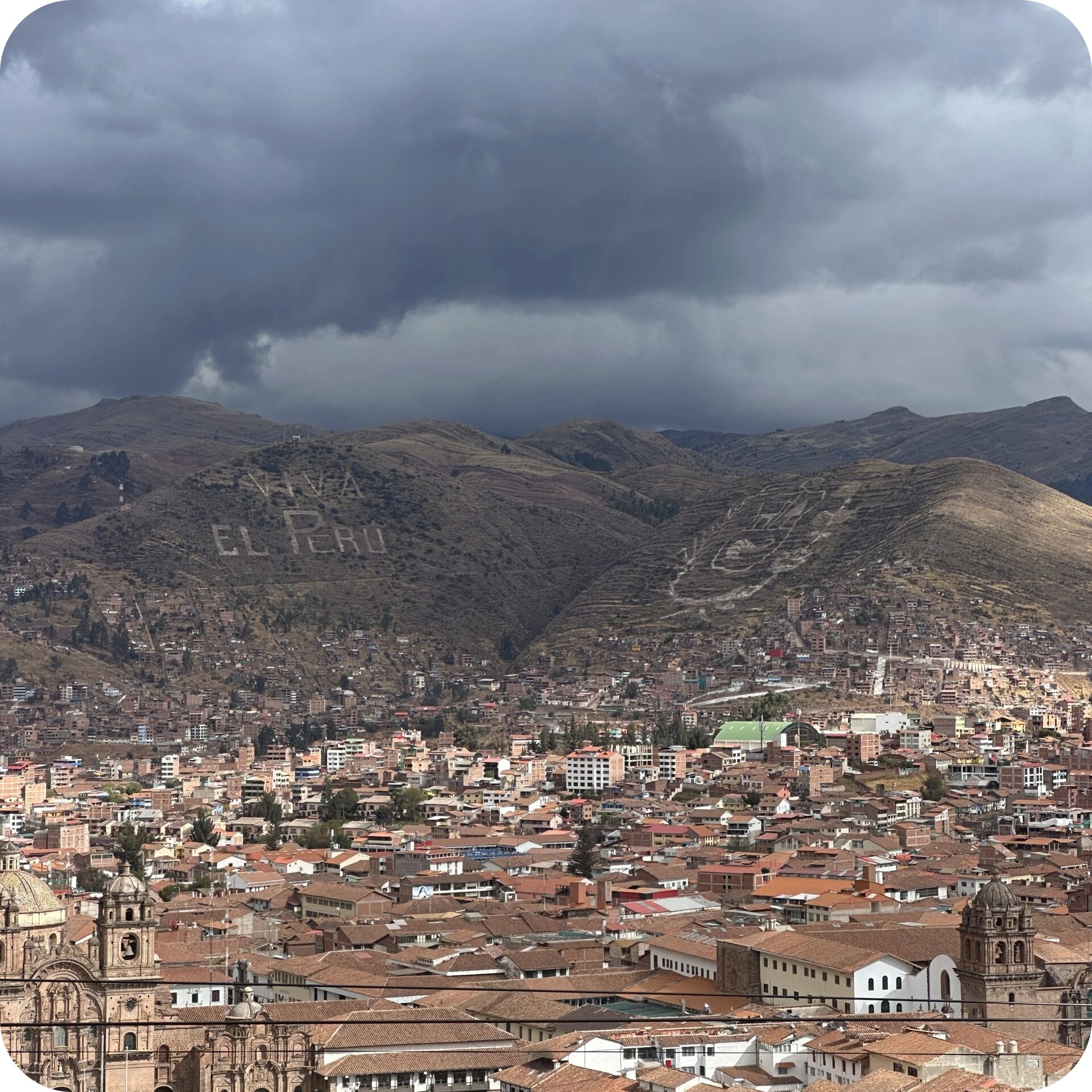
Cusco’s most beautiful streets
are found on foot
Cusco Free Walking Tour
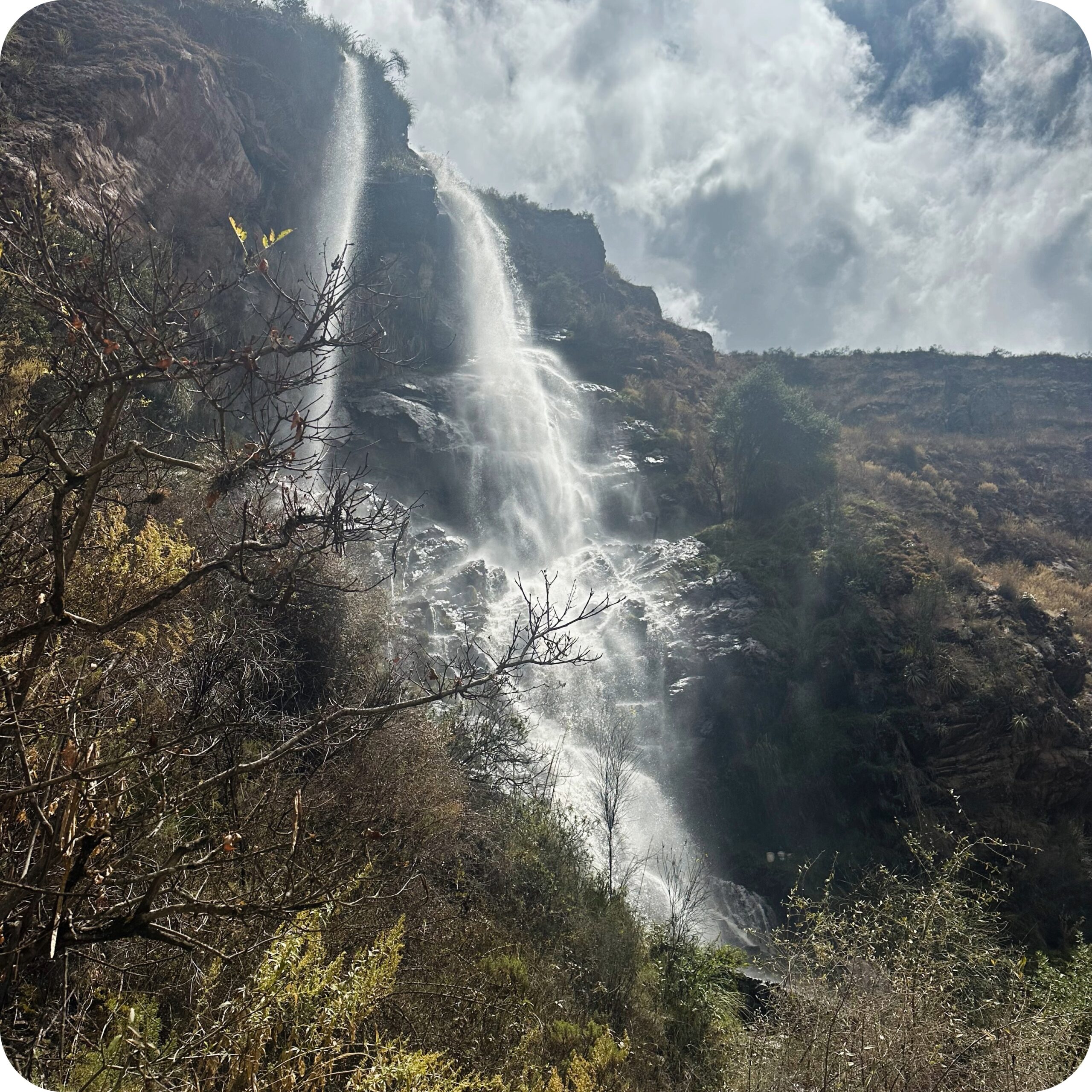
A short hike with powerful Sacred Valley energy
Arín Waterfalls Hike
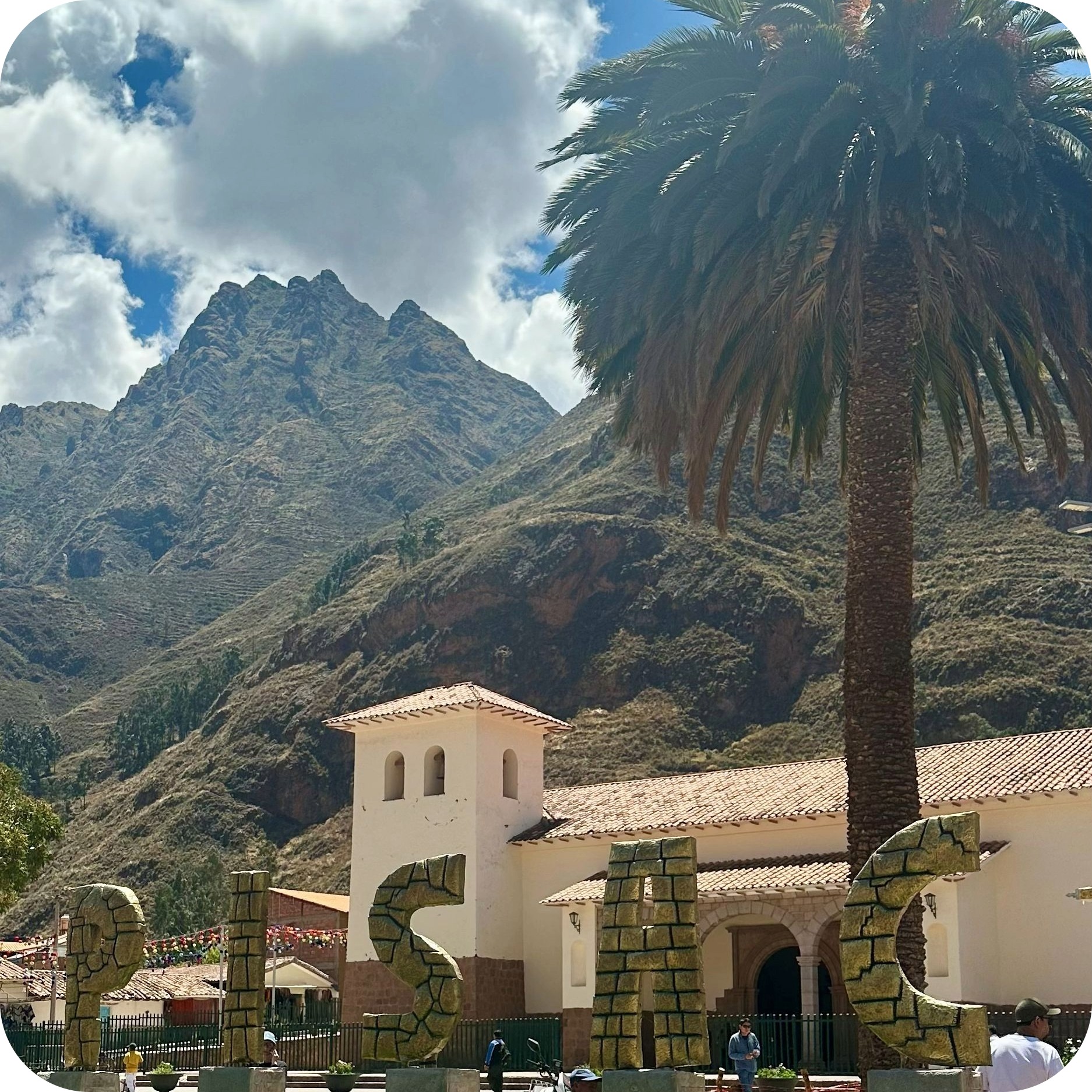
A Walk through the Heart
of the Sacred Valley
Pisac Market Stroll