ESCAPE INTO NATURE NEAR THE CITY
Hikes in
Greenbelt, Maryland
Choose between wooded trails and peaceful lakeside paths for
an easy outdoor escape near Washington, DC.
Woodland Walks and Peaceful Lakes Close to the City
Trails at a Glance
Chose the walk that fits your day. Settle into a longer woodland loop, or take your time beside the lake.
01 A LONGER WOODLAND WANDER
Perimeter Trail
TIME
2.5 – 3 hours
DIFFICULTY
Easy – Moderate
DISTANCE
~5.4 miles
ELEVATION
~ 406 feet
02 A SHORTER LAKESIDE ESCAPE
Loop
TIME
30 – 45 minutes
DIFFICULTY
Easy
DISTANCE
~1.5 miles
ELEVATION
~ 40 feet
01 | Greenbelt Park Perimeter Trail
HIKING GUIDE
Follow the Forest
into a Quieter
Side of Greenbelt
TIME
2.5-3 hours
Depending on pace
DIFFICULTY
Easy – Moderate
due to distance
DISTANCE
~5.4 miles
Roundtrip
ELEVATION
~406 feet
Approximate gain
Quick Trail Notes
Location & Trailhead
Greenbelt Park (near the Baltimore-Washington Parkway); Trail has Multiple access points; main parking near campground/day-use areas
Portions of the trail are wide and relatively level, but the natural gravel and dirt surfaces, exposed roots, and small bridges make the complete loop unsuitable for wheelchairs and most mobility devices.
Facilities
Public bathrooms are located in the Sweetgum Picnic Area and the Ranger Station near the campground entrance. There is also a campground, if you are inclined to explore more of the area.
Water Availability
Drinking water is typically available near the Ranger Station and campground during the main visitor season. There is no potable water along the trail itself, so carry enough water for your hike, especially during warmer months.
Cell Service
Generally reliable throughout most of the park, although coverage may briefly weaken in some of the more wooded creek valleys.
Seasonal Closures
The trail is open year-round. Temporary closures or short detours may occur following severe storms, flooding, or maintenance projects. Check current conditions before visiting after significant weather events.
Parking
Free parking is available at the Sweetgum Picnic Area, campground entrance, and other designated day-use parking areas throughout Greenbelt Park. Parking is generally plentiful except during busy spring and fall weekends.
Dogs
Allowed on leash
Maps
Free
What to Bring
Bring sturdy walking shoes, water, bug spray for creekside sections, light layers for changing weather, and a camera to capture the blossoms and quiet forest details.
Read Along the Route
The quiet forests and peaceful atmosphere of Greenbelt Park pair beautifully with Kindred. Like the trail, the novel is deeply rooted in Maryland’s landscape and invites readers to reflect on the stories woven into the places we walk.
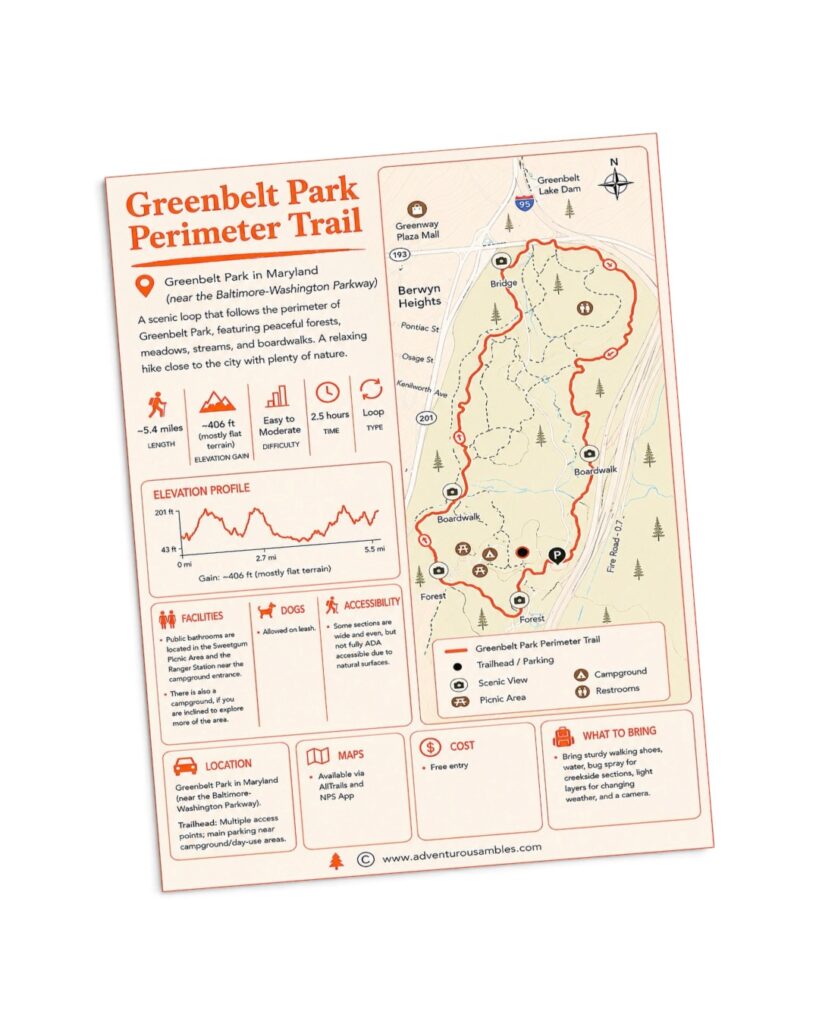
FREE PRINTABLE GUIDE
Take the peaceful trail with you.
Save this trail map for your next hike! The Greenbelt Park Perimeter Trail is one of the best hikes near Washington, D.C., offering a peaceful 5.4-mile loop through forests, across boardwalks, past open meadows, and alongside quiet streams. Use this printable quick-reference guide to review trail statistics, the elevation profile, parking, facilities, accessibility details, and a map highlighting scenic viewpoints and key landmarks before your visit.
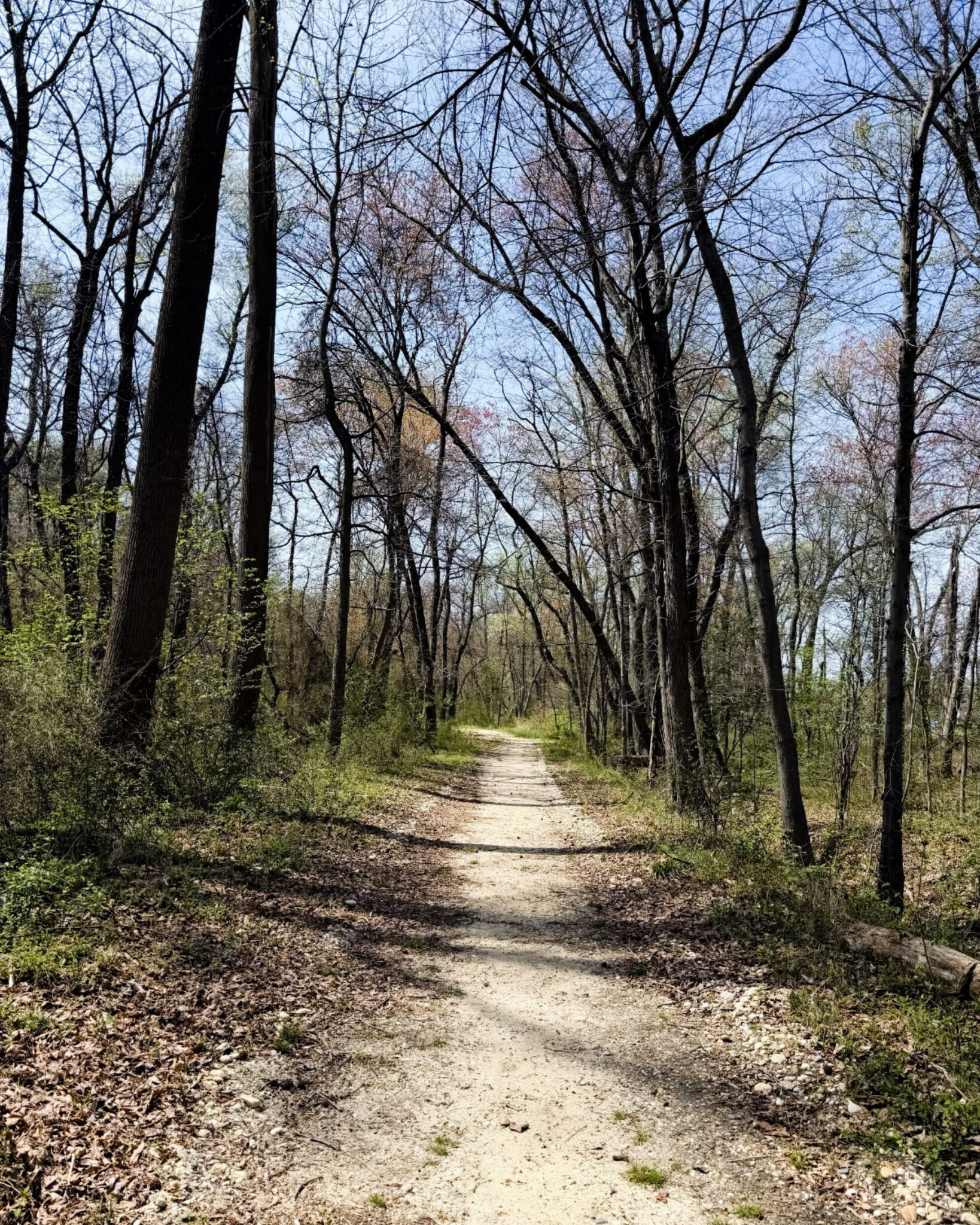
There was something especially inviting about beginning the Perimeter Trail from the Dogwood Nature Trail.
It felt like a quieter, more intimate entrance into the woods, with the transition from roadside to forest happening almost immediately. Just beyond the trail sign, the world seemed to soften. The sound of passing cars faded behind us, replaced by birdsong and the gentle rustle of leaves beneath our feet.
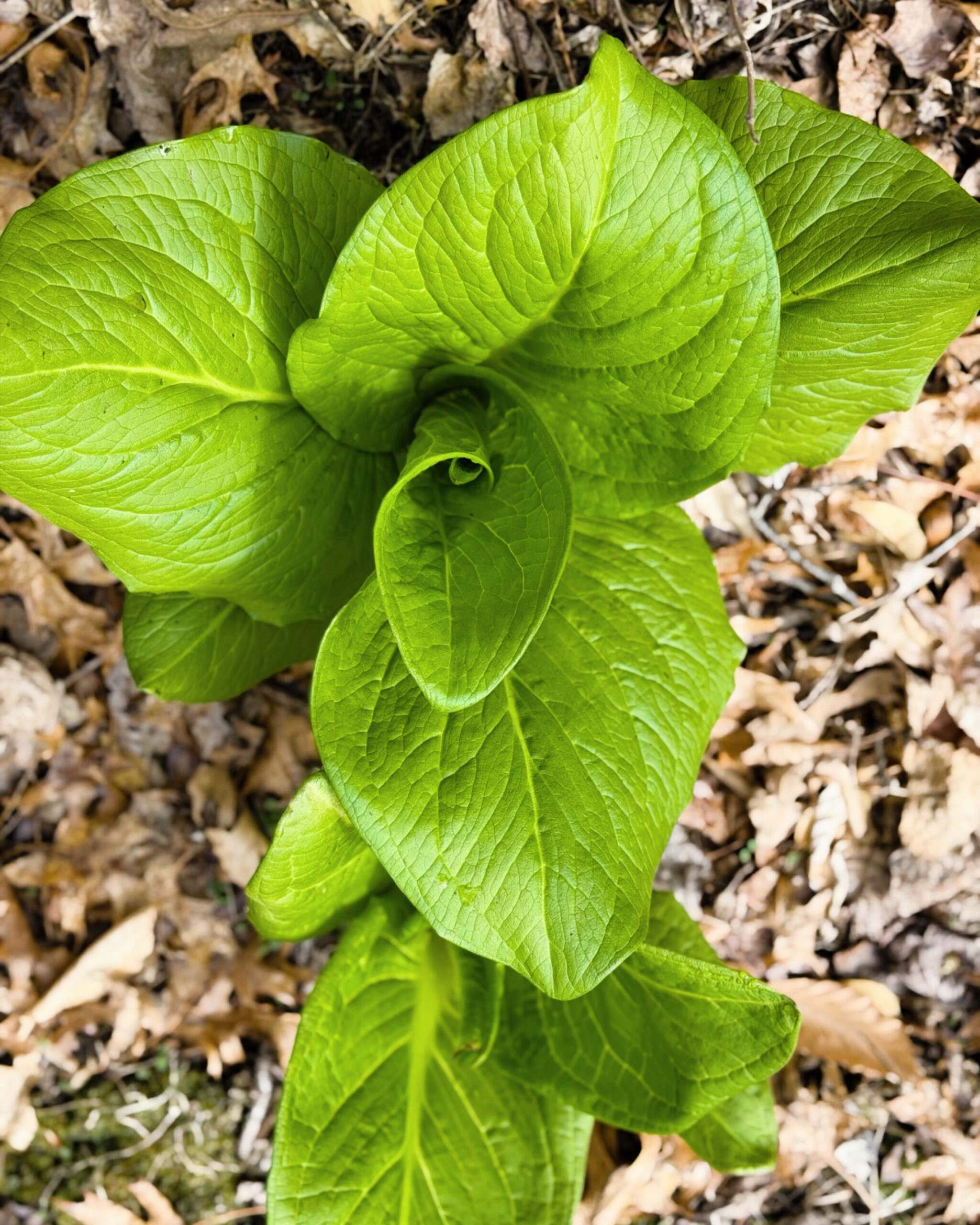
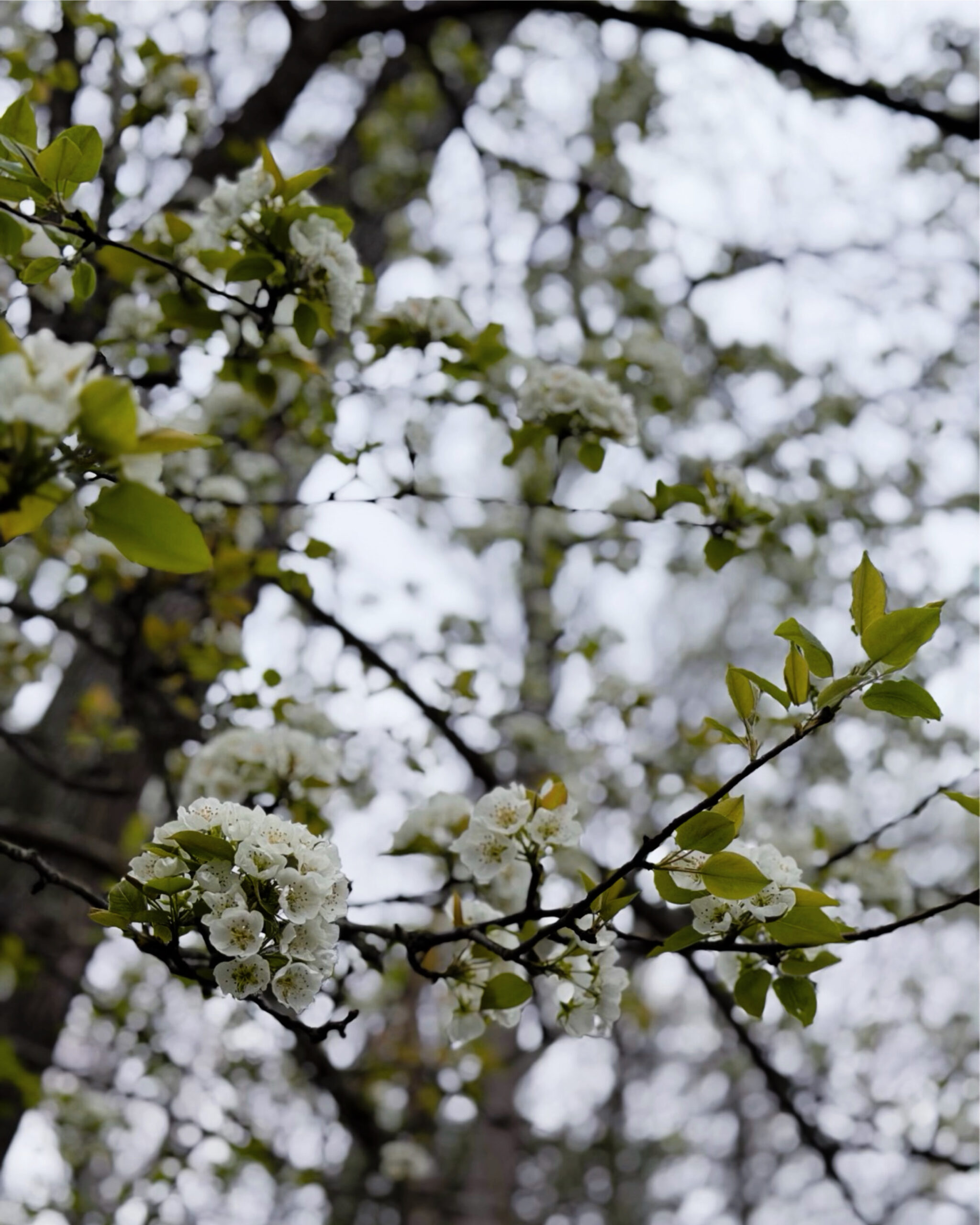
The Dogwood Trail felt like a natural prologue to the longer loop, introducing us to a landscape alive with seasonal change. In spring, flowering dogwoods, mountain laurels, and wild azaleas bring soft shades of white and pink to the understory. Below them, bright green skunk cabbages unfurl in spirals, their broad leaves glowing against the remains of last season’s foliage.
The Dogwood Nature Trail is a 1.5-mile loop, so we could have followed the smaller circuit and returned to our starting point. Instead, when it intersected with the Perimeter Trail, we continued onto the longer route.
True to its name, the Perimeter Trail circles the entire park, quietly connecting its different areas. It passes picnic grounds along the northern end and the campground to the south while remaining largely tucked beneath the forest canopy. Along the way, it also connects with the Blueberry Nature Trail, while the Azalea Trail is only a short detour away.
Once we joined the Perimeter Trail, the path widened into a gravel track marked by yellow blazes painted on trees and trail signs. Despite being so close to the city, the forest seemed to create its own climate. The temperature felt noticeably cooler beneath the trees (sometimes by as much as 10 degrees Fahrenheit) making the trail a welcome escape on a warm day.
The landscape shifted again when we reached the wooden footbridges. We crossed Still Creek, a muddy but picturesque waterway that runs from east to west through the park, as well as nearby Deep Creek. Along their sandy banks, we noticed tracks left by birds and small mammals. The slow water reflected the trees in soft, wavering lines, and I found myself stopping simply to listen and look more closely.
Wildlife didn’t announce itself here. It appeared in quick, quiet moments: the flicker of a white-tailed deer slipping between the trees, a squirrel racing up a trunk, or a bird moving through the branches overhead.
For birdwatchers, there was plenty of reason to linger. Colorful warblers darted among the leaves, woodpeckers tapped out a steady rhythm, and chickadees flitted from branch to branch. A flash of red might reveal a scarlet tanager, while the woods near the creeks sometimes shelter a barred owl watching quietly from above. Even in its stillest moments, the forest felt full of life.
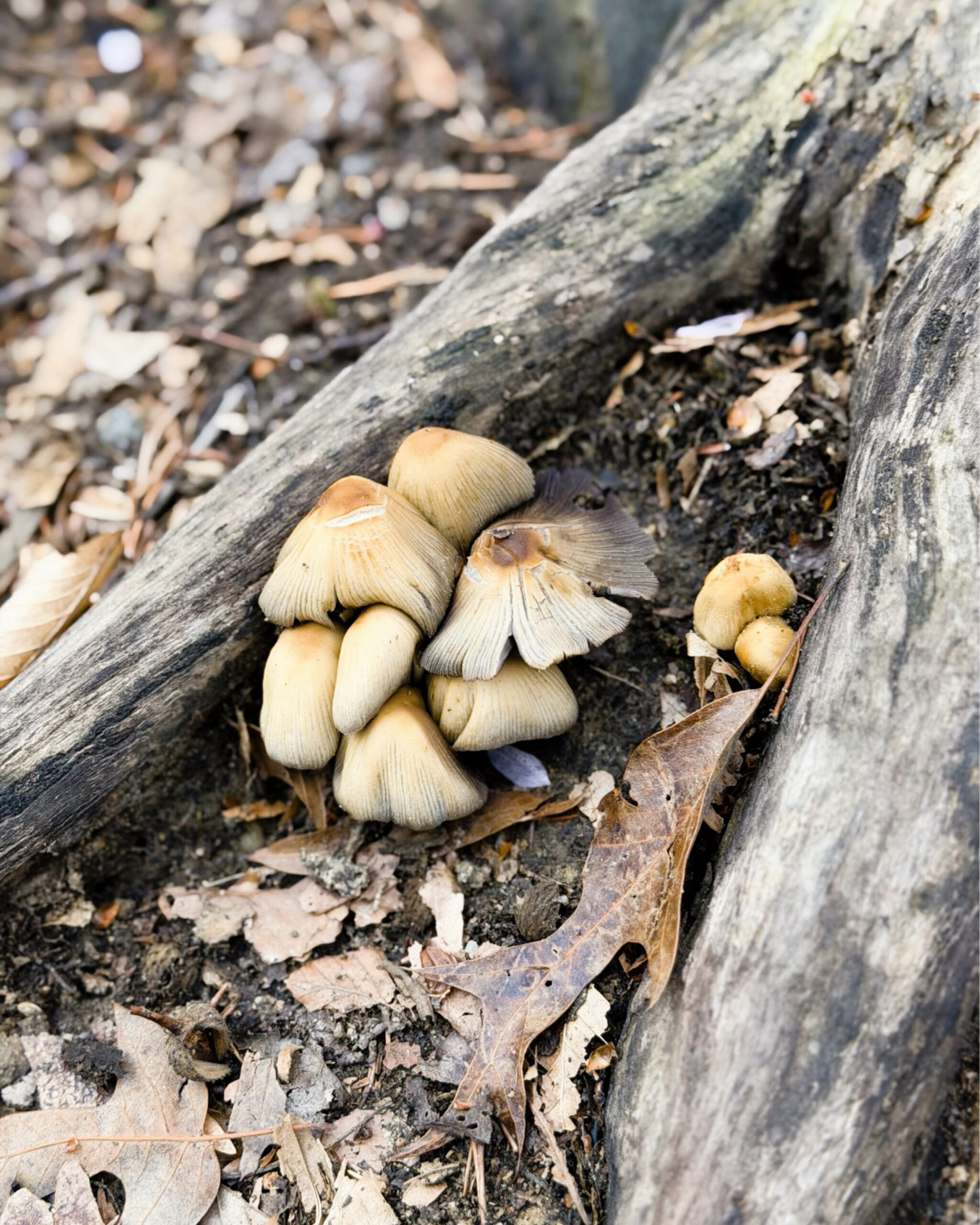
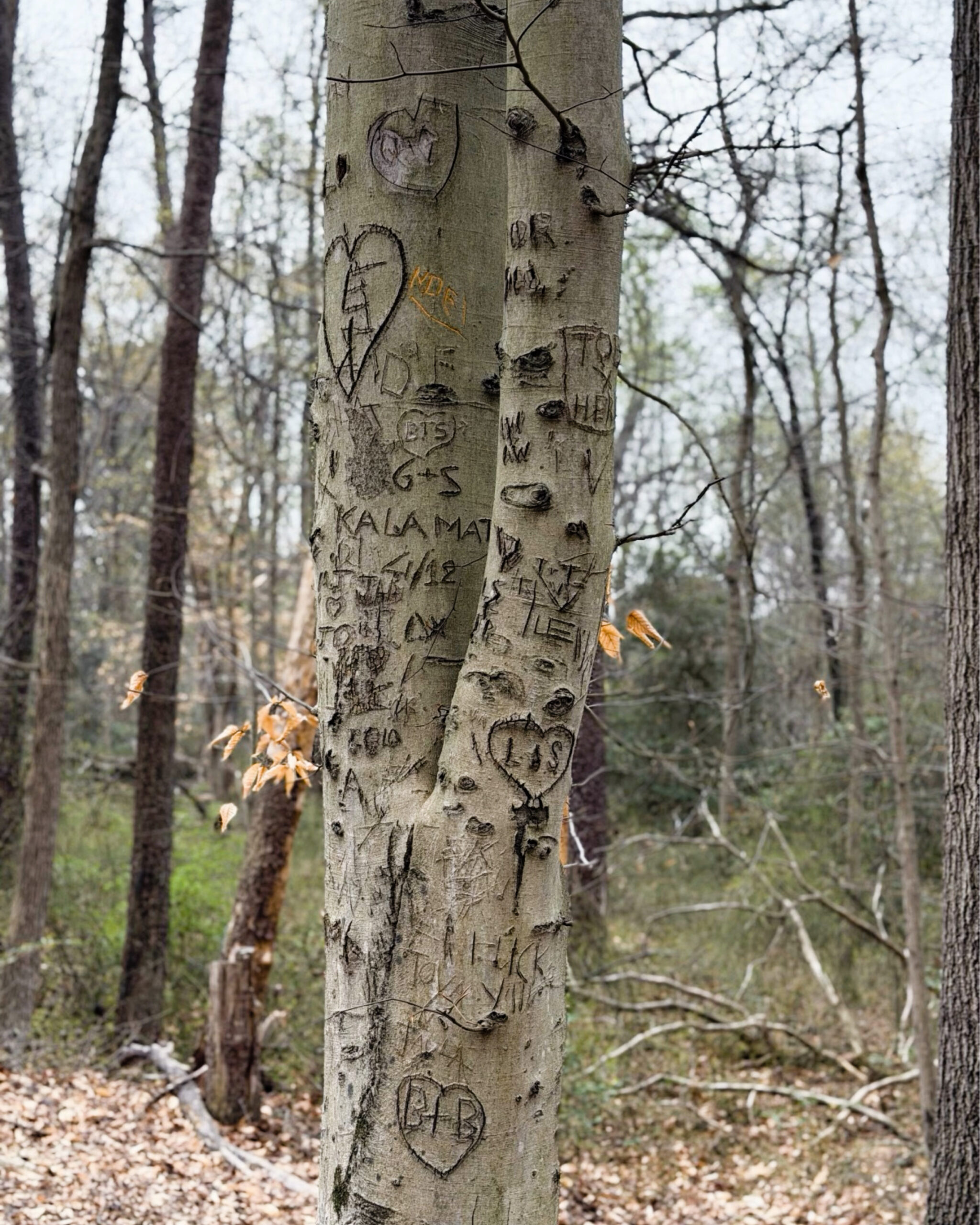
Some of my favorite discoveries were the smallest ones: clusters of mushrooms emerging from damp soil, fallen logs slowly returning to the earth, and initials carved into smooth bark. All little reminders of the people who had wandered these paths before us.
Because ticks are common in wooded areas, especially during the warmer months, I was careful to stay aware and check thoroughly after the hike.
Beginning on the Dogwood Trail gave the Perimeter loop a lovely sense of unfolding, as though the forest were revealing itself one detail at a time. It wasn’t a dramatic or demanding hike, but that was part of its appeal.
This was a trail best explored at a wandering pace, where the quiet details became the destination.
“We were watching history happen around us.”
Octavia E. Butler, Kindred
02 | Buddy Attick Park Lake Loop
HIKING GUIDE
Slow Down
Where the
Lake Meets
the Trees
TIME
30-45 Minutes
Longer if you linger
DIFFICULTY
Easy
Flat pathway
DISTANCE
1.5 miles
Round trip
ELEVATION
~40 feet
Approximate gain
Quick Trail Notes
Location
Buddy Attick Lake Park, Greenbelt, Maryland, 555 Crescent Rd, Greenbelt, MD
Easy for hikers of all ages and abilities. A durable stroller or wheelchair with all-terrain wheels is recommended for the packed gravel sections.
Facilities
Restrooms, picnic areas, playground, benches, fishing piers, and water fountains (when in season).
Water Availability
Drinking fountains are typically available near the restrooms during the warmer months, but it’s still a good idea to bring your own water, especially in summer.
Cell Service
Reliable cell service is available throughout the park for most major carriers.
Seasonal Closures
The park is open year-round. Trails may be muddy after heavy rain, and occasional temporary closures may occur due to flooding, maintenance, or severe weather.
Parking
Free parking is available in the park’s main lot near the trailhead. Parking is generally plentiful, though it can fill on weekends and during community events.
Walking, running, fishing, birdwatching, canoeing
Dogs
Allowed on leash
Free to walk. Picnic pavilions are permitted out to Greenbelt residents and businesses only. Canoes and kayaks are allowed with permit to residents only.
What to Bring
Comfortable walking shoes (can be muddy in spring), water, sun protection, binoculars, bug spray in warmer months.
Read Along the Route
A stroll around the peaceful waters of Buddy Attick Park Lake Loop pairs beautifully with Greenbelt, Maryland: A Living Legacy of the New Deal, adding historical depth to the surrounding community and its carefully planned green spaces.
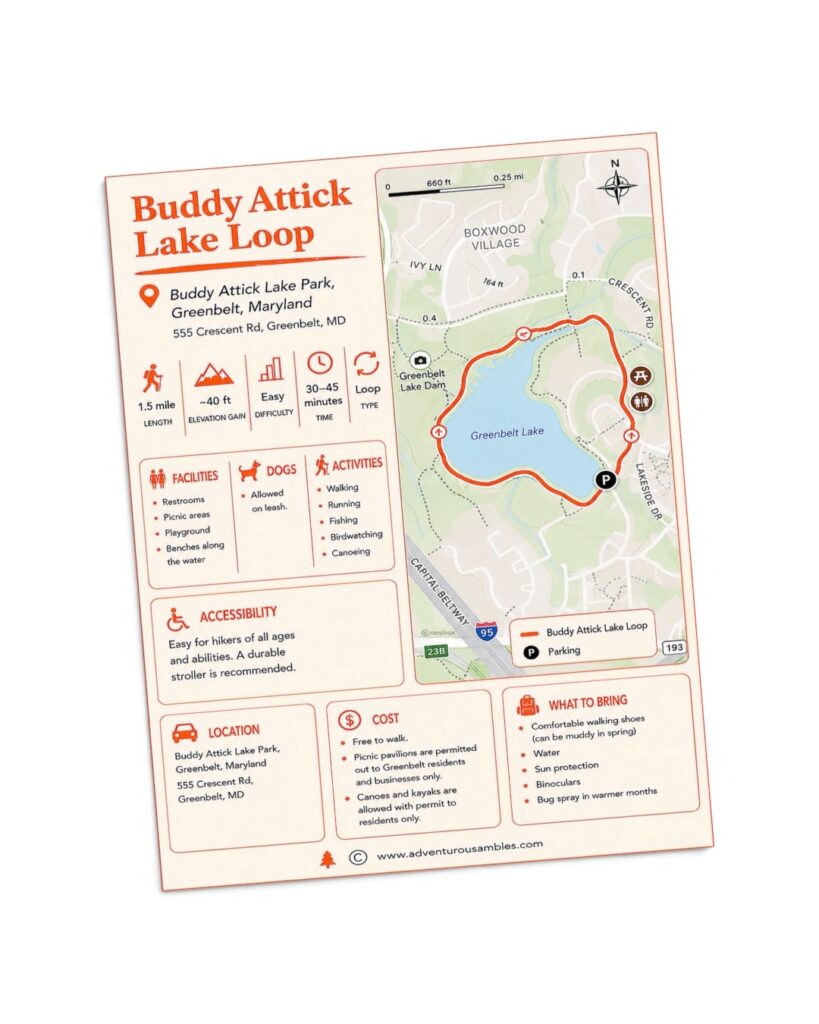
FREE PRINTABLE GUIDE
Take the lakeside loop with you.
Save this trail map before you go! The Buddy Attick Lake Loop is an easy 1.5-mile walk around scenic Greenbelt Lake, featuring paved paths, wildlife viewing, fishing, and plenty of benches where you can pause and enjoy the water. Use this printable quick-reference guide to check trail details, amenities, accessibility, parking, and what to bring before your visit.
Wooden bridges carried me over narrow inlets where the water slowed around fallen branches, creating small habitats for wildlife. Turtles rested on partially submerged logs, ready to slip into the water at the slightest disturbance, while tiny fish sent ripples through the shallows below.
Farther along, the trees opened once again to reveal peaceful views across the lake. A breeze moved gently over the surface, creating patterns that seemed to mirror the sky. Oaks, maples, and tulip poplars framed the water in shifting shades of green.
During the warmer months, the park has its own quiet soundtrack: the hum of insects, the calls of birds, and the occasional buzz of dragonflies tracing the shoreline.
I found myself walking more slowly as the trail continued, not because the path was difficult, but because there was so much to notice.
Buddy Attick Lake Park is that kind of place. It doesn’t ask for your attention with dramatic scenery. Instead, it draws you in through small, peaceful details and reminds you how restorative a simple walk beside the water can be.
Greenbelt, Maryland, was born from the New Deal in 1937 and designed as a community where nature and everyday life could exist side by side.
Inspired by the “garden city” concept, its planners hoped to limit urban sprawl by surrounding the town with a permanent greenbelt of forests and farmland. I felt that original vision most clearly while walking around Buddy Attick Lake Park, named for a local leader who helped shape the town’s story.
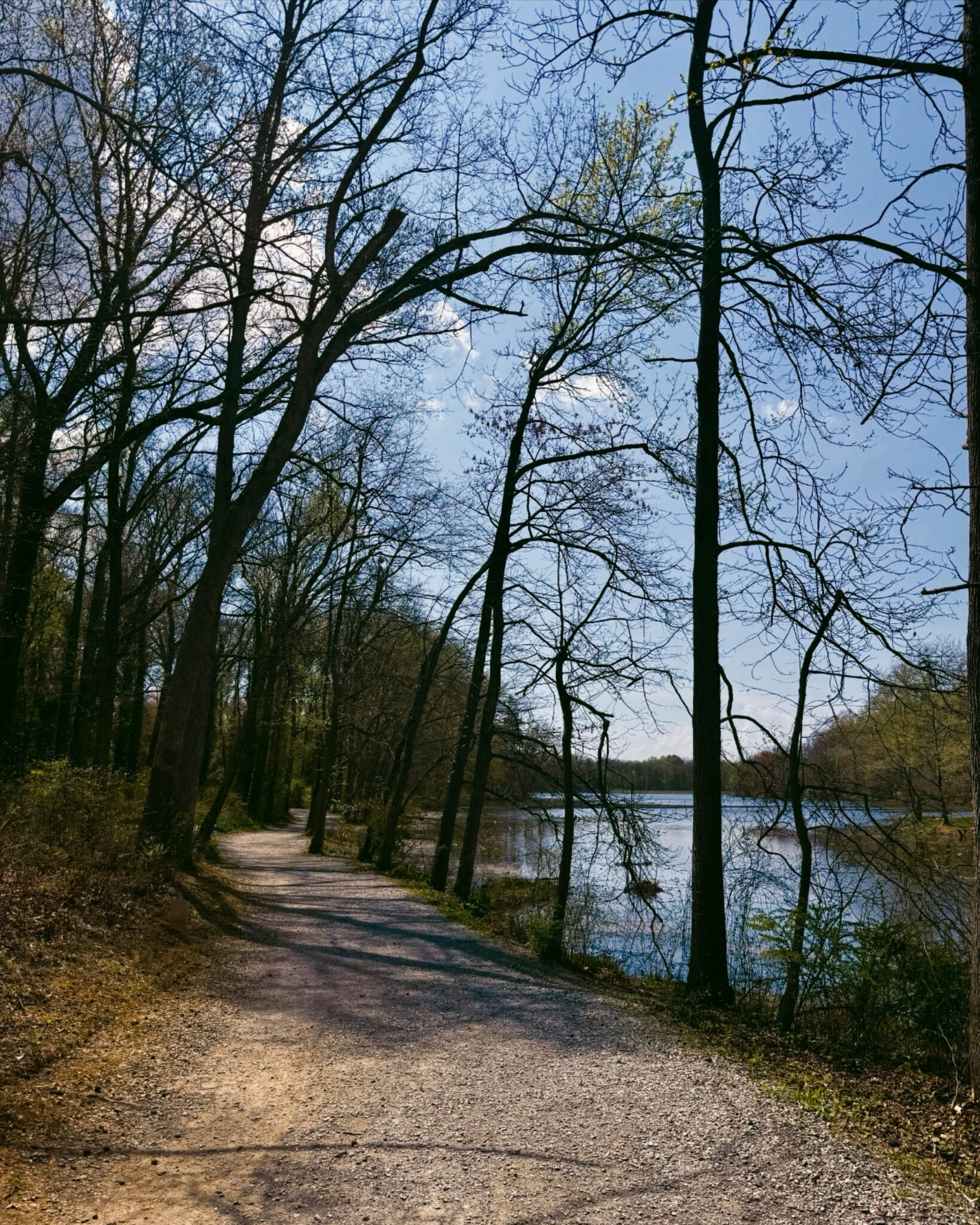
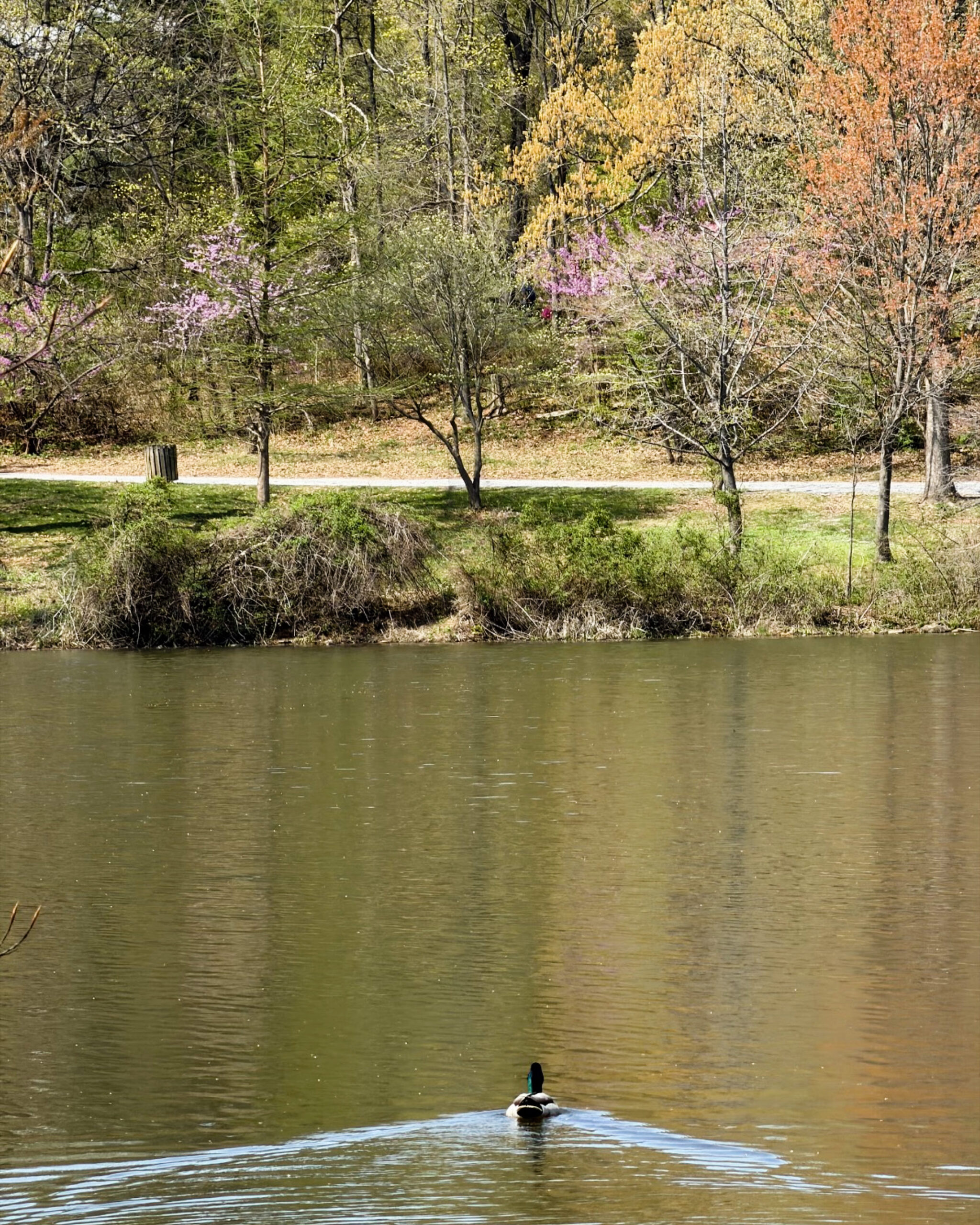
The trail began gently, curving along the edge of Greenbelt Lake. The water stretched wide and calm before me, reflecting the sky and surrounding trees. A lone duck glided across the surface, leaving a perfect V-shaped ripple in its wake, while Canada geese lingered near the shoreline and stepped occasionally into the shallows to preen.
On quieter mornings, visitors may even spot a great blue heron standing motionless at the water’s edge. I found myself watching the shoreline closely, hoping to catch sight of one waiting patiently for its next meal.
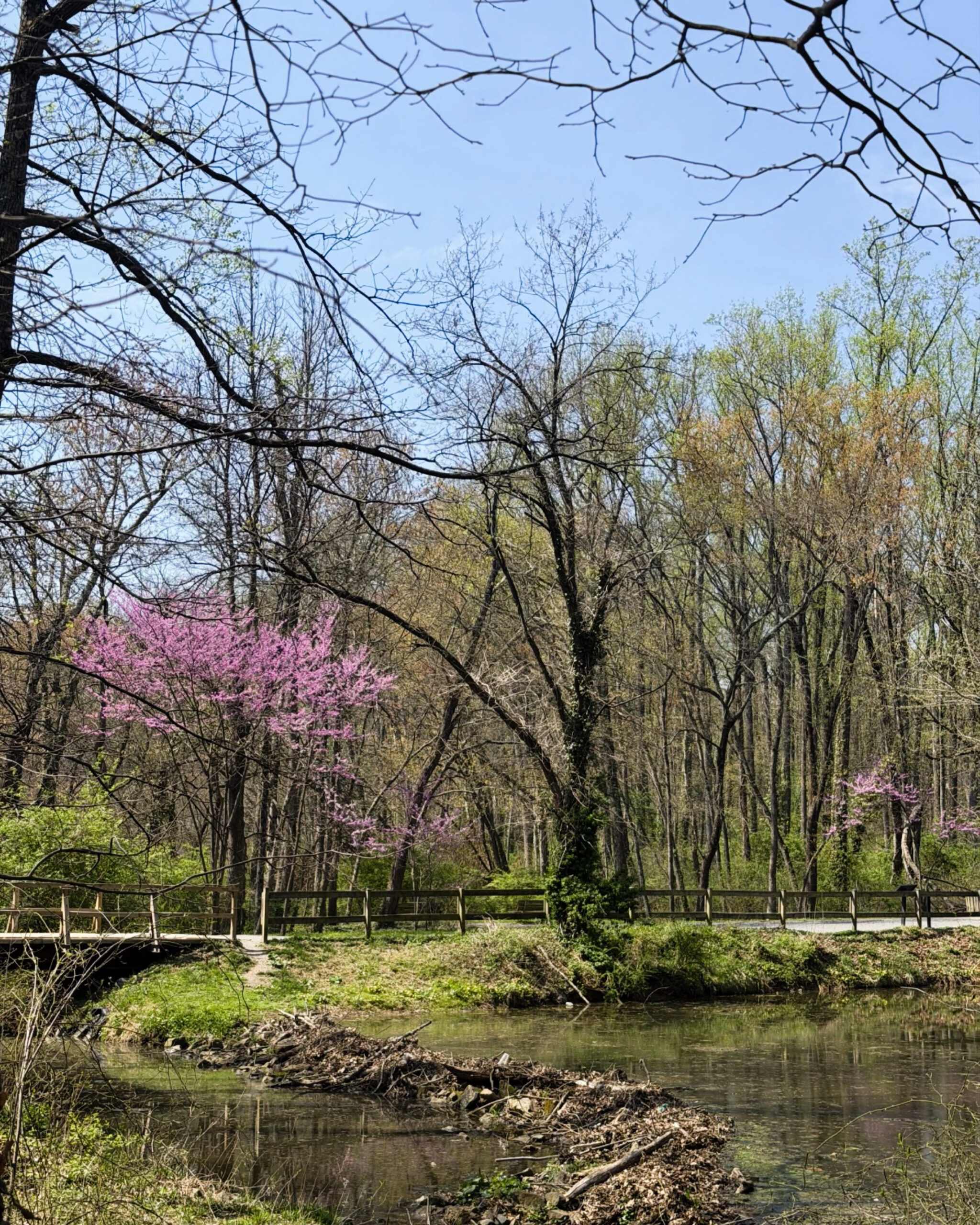
In early spring, the park seemed to awaken one layer at a time. Redbud trees brought soft bursts of pink to the trail before the forest canopy had fully returned. Delicate white dogwood blossoms followed, while fresh greenery emerged across the forest floor.
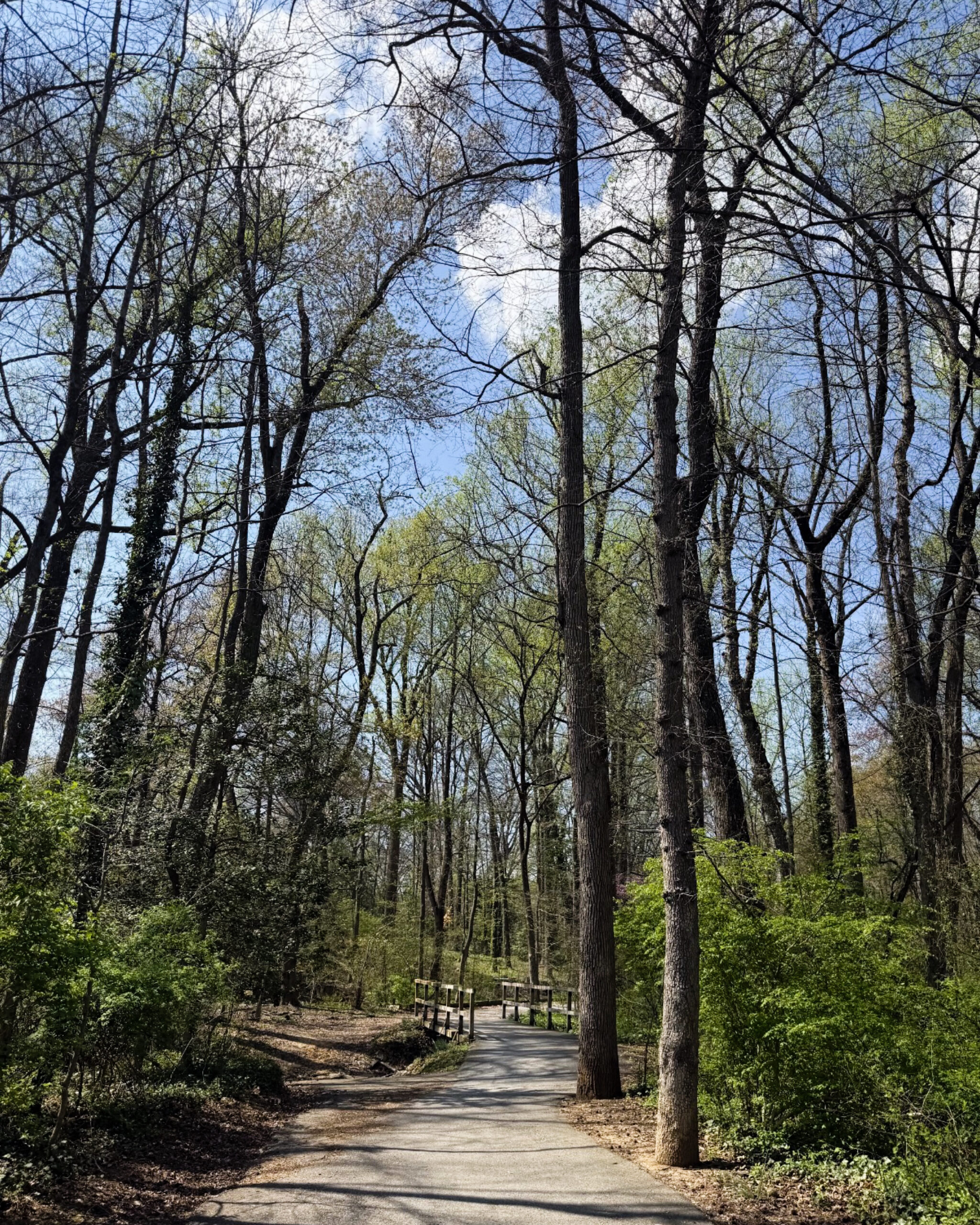
As I continued, the path shifted between open views of the lake and shaded stretches beneath the trees. In the quieter woodland sections, squirrels raced across the trail and rustled through fallen leaves. Whenever I paused, I could hear songbirds calling from somewhere within the canopy.
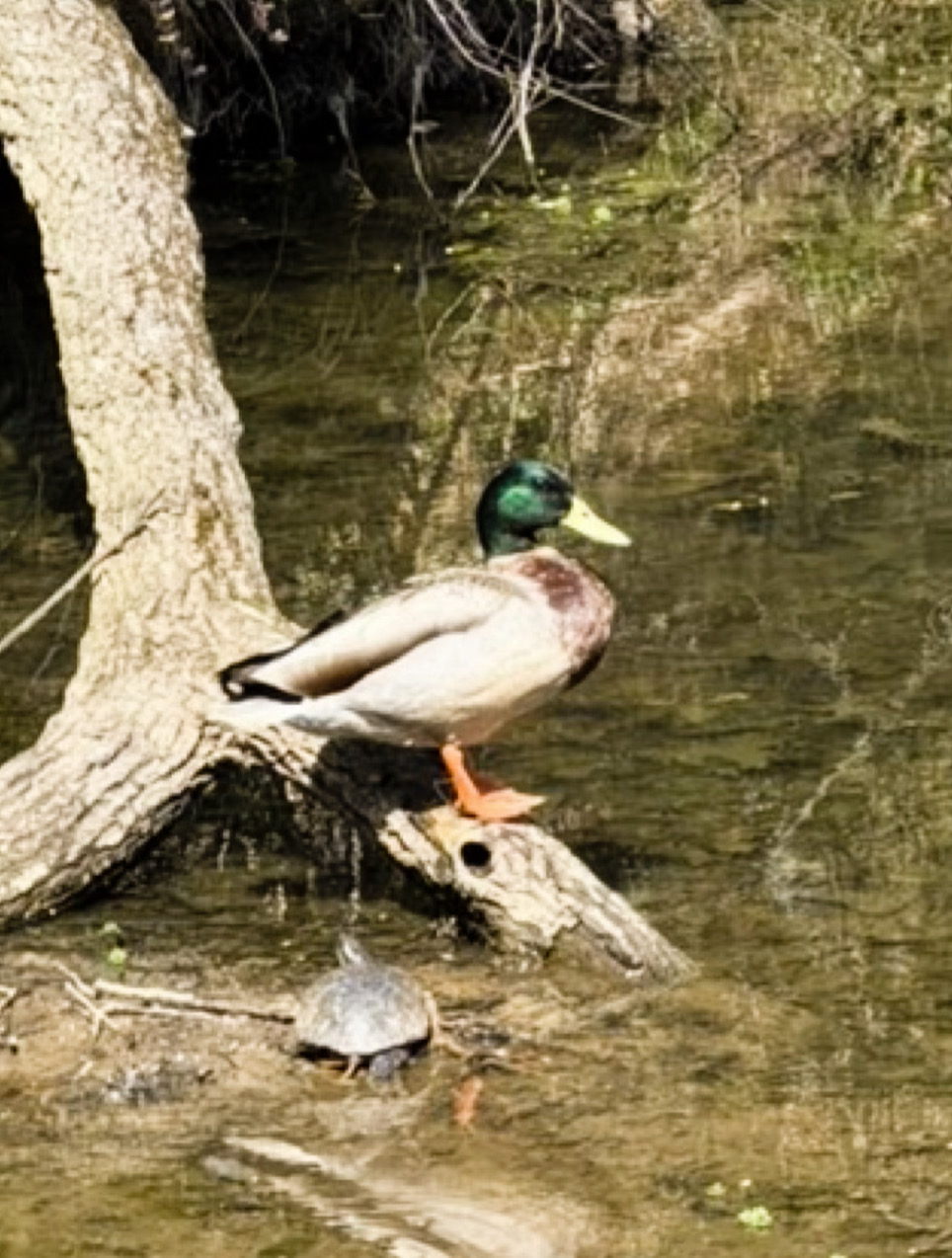
Wooden bridges carried me over narrow inlets where the water slowed around fallen branches, creating small habitats for wildlife. Turtles rested on partially submerged logs, ready to slip into the water at the slightest disturbance, while tiny fish sent ripples through the shallows below.
Farther along, the trees opened once again to reveal peaceful views across the lake. A breeze moved gently over the surface, creating patterns that seemed to mirror the sky. Oaks, maples, and tulip poplars framed the water in shifting shades of green.
During the warmer months, the park has its own quiet soundtrack: the hum of insects, the calls of birds, and the occasional buzz of dragonflies tracing the shoreline.
I found myself walking more slowly as the trail continued, not because the path was difficult, but because there was so much to notice.
Buddy Attick Lake Park is that kind of place. It doesn’t ask for your attention with dramatic scenery.
Instead, it draws you in through small, peaceful details and reminds you how restorative a simple walk beside the water can be.
“Greenbelt was truly a city built for living.”
Cathy D. Knepper, Greenbelt, Maryland: A Living Legacy of the New Deal
THOUGHTFULLY RESEARCHED
Written by Jacqueline Miller, founder of Adventurous Ambles. Through firsthand travel, original photography, and detailed route research, Jacqueline creates walking guides, hiking resources, destination reading lists, and travel inspiration for curious travelers. Unless otherwise noted, all content and photography on Adventurous Ambles are original works protected by copyright.
KEEP WANDERING
More Adventurous Ambles in Greater Washington DC

DESTINATION GUIDE
One Region. Three Destinations. Endless Opportunities to Amble
Greater Washington DC Area, US
Visitor Information, Packing List, FAQs

READING LIST
The Perfect Books to Pair With Your DC Adventures
US
Destination Reads