Royal gardens and floating bridges
Taman Ujung Water Palace
Quick Trail Notes:
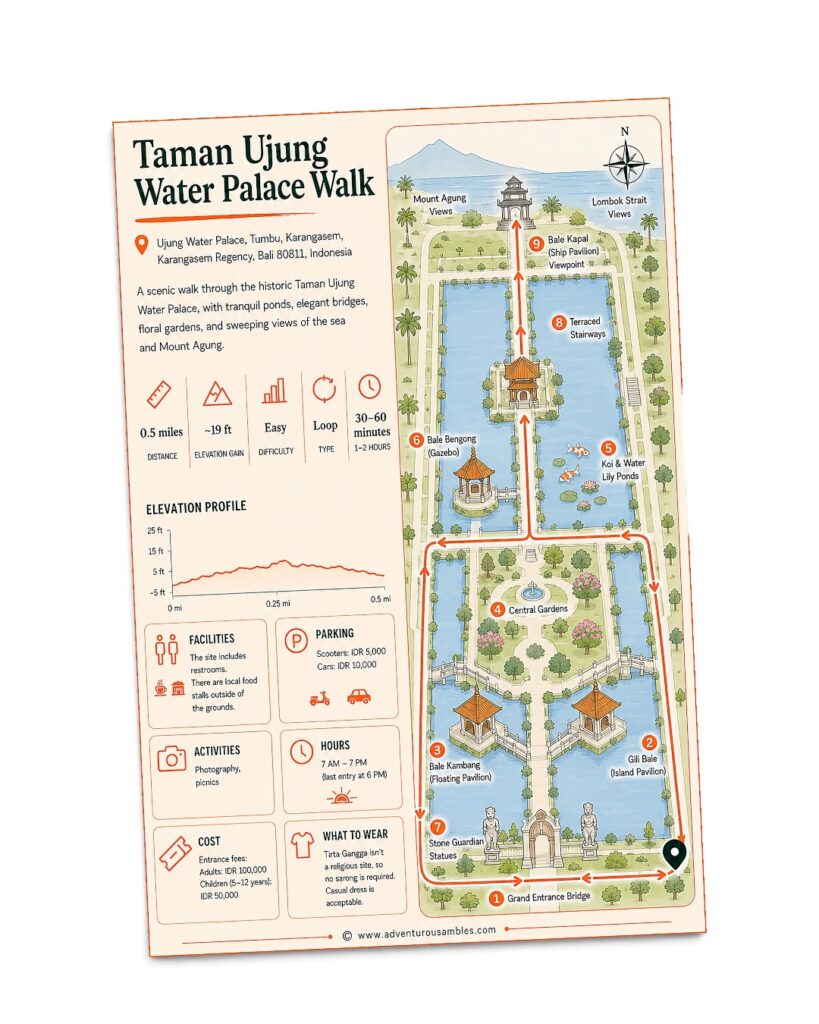
Length: 1.5 miles
Elevation gain: ~19 feet
Difficulty: Easy. The trail includes paved pathways, stone walkways, and broad staircases.
Time: 1-2 hours
Best time to go: Early morning (8-10 AM) or Late afternoon (after 4 PM), Dry season (April- October)
Location: Ujung Water Palace, Tumbu, Karangasem, Karangasem Regency, Bali 80811, Indonesia
Facilities: The site includes restrooms. There are local food stalls outside of the grounds.
Parking: Scooters: IDR 5,000 and Cars: IDR 10,000
Activities: Photography, picnics
Hours: 7 AM-7 PM (last entry at 6 PM)
Cost: Entrance fees: Adults: IDR 100,000, Children (5–12 years): IDR 50,000
What to wear: Tirta Gangga isn’t a religious site, so no sarong is required. Casual dress is acceptable.
What to bring: Camera, Sun protection
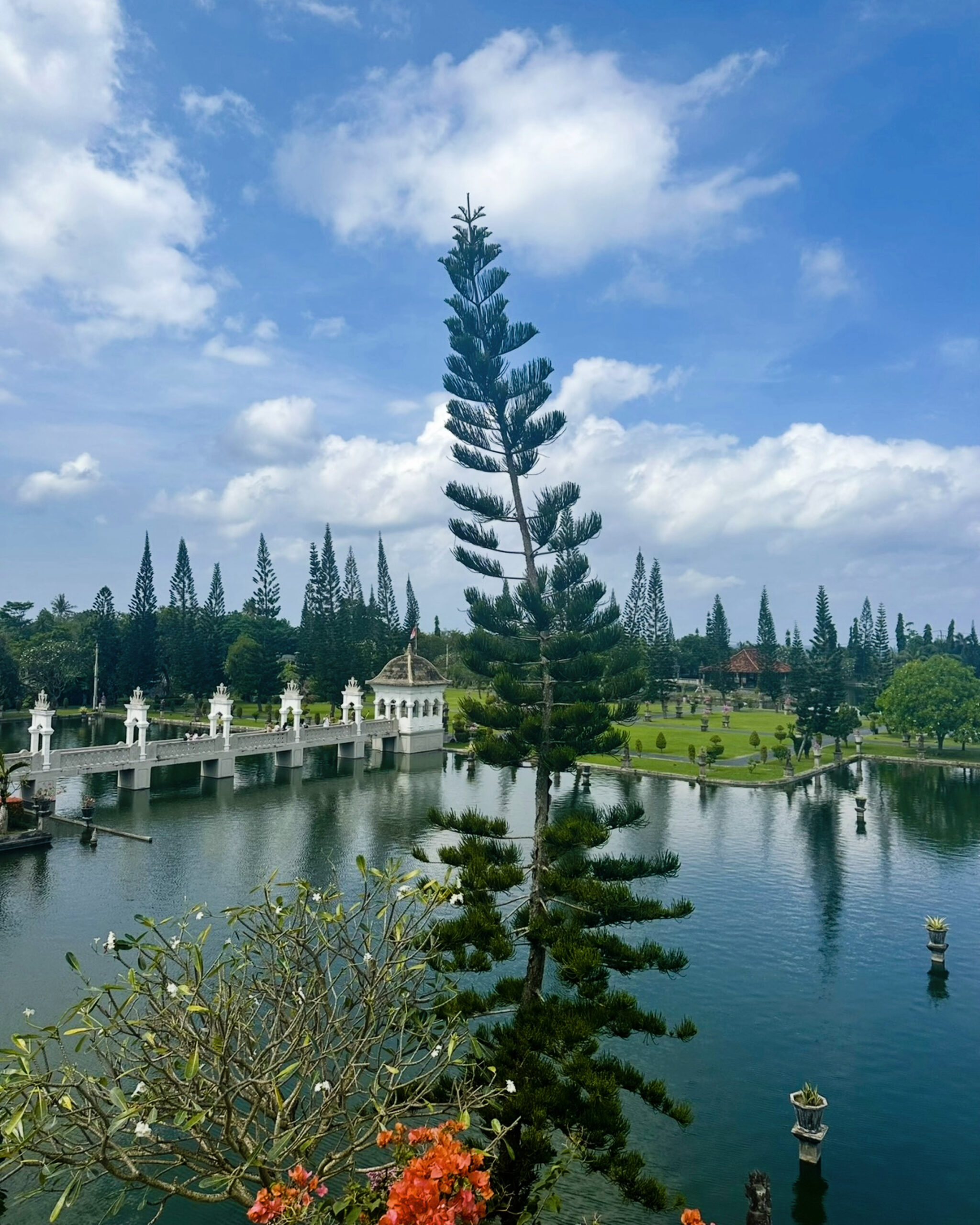
There are places in Bali that feel made for slow wandering, and Taman Ujung Water Palace, also known as Ujung Water Palace or Taman Soekasada Ujung, is one of them. Its name is often translated as “Garden at the End,” a fitting title for this peaceful royal retreat tucked along Bali’s eastern coastline near Amlapura, where the island seems to soften into sea and sky. Spread across nearly 30 acres, the palace unfolds through manicured gardens, expansive reflecting ponds filled with koi fish and blooming water lilies, and elegant “floating” pavilions connected by ornate white bridges.
Originally designed in 1909 by the King of Karangasem, Anak Agung Anglurah Ketut Karangasem, Ujung Water Palace was created as a place of leisure, diplomacy, and royal ceremony. It served as a retreat for the last royal family, where they welcomed foreign dignitaries and important guests in surroundings that reflected both refinement and power.
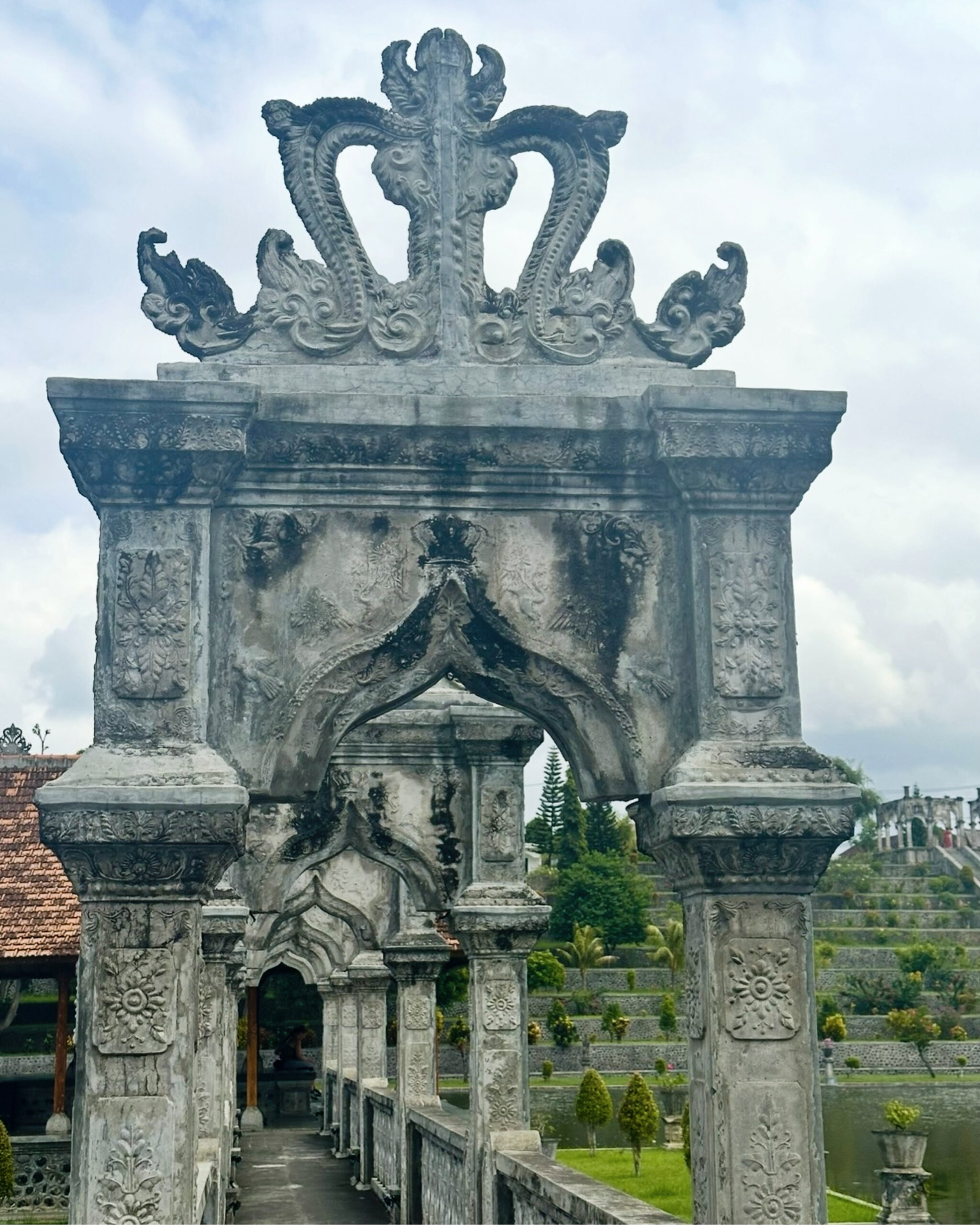
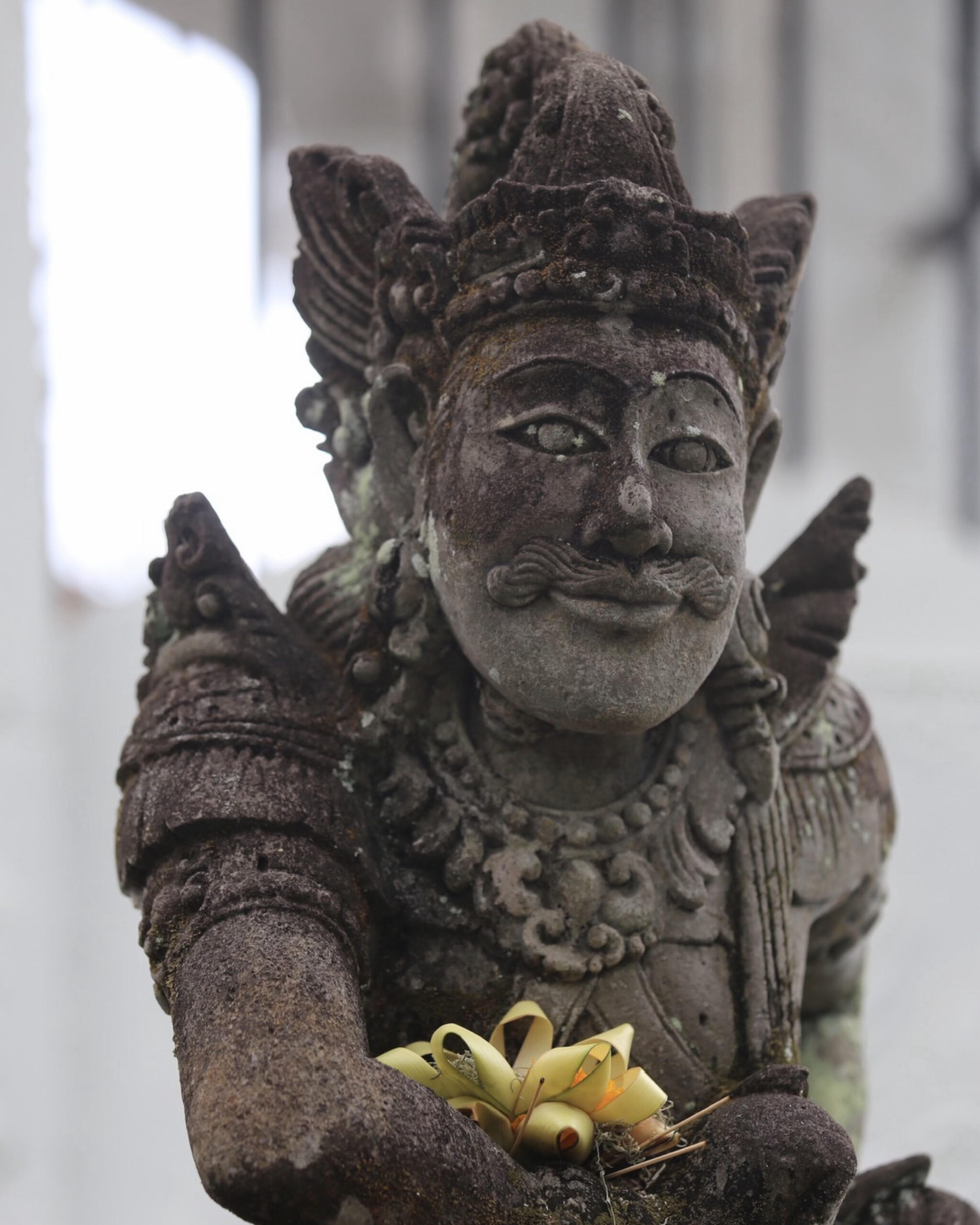
What makes the palace especially striking is its blend of architectural influences. Balinese design meets Dutch colonial elegance and Chinese decorative detail, creating a space that feels both regal and serene. White archways rise over still pools, pavilions sit like islands in the water, and stone sculptures of mythical guardians quietly watch over the grounds.
The palace was heavily damaged by both the eruption of Mount Agung in 1963 and a major earthquake in 1979, but careful restoration has returned much of its beauty. Today, it remains one of East Bali’s most graceful historical landmarks.
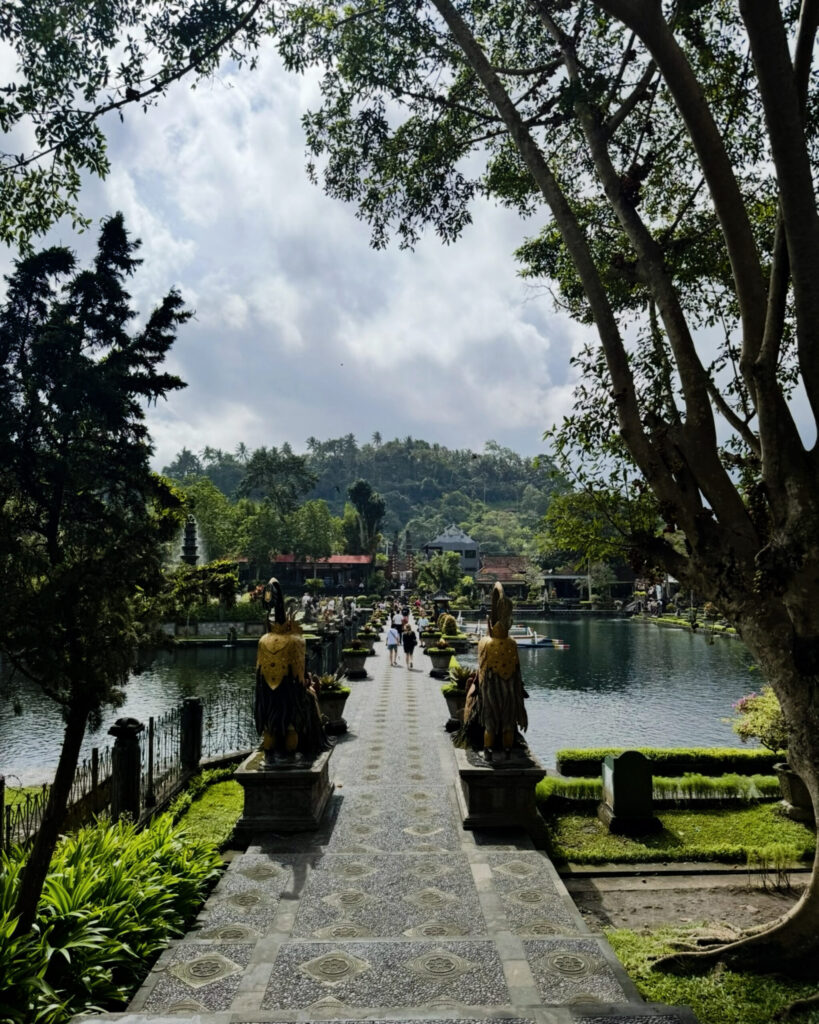
The stroll begins with one of the palace’s most memorable features, a grand 10-meter-long bridge crossing over lotus ponds, immediately setting a regal tone for your visit. To the right sits Gili Bale, meaning Island Pavilion, the beautiful white building that once served as the residence of the King of Karangasem. Its elegant symmetry and quiet position over the water make it one of the most photographed corners of the palace. On the left pond stands Bale Kambang, or Floating Pavilion, with a more open architectural design. This was where the King would receive guests, host meetings, and dine with visiting dignitaries. Further south, tucked quietly between lush greenery, sits Bale Bengong, a small gazebo perched in the middle of the pool. Slightly hidden and wonderfully peaceful, it feels like one of the palace’s secret corners.
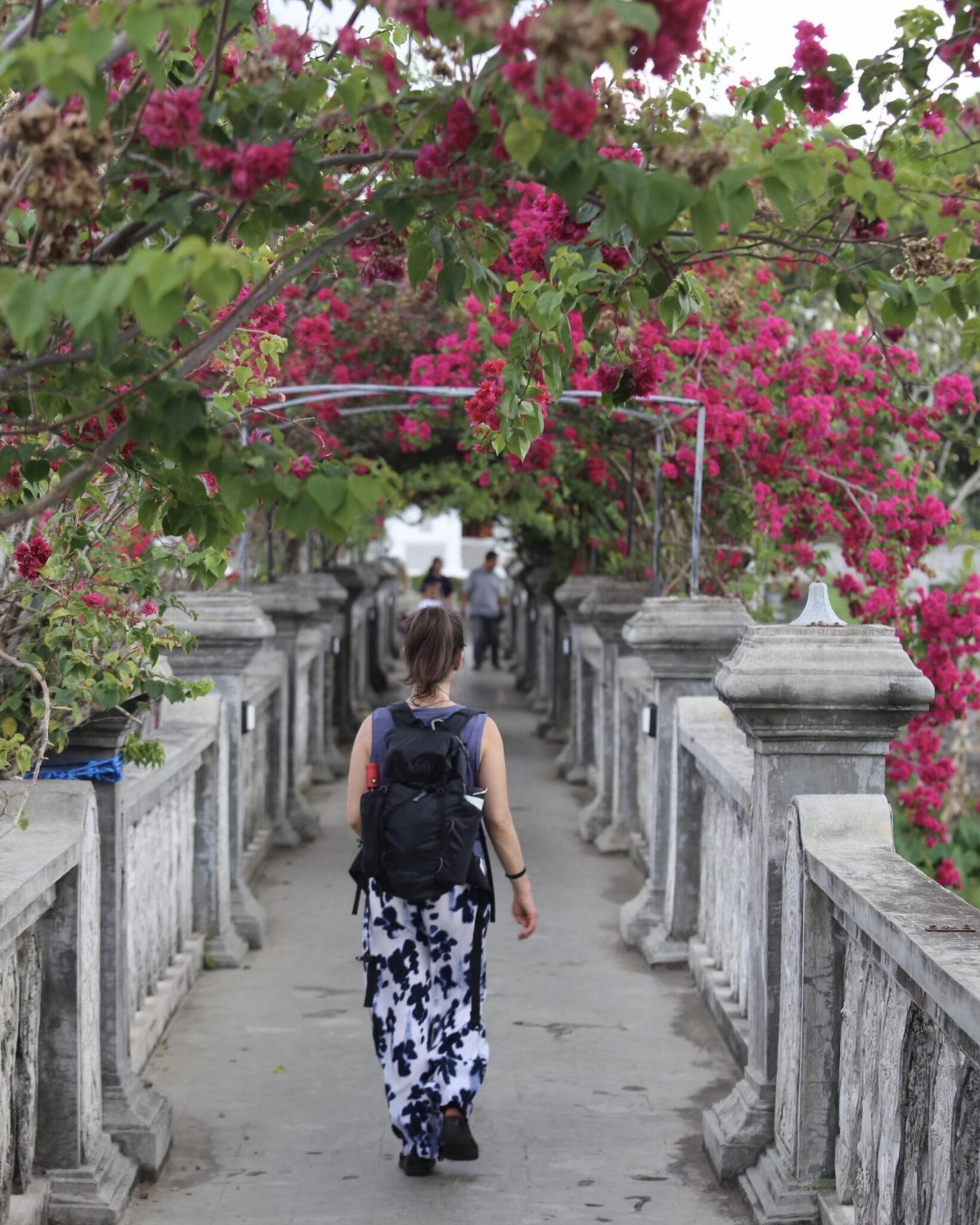
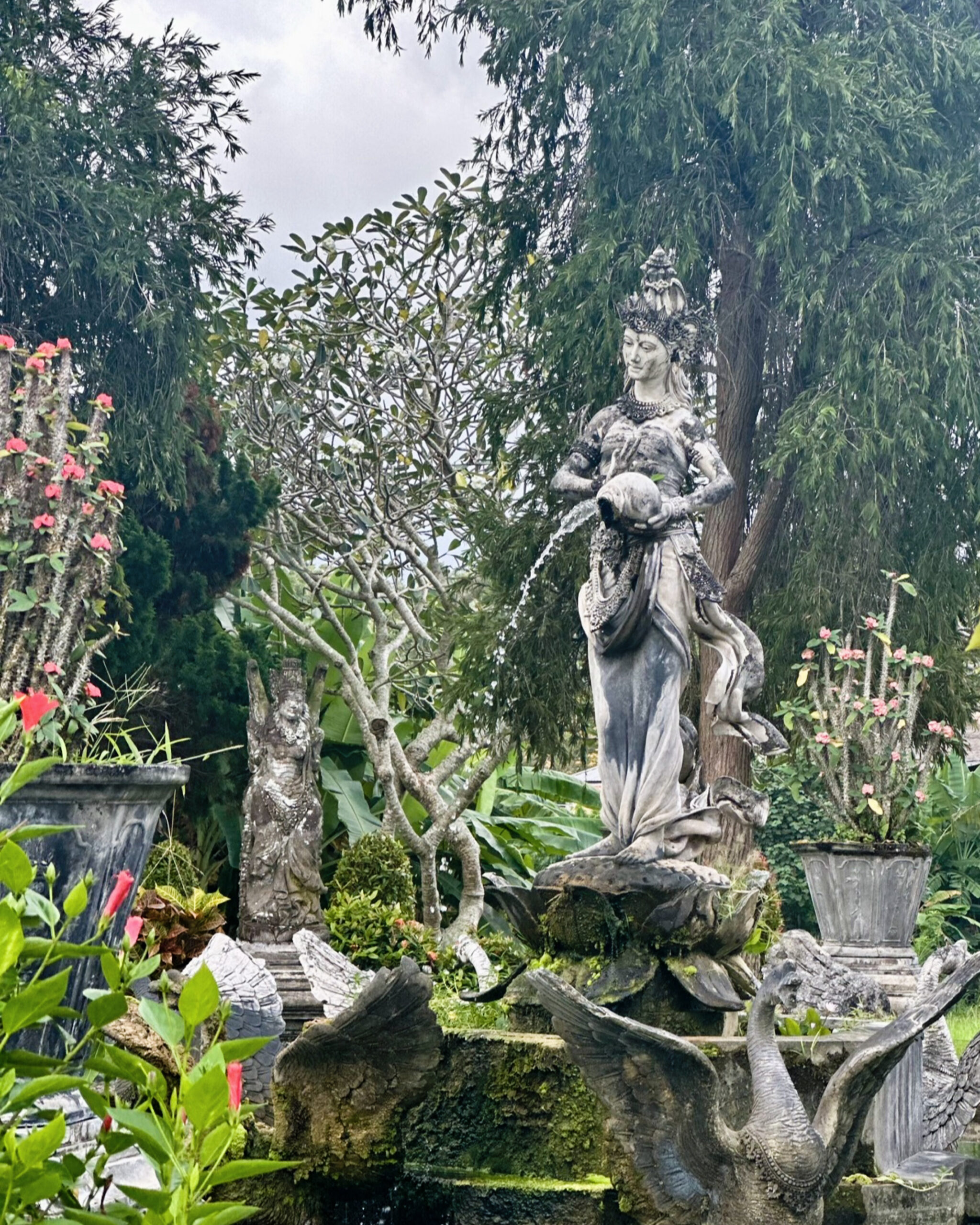
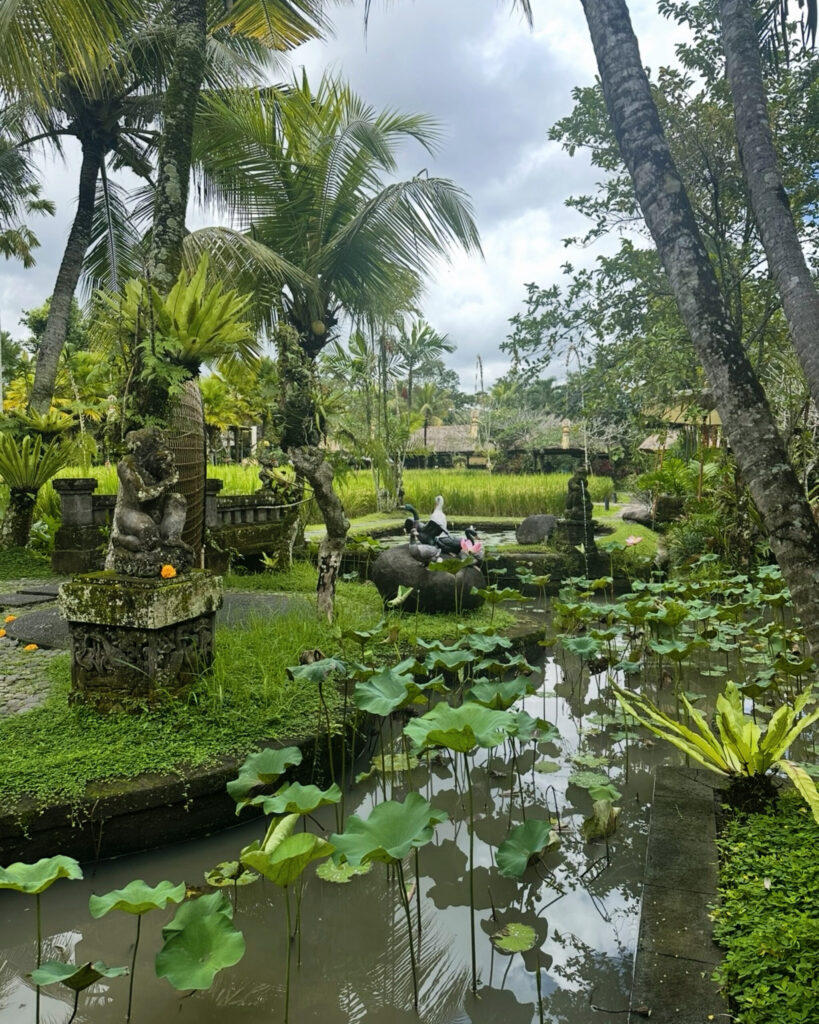
The pathways guide you onward through flowering frangipani, bright bougainvillea, hibiscus blooms, and carefully trimmed gardens. Large ponds shimmer with several varieties of koi fish gliding beneath the surface, while clusters of water lilies float quietly among the reflections. Stone statues rise from the water’s edge, depicting gods, guardians, and mythical creatures that give the gardens an almost dreamlike atmosphere.
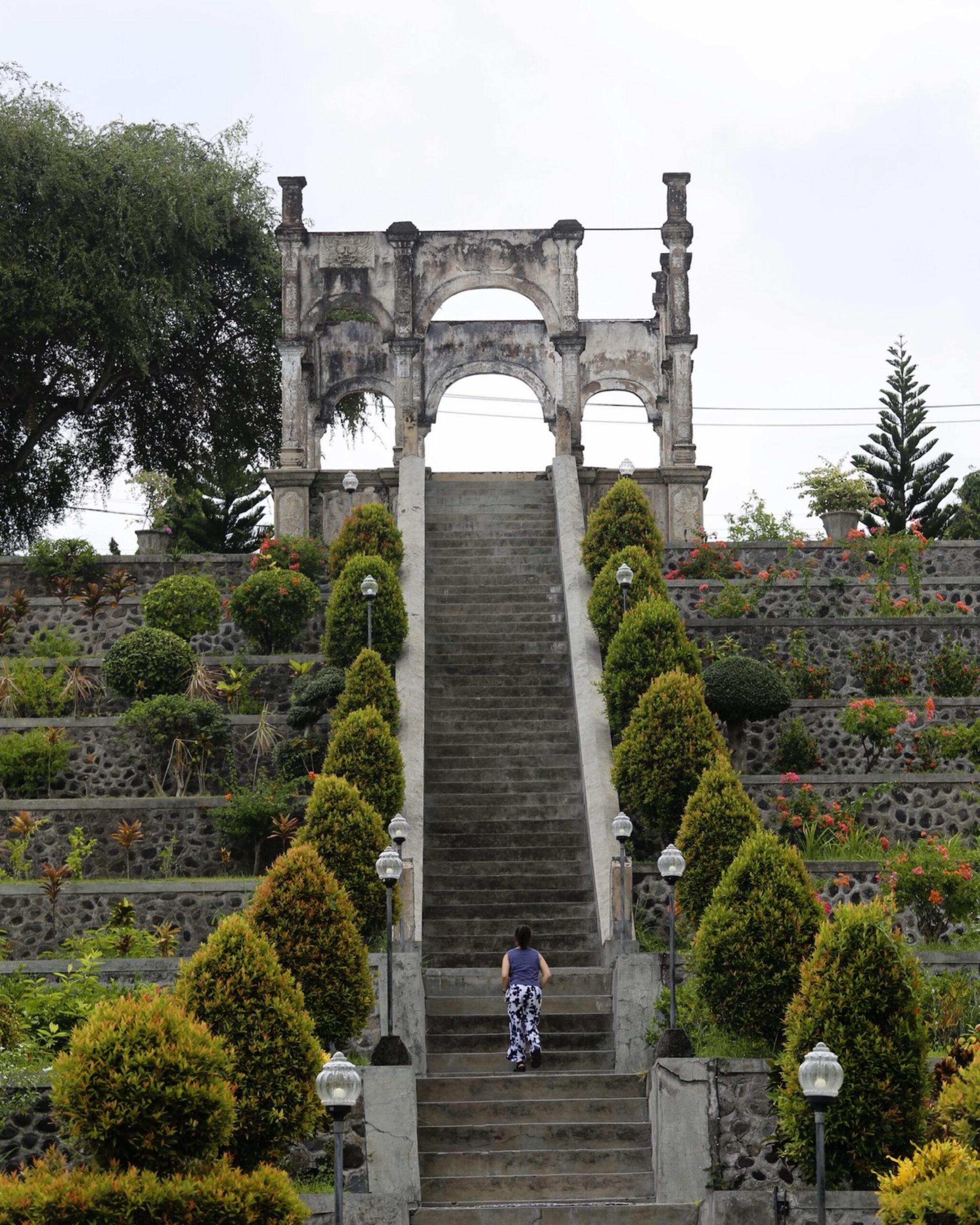
From there, continue upward toward the terraced stairways that climb above the palace grounds. Each level reveals a new perspective: the geometric beauty of the pools below, the rooftops of the pavilions, and the vast surrounding landscape.
Our favorite spot was Bale Kapal, the Ship Pavilion, a ruined pavilion at the highest point of the complex. There is something especially beautiful about its weathered stone arches standing open to the sky. From here, the entire palace unfolds below you—on one side, the blue shimmer of the Lombok Strait; on the other, the towering presence of Mount Agung rising in the distance.
Timeless and breathtaking.
Taman Ujung is wonderfully photogenic. The symmetry of the bridges, the reflections in the pools, the dramatic staircases, and the contrast between bright tropical flowers and white palace walls make nearly every corner camera-worthy. Because the palace is less crowded than many of Bali’s better-known attractions, you often have space to linger, compose the perfect shot, and simply enjoy the quiet.
Some places ask you to explore quickly. Ujung Water Palace invites the opposite.
It asks you to slow down.
To cross the bridge without rushing. To stop at the top of the stairs and look out a little longer. To notice reflections, flowers, koi fish beneath the lilies, old stone carvings, and the way the clouds move across the water.
It is less about checking off a landmark and more about stepping into a softer rhythm for an afternoon.
And that, perhaps, is exactly what a royal retreat was always meant to be.