GIANT TREES & SIERRA TRAILS
King's Canyon &
Sequoia National Parks
Make the most of towering forests, dramatic canyons, scenic drives,
and rewarding hikes across California’s Sierra Nevada.
SIERRA TRAVEL GUIDE
Planning
the Perfect
Sierra Escape
Starts Here
Two Parks, One Remarkable Story
The story of Sequoia and Kings Canyon National Parks can be felt with every step along the trail. Long before these lands became protected parks, Indigenous peoples, including the Mono (Monache) and Yokuts, moved through the mountains seasonally. They lived in rhythm with the land and cared for it in ways that helped the forests thrive.
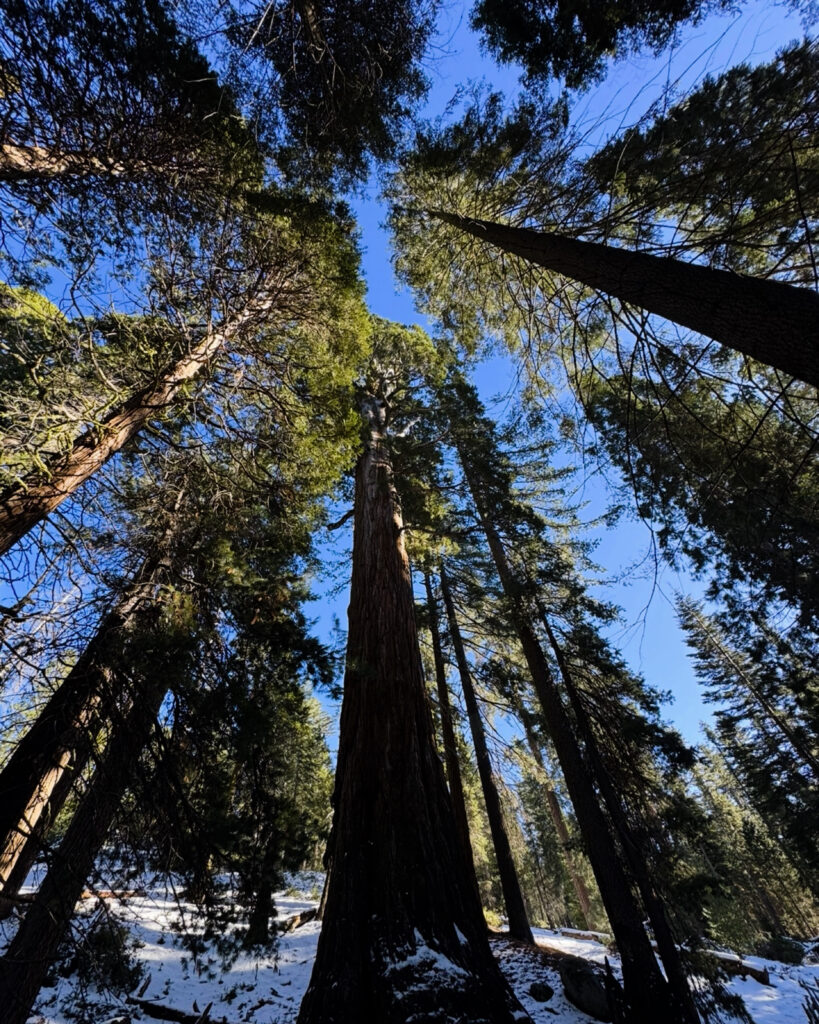
During the 1800s, the California Gold Rush brought increased settlement and industry to the nearby foothills. Logging soon threatened the giant sequoias, but growing efforts to protect these remarkable trees led to the establishment of Sequoia National Park in 1890, making it one of the country’s oldest national parks. Today, it is home to the General Sherman Tree, the largest tree on Earth by volume. And yes, it’s every bit as awe-inspiring as you might imagine.
Just to the north, Kings Canyon National Park was established in 1940, protecting vast wilderness and one of the deepest canyons in North America. Carved by glaciers and shaped by the Kings River, the landscape is filled with dramatic granite walls, rushing water, and rugged mountain scenery. It is often compared to Yosemite, but usually feels quieter and less crowded.
The surrounding Sequoia National Forest protects even more of this extraordinary region. Today, Sequoia and Kings Canyon National Parks are managed together, making it easy to experience both in one trip. Whether you’re walking beneath ancient trees or climbing toward a sweeping canyon view, you’re moving through layers of natural and human history that make these landscapes even more meaningful.
What to Know
Before You Go
01 | ARRIVAL
Park Entry
& Passes
Sequoia and Kings Canyon are managed together, so one entrance fee covers both parks for seven consecutive days. Bring your park pass or purchase entry when you arrive.
Most visitors enter through Big Stump on Highway 180 for Kings Canyon or Ash Mountain on Highway 198 for Sequoia. The parks are open 24 hours a day, although roads, visitor centers, and services can close seasonally.
An America the Beautiful Pass covers standard entrance fees. Additional fees or documentation requirements may apply to international visitors, so confirm current National Park Service guidance before traveling.
02 | WHEN TO GO
Best Time to
Visit
03 | IN YOUR BAG
What to Pack
✓ Comfortable hiking shoes
✓ Lightweight daypack
✓ Reusable water bottle
✓ Sweater or warm fleece
✓ Waterproof outer layer
✓ Sunscreen and sunglasses
✓ Hat for sun or cold
✓ Trail snacks and lunch
✓ Portable phone charger
✓ Downloaded offline maps
✓ Basic first-aid supplies
✓ Tire chains when required
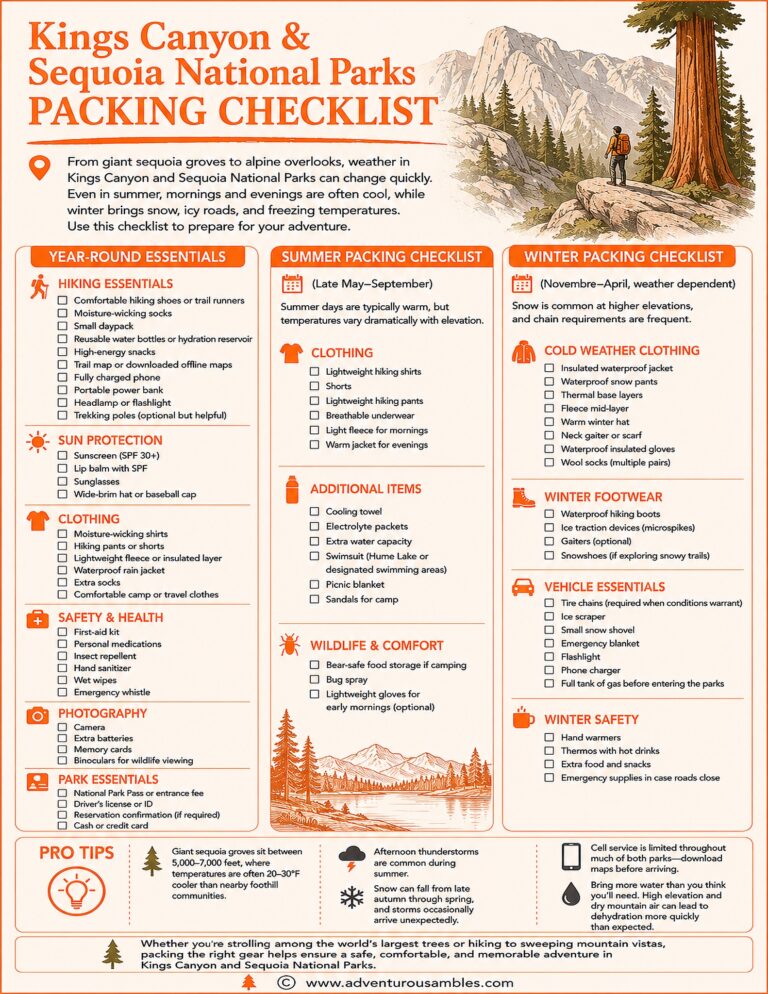
Save this printable Kings Canyon & Sequoia National Parks Packing Checklist before you go! From hiking essentials and sun protection to summer gear, winter safety, and pro tips, this one-page guide helps you arrive prepared for every season in California’s giant sequoia country. Download it, print it, or keep it on your phone for easy reference before your next adventure.
04 | BUDGET
Park Fees
& Passes
Official entrance fees ↗
05 | ON THE MOVE
Getting
around
the Parks
06 | THE BEST WAY
On foot
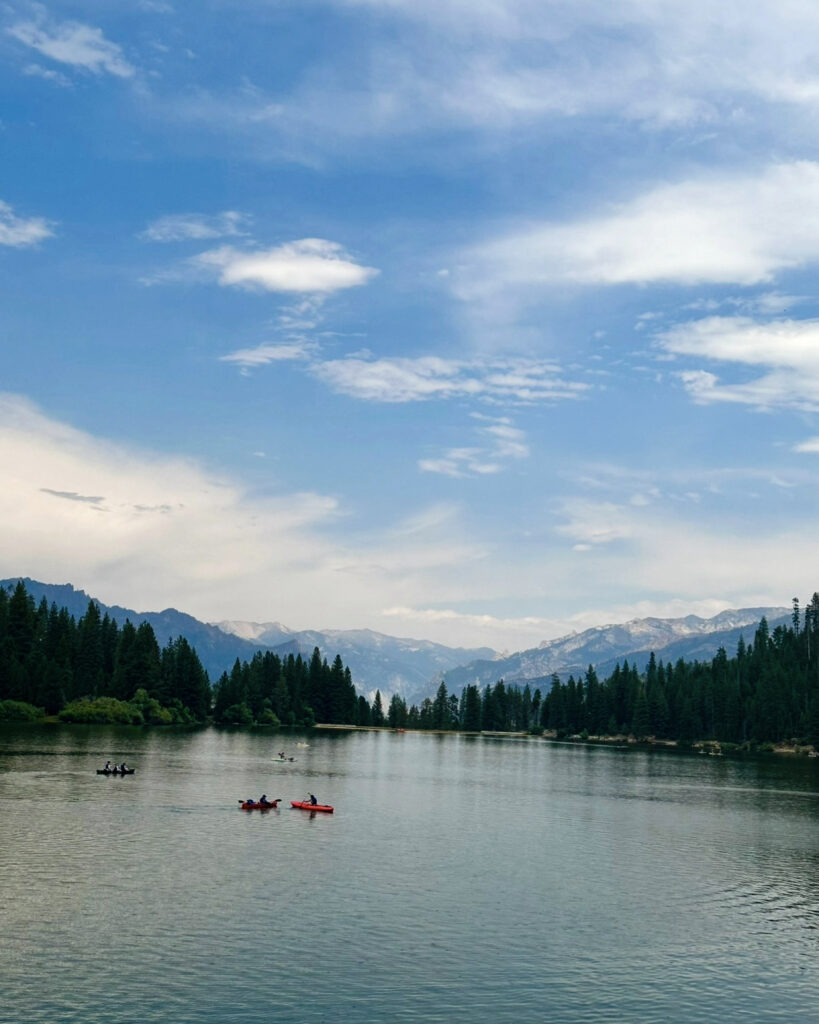
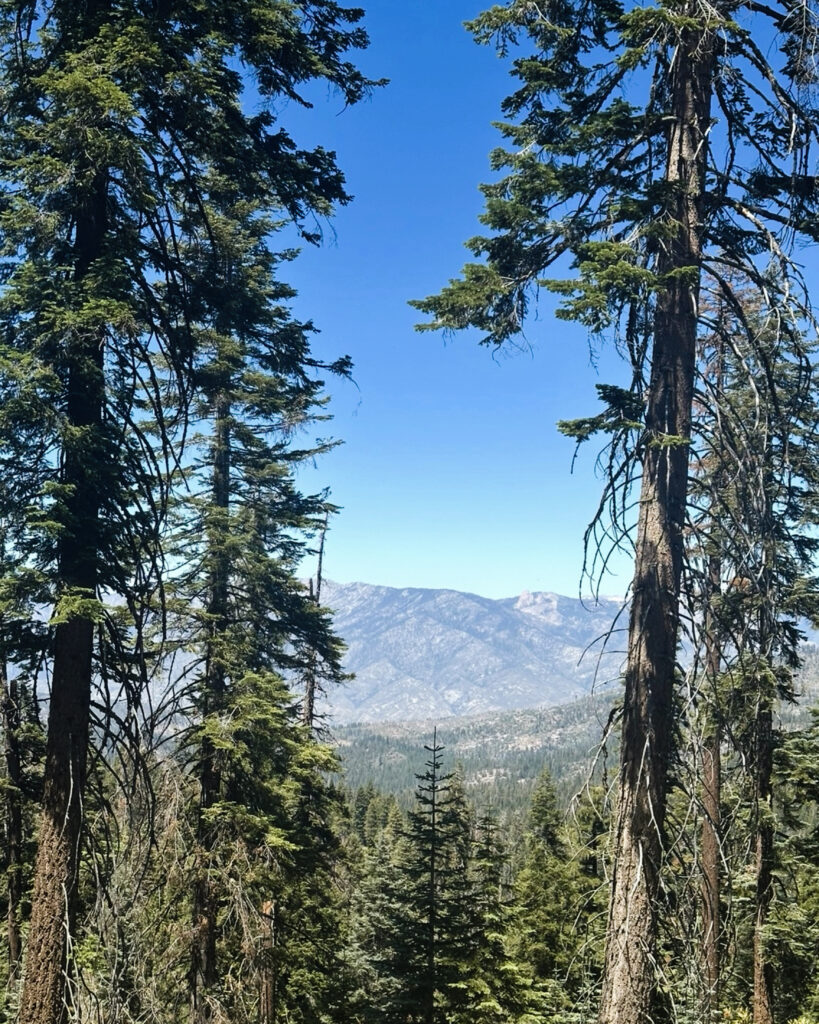
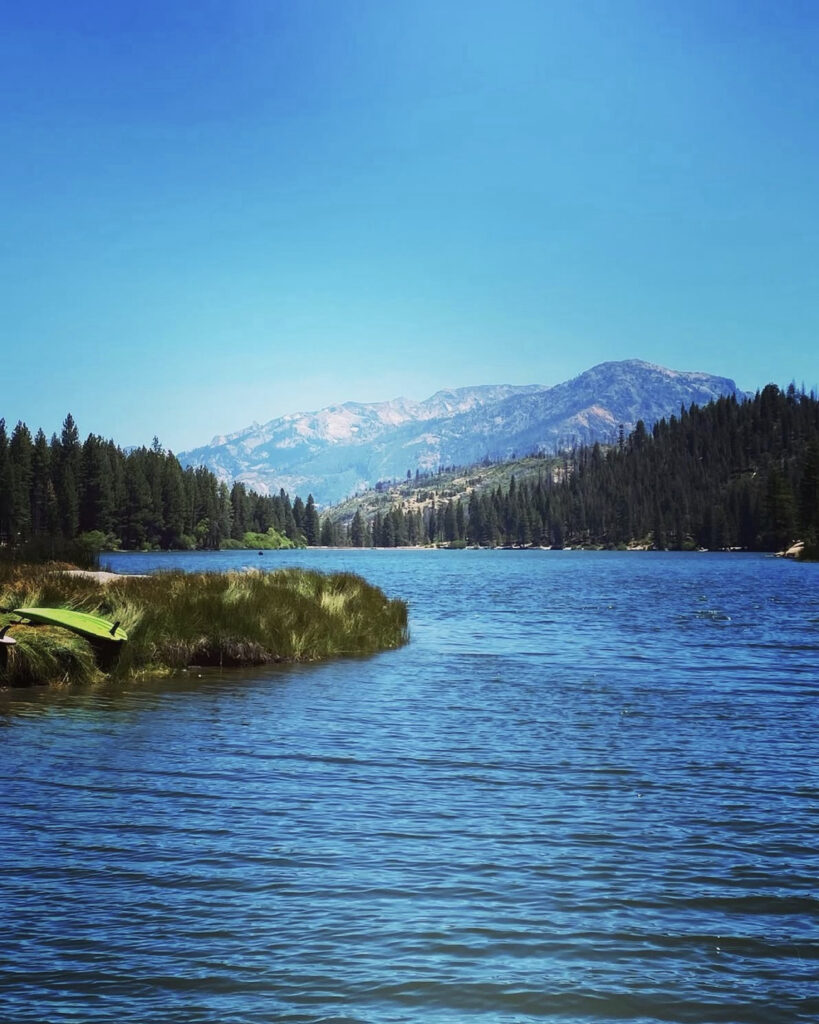
Follow a quiet path beneath trees that have stood for centuries. Walk around Hume Lake with mountain reflections beside you. Climb toward an overlook, pause beside the Kings River, or wander through Grant Grove until the forest becomes the destination.
Some of the most memorable moments here happen on the short trails you almost skipped.
USEFUL LINKS
Walks, trails &
destinations
Hume Lake Loop Trail ↗
Moro Rock ↗
07 | QUICK BASICS
Park Hours, Services
& Where to Stay
PARK HOURS
VISITOR CENTERS
TIME ZONE
08 | GOOD TO KNOW
Frequently Asked Questions
How many days should I spend in the Kings Canyon and Sequoia National Park region?
To experience the highlights of both parks, plan to spend 2–3 days. This gives you enough time to visit iconic attractions like the General Grant Tree, General Sherman Tree, Moro Rock, Hume Lake, and several short hikes. If you enjoy longer hikes, scenic drives, or photography, 4–5 days allows for a more relaxed visit and time to explore Cedar Grove, Mineral King, or lesser-visited trails.
Which entrance should I use?
The best entrance depends on what you want to see first:
- Highway 180 (Big Stump Entrance): Best for Kings Canyon National Park, Grant Grove, Hume Lake, and Cedar Grove.
- Highway 198 (Ash Mountain Entrance): Best for Sequoia National Park, the General Sherman Tree, Moro Rock, Giant Forest, and Lodgepole.
If you're planning to visit both parks, you can enter through one entrance and drive the scenic Generals Highway between them (weather permitting). During winter, sections of the highway may temporarily close because of snow.
Do I need reservations?
No. Reservations are not required to enter Sequoia or Kings Canyon National Parks. You'll simply need a valid park entrance pass or an America the Beautiful Pass.
However, reservations are recommended or required for some services, including:
- Campgrounds
- Lodging
- Crystal Cave tours (when operating)
- Wilderness backpacking permits
Booking these well in advance is especially important during the busy summer season.
When does it snow?
Snow is common from late fall through early spring, typically November through April, although higher elevations can receive snow earlier or later depending on the year. Winter storms may temporarily close roads, and tire chains are often required. If you're visiting between November and May, check current road and weather conditions before you travel. Even in spring, you may encounter snow around Giant Forest and Grant Grove.
Can I bring dogs?
Yes, but with restrictions. Dogs are welcome in developed areas such as campgrounds, picnic areas, parking lots, and paved roads while on a leash no longer than 6 feet.
Dogs are not allowed on hiking trails, in wilderness areas, or inside most park buildings, including visitor centers. If you want to hike with your dog, nearby national forest lands surrounding the parks offer many dog-friendly trails.
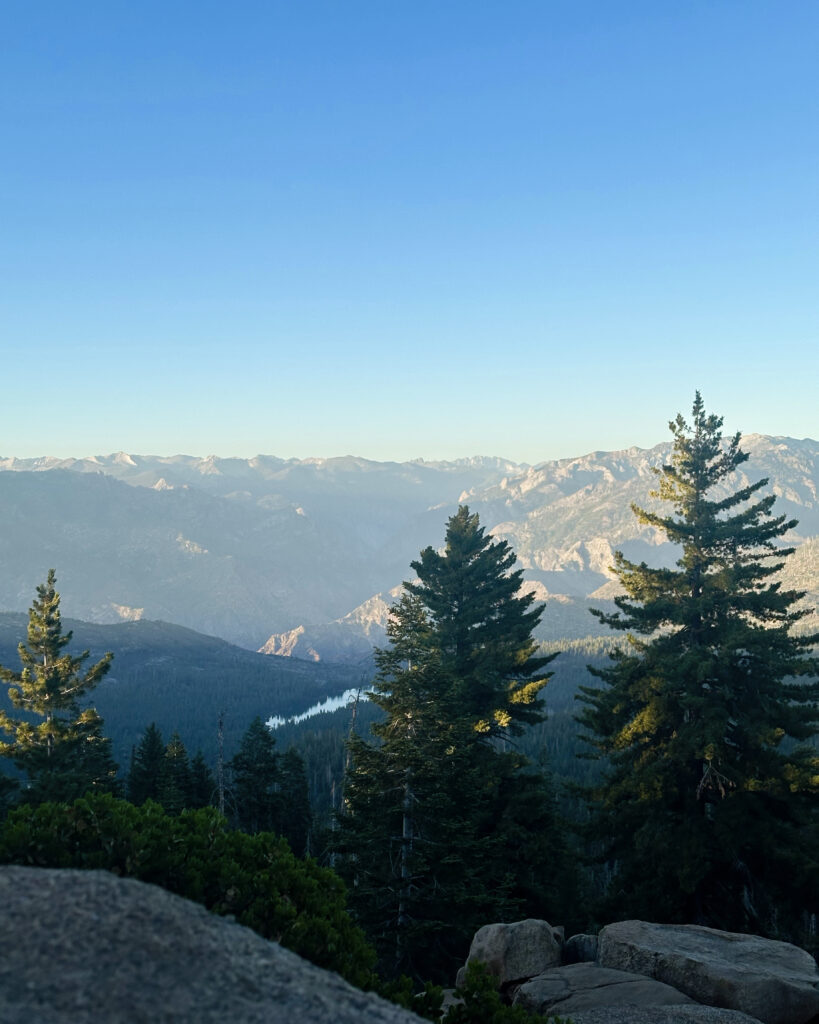
Walk beneath an ancient sequoia. Follow the curve of a mountain lake. Stop at an overlook you did not plan to visit, then stay a little longer when the afternoon light reaches the canyon walls.
Whether you come for the towering trees, quiet forest trails, granite peaks, or the simple joy of being outside, these mountains have a way of making every step feel like part of the story.
John Muir, My First Summer in the Sierra
THOUGHTFULLY RESEARCHED
Written by Jacqueline Miller, founder of Adventurous Ambles. Through firsthand travel, original photography, and detailed route research, Jacqueline creates walking guides, hiking resources, destination reading lists, and travel inspiration for curious travelers. Unless otherwise noted, all content and photography on Adventurous Ambles are original works protected by copyright.
KEEP WANDERING
More Adventurous Ambles in King's Canyon and Sequoia National Parks
READING LIST
The Ultimate Reading List For California’s Giant Forests
King’s Canyon & Sequoia National Park, California, US
Destination Reads
HIKING GUIDE
HIKING GUIDE