A Brief History of Ireland

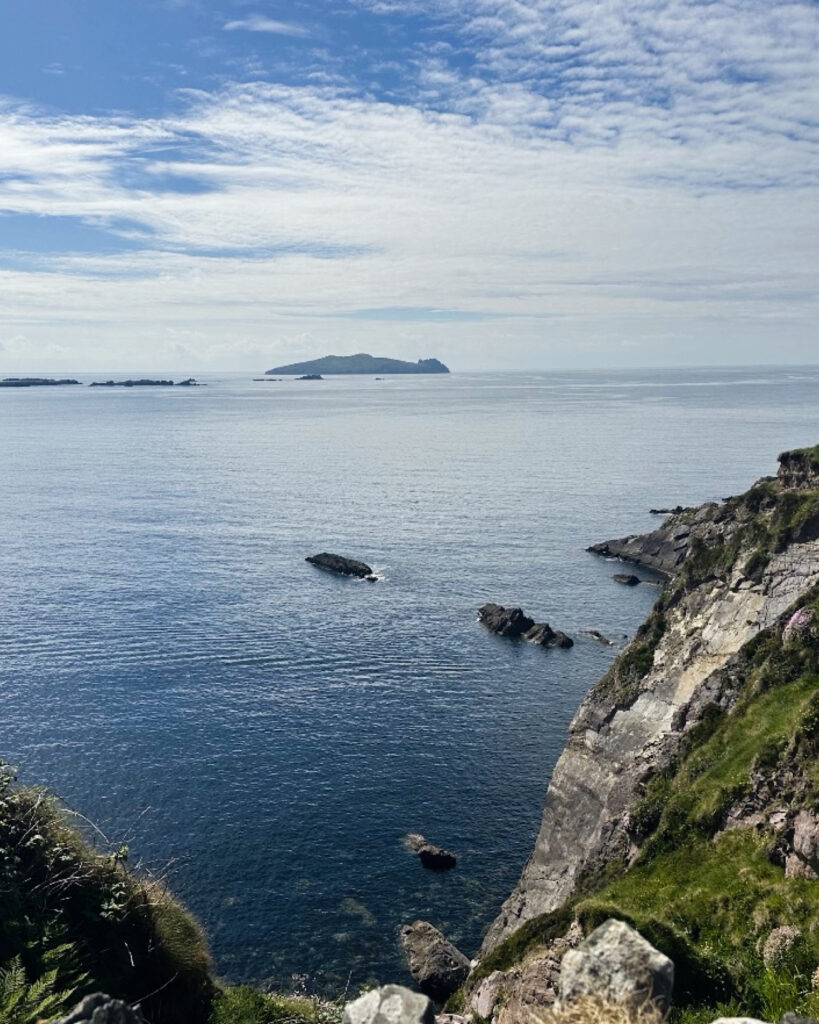
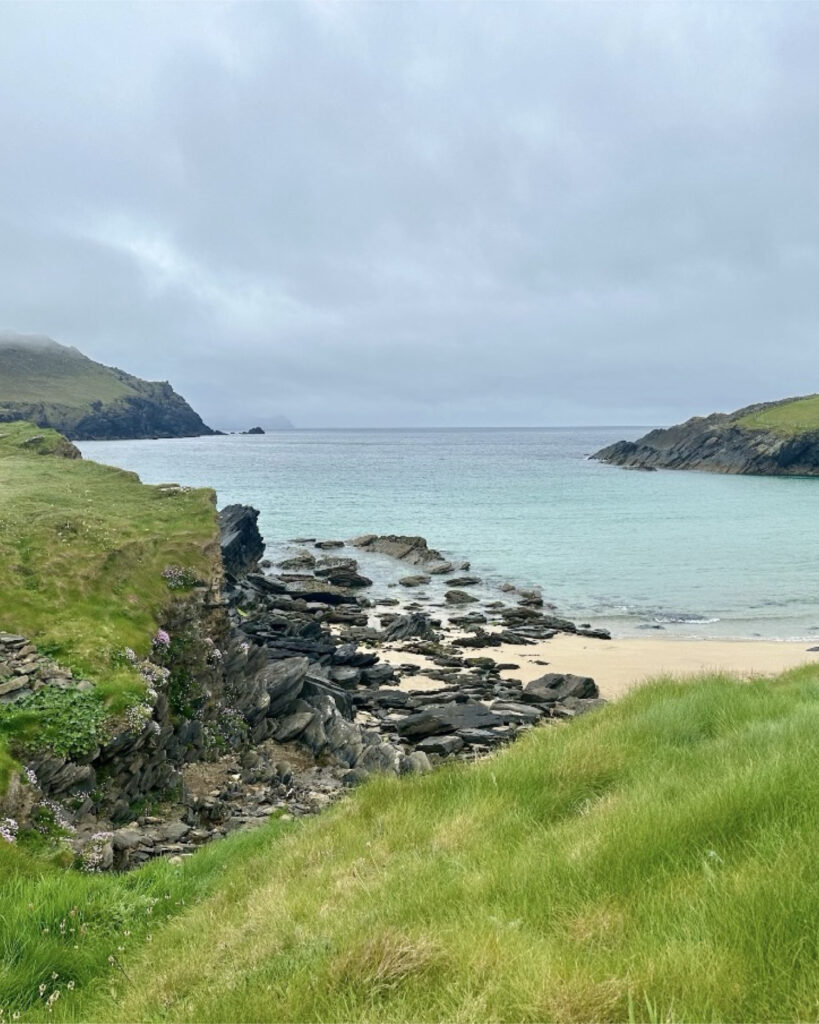
There’s something about Ireland that makes you want to slow down and wander. Maybe it’s the rolling green hills stitched together by old stone walls, the dramatic cliffs where the Atlantic crashes below, or the cozy villages where every pub seems to hold a story. It might be the music drifting out of an open doorway in Galway, or the way even a rainy walk through Dublin somehow feels romantic.

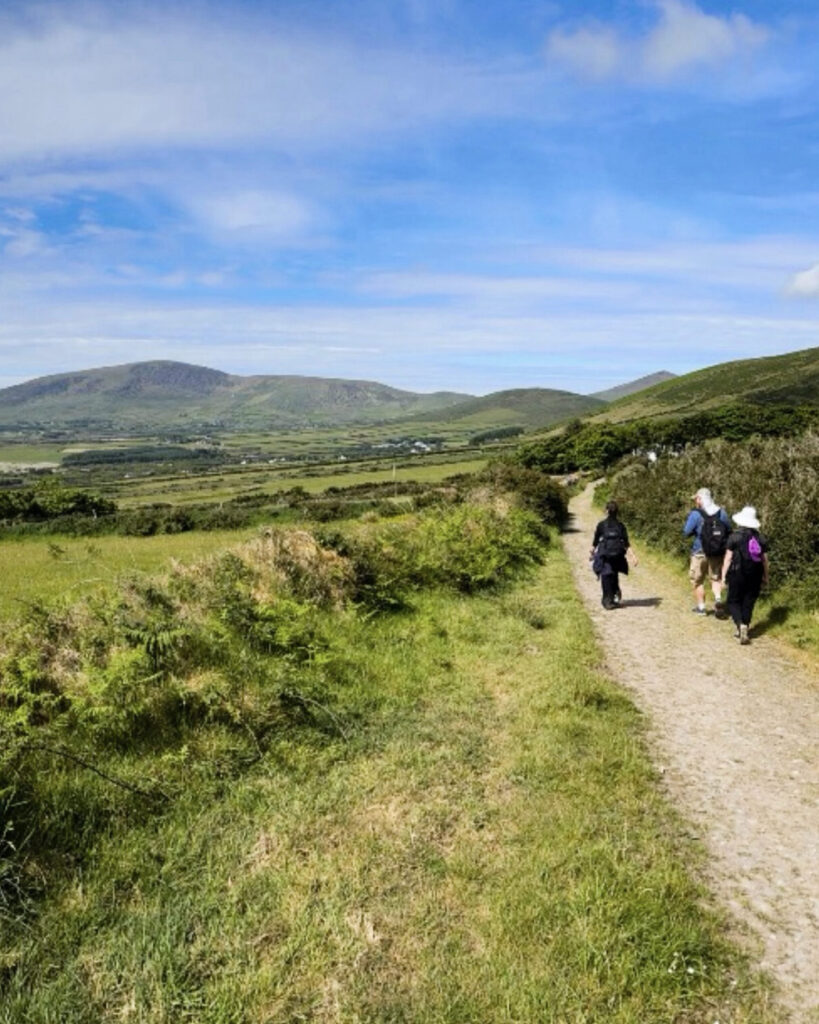
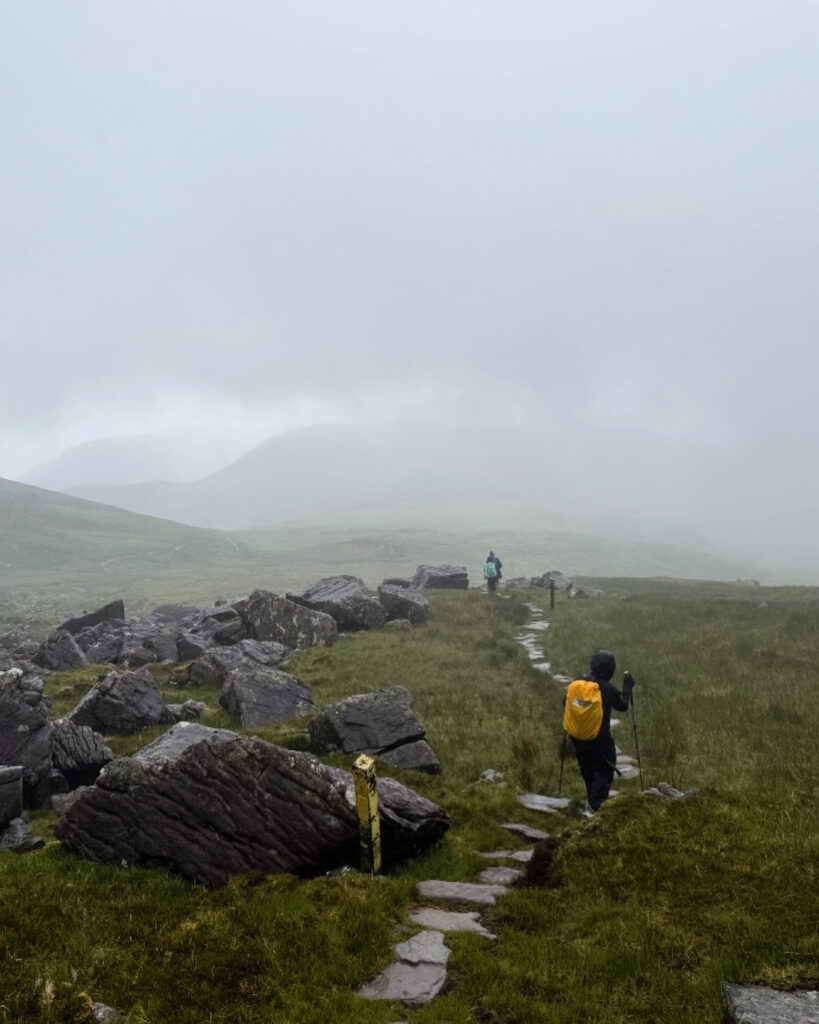
Ireland is one of those places that feels made for walking. From city strolls through cobbled streets to coastal hikes along the Wild Atlantic Way, every path seems to come with a little history and a lot of scenery.

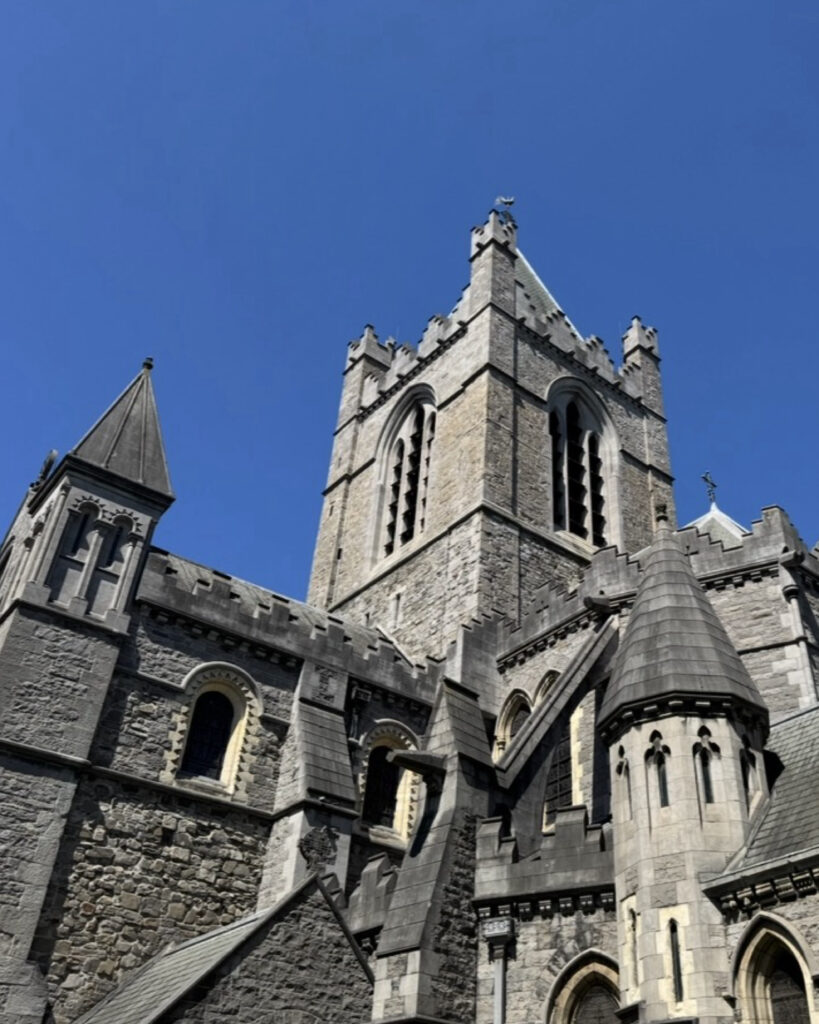
Ireland’s story stretches back thousands of years. Long before castles and cathedrals, there were ancient stone tombs like Newgrange, built even before the pyramids of Egypt. Celtic tribes shaped much of early Irish culture, followed by Viking settlers who founded cities like Dublin. Christianity arrived with St. Patrick in the 5th century, and Ireland became known as the Land of Saints and Scholars, with monasteries preserving knowledge during Europe’s Dark Ages.

Later came Norman castles, centuries of British rule, and the heartbreak of the Great Famine in the 1840s, which changed the country forever and sent millions of Irish people abroad. After a long fight for independence, most of Ireland became a republic, while Northern Ireland remained part of the United Kingdom. Today, Ireland feels like a beautiful blend of old and new—rich in tradition, fiercely proud of its culture, and always ready with a good story.
Visitor Essentials: What to Know Before You Go

Visas and Entry

Getting into Ireland is fairly easy for many travelers. For U.S. visitors, the Republic of Ireland is wonderfully straightforward.

  • You can usually stay for up to 90 days without needing a visa
  • Your passport should be valid for the length of your stay
  • Ireland is not part of the Schengen Zone, so its entry rules are separate from much of Europe
  • It’s always smart to carry proof of your return flight and accommodation details, just in case immigration asks

If your trip includes Northern Ireland, whether for Belfast, the Giant’s Causeway, or crossing the border during a road trip, you’ll also need to check UK entry requirements

U.S. visitors now need a UK Electronic Travel Authorisation (ETA) to enter Northern Ireland, since it’s part of the United Kingdom.

A few quick things about the ETA:

  • It’s a simple online application
  • It currently costs £20 (about $27 USD)
  • It’s best to apply before your trip so there are no surprises at the border

It’s one of those small travel details that’s easy to miss but much nicer to sort out before you’re standing at the airport with a coffee in one hand and your passport in the other.

Best Time to Visit

The best time to visit Ireland is usually from May through September, when the days are long, the countryside is glowing green, and the weather is as good as Ireland can promise.

Each season has its own charm:

  • Spring (March–May): wildflowers, fewer crowds, fresh green landscapes
  • Summer (June–August): festivals, pub gardens, longest daylight hours
  • Autumn (September–October): golden trees, cozy city weekends, fewer tourists
  • Winter (November–February): castle hotels, pub fires, moody coastal views

Ireland is beautiful year-round—it just depends on whether you’re chasing sunshine or stormy cliff walks.

What to Pack

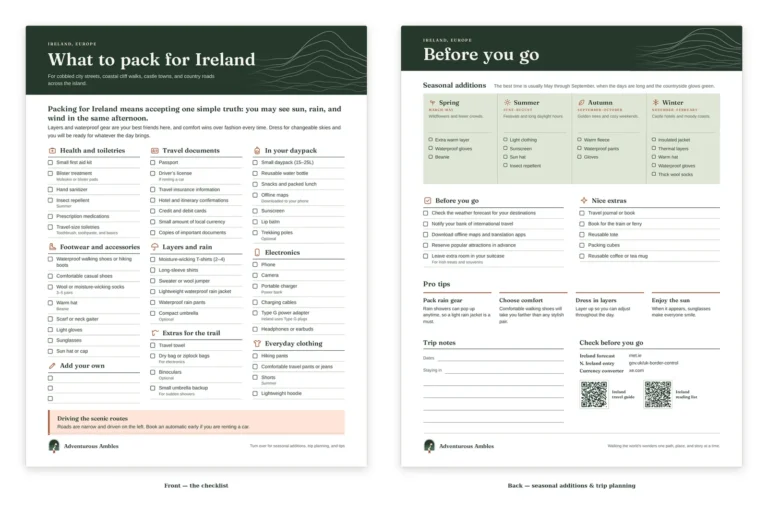
Packing for Ireland means accepting one simple truth: you will probably see sunshine, rain, wind, and clouds all in the same day.

Essentials to bring:

  • Waterproof walking shoes
  • Lightweight rain jacket
  • Layers like sweaters, scarves, and a warm fleece
  • Small daypack for hikes and day trips
  • Type G power adapter
  • Portable charger
  • Reusable water bottle
  • Sunglasses—because when the sun appears, everyone celebrates

Comfort over fashion wins every time here.

Average Costs

Ireland can be done on a budget, but it also knows how to tempt you into castle hotels and long pub dinners.

Typical costs:

Countryside guesthouses are often the best mix of comfort, charm, and value.

Getting Around Ireland

Ireland is one of those places where the journey becomes part of the adventure.

  • By Car: Renting a car is often the best option for places like the Ring of Kerry, the Dingle Peninsula, and the Wild Atlantic Way.
  • By Train: Trains are one of the easiest and most scenic ways to travel between Dublin, Cork, Galway, Limerick, and Belfast.
  • By Bus: Buses are excellent for reaching smaller towns and coastal villages where train lines don’t go.
  • By Taxi: FREENOW is the most popular taxi app in Ireland and connects you with licensed drivers in cities like Dublin, Cork, and Galway. It describes itself as Ireland’s number one taxi app.
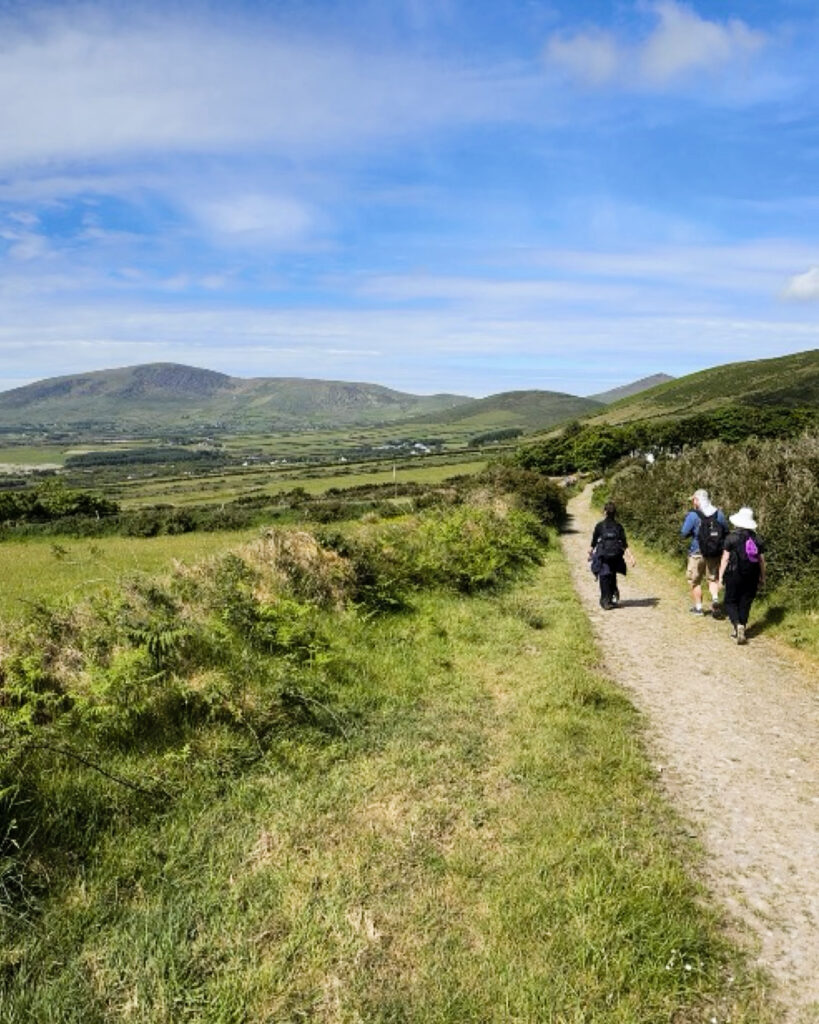
  • On Foot: Honestly, some of the best exploring in Ireland happens on foot. Walk through Galway’s colorful streets, the cliffs of Howth, castle gardens in Kilkenny, or tiny village lanes where every wrong turn leads somewhere beautiful. Ireland rewards wandering, and often the best memories come from the places you didn’t plan to find. For walkers looking for a bigger adventure, Ireland is perfect for inn-to-inn hiking holidays where you spend your days walking through beautiful landscapes and your evenings in cozy B&Bs, guesthouses, or welcoming village pubs rather than pitching a tent.

Currency, Language, and Time Zone

A few quick basics before you go:

If your trip crosses into Belfast or the Giant’s Causeway, it’s worth keeping both currencies in mind.

Wander through Ireland one step at a time, from windswept cliffs and colorful villages to cozy pubs and ancient stories waiting around every corner.

What makes Ireland special isn’t just the famous landmarks, it’s the little moments in between.

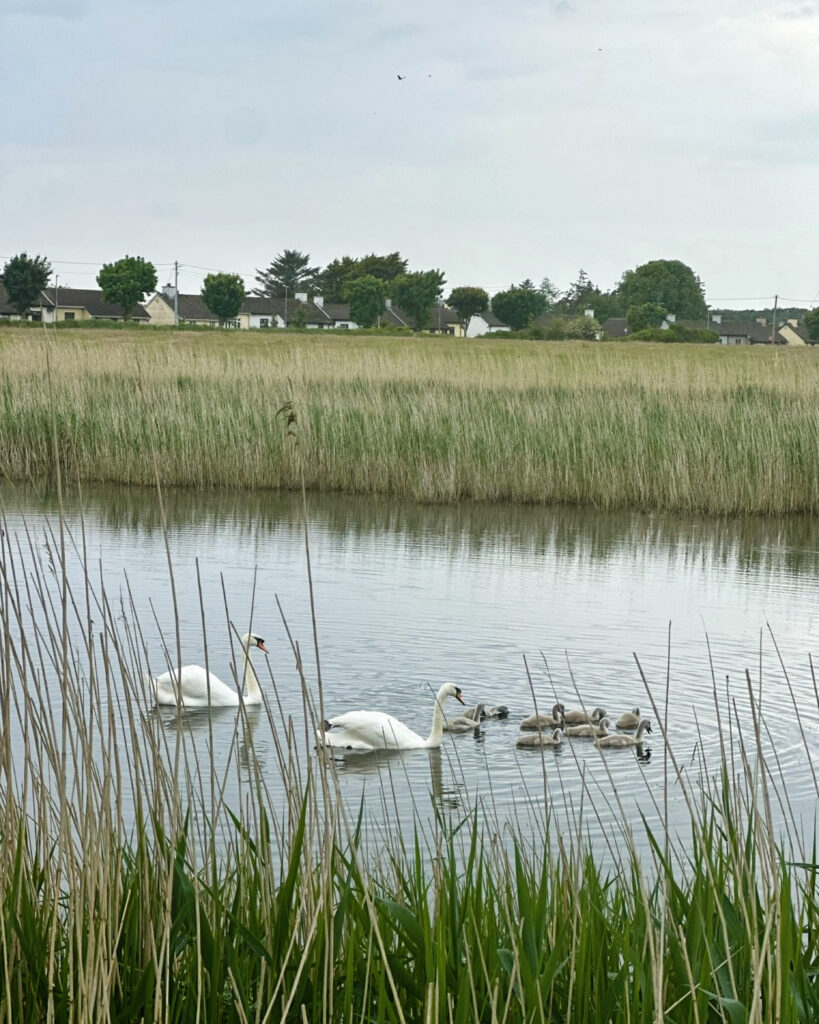
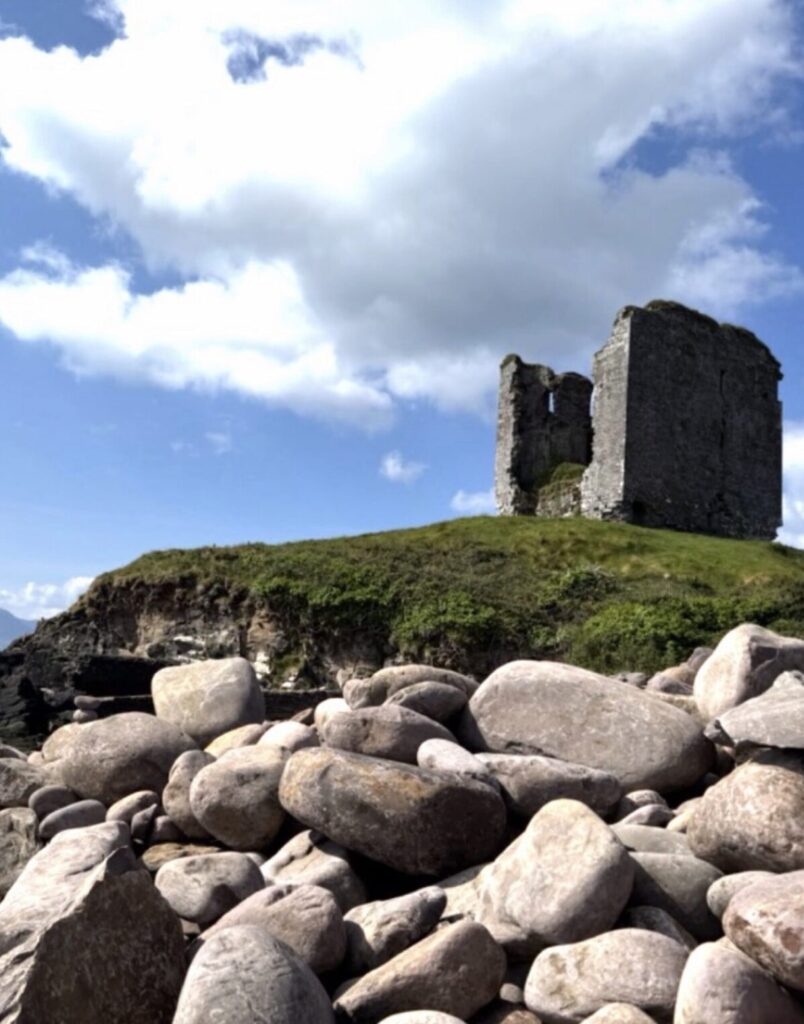
The quiet country road lined with bleating sheep. The pub where a stranger starts telling you family history like you’ve known them for years. The unexpected castle ruins you stumble across simply because you took the wrong turn.

It’s a place that rewards slowing down, walking a little farther, and saying yes to the scenic route.

And honestly, that feels exactly like the kind of adventure we’re always chasing at Adventurous Ambles.

Scroll to Top