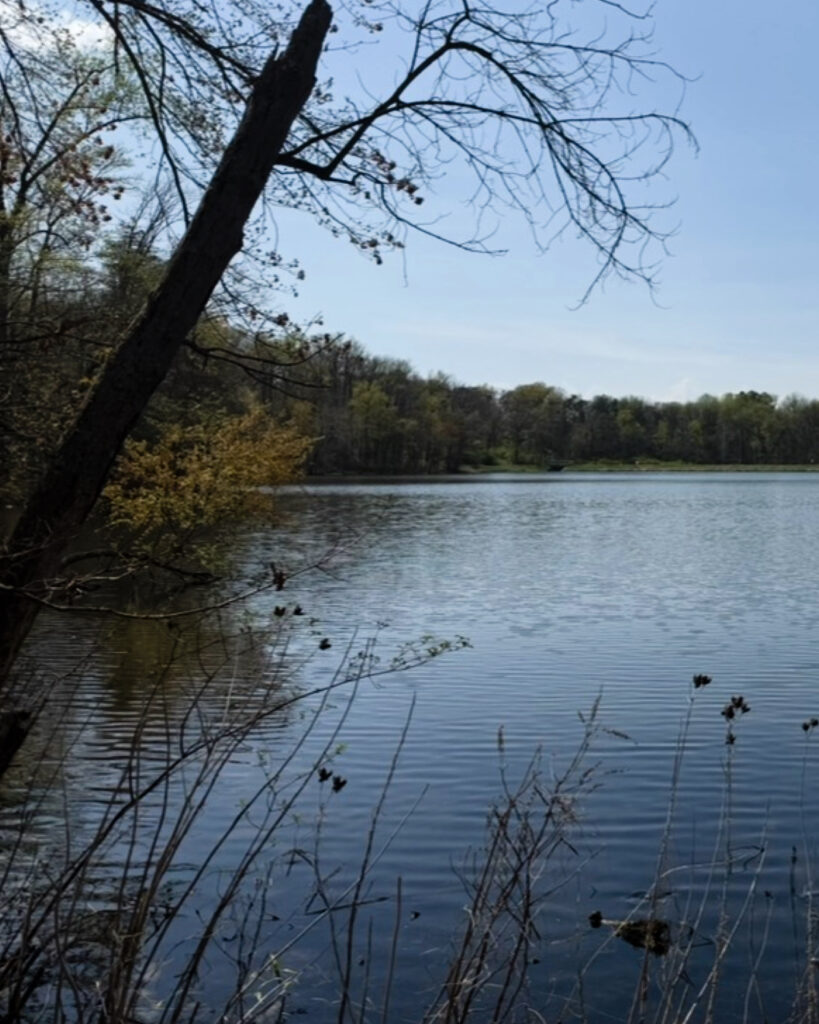
A Brief History of the DMV

The region now known as the DMV (short for the District of Columbia, Maryland, and Virginia) is far more than a political hub. It’s a layered landscape of rivers, revolutions, and reinvention.

Long before monuments and marble, the land along the Potomac and Anacostia Rivers was home to Indigenous communities like the Nacotchtank, who thrived on trade and natural resources.

In 1790, a young nation made a bold decision: to create a neutral capital that belonged to no single state. Maryland and Virginia each ceded land to form a new federal district along the Potomac River; a political compromise that helped unify the country after the American Revolution.

By 1800, Washington, D.C. became the official seat of government. Over the next two centuries, the region would grow into a center of power, protest, and progress, from the rebuilding after the War of 1812 to its pivotal role in the Civil Rights Movement.

Meanwhile, Maryland and Virginia evolved alongside the capital. Historic port towns like Annapolis and Alexandria, agricultural landscapes, and later suburban expansions created the interconnected region we now call the DMV: a vibrant metropolitan area of over 6 million people tied together by culture, commuting, and the rhythm of daily life.

Today, the DMV feels like a seamless blend of historic streets, suburban neighborhoods, and accessible green spaces, all connected by transit. The DMV is perfect for travelers who like to explore on foot and just as importantly, by train. With the Metro connecting key areas in Maryland and Virginia, you can wander beyond D.C. without ever needing a car, discovering charming towns, riverside paths, and surprisingly wild pockets of nature along the way.
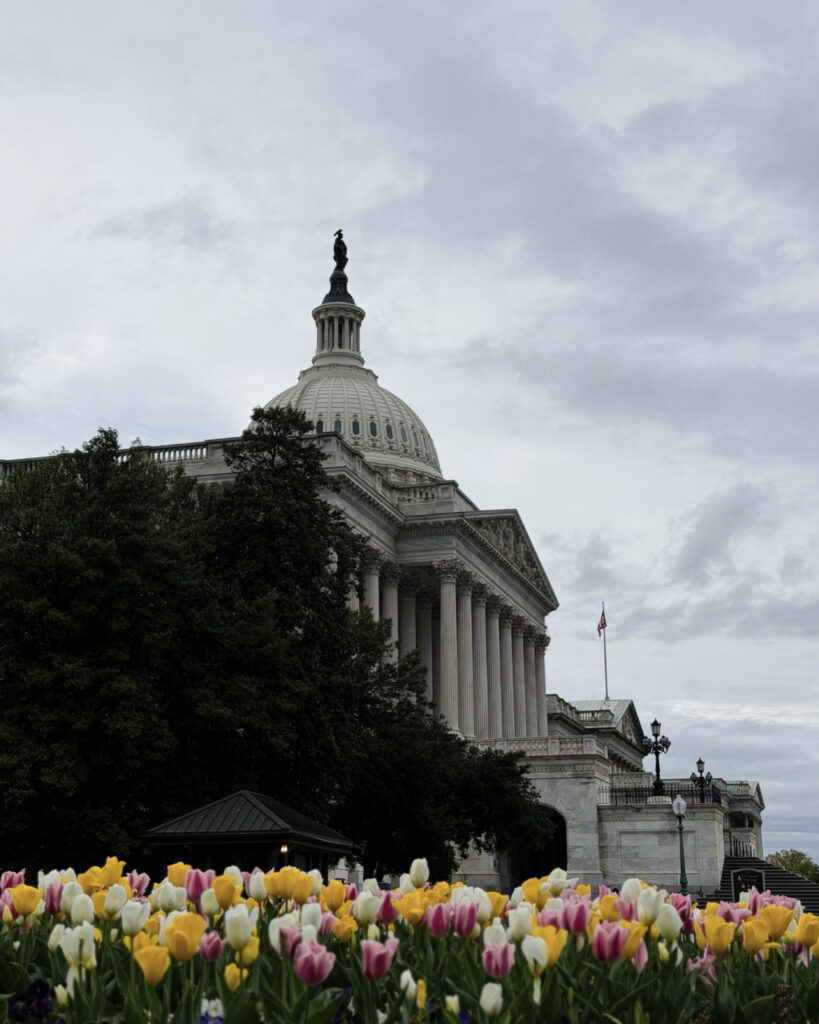
us capitol building in washington dc
VISITOR ESSENTIALS

What to Know
Before You Go

One capital region.

Three distinct destinations.

Follow the Metro beyond the monuments to riverside paths, old towns, and forested trails.

01  |  ARRIVAL

Getting Here

Three airports serve the region. Reagan National is closest to downtown and sits directly on Metro. Dulles connects by the Silver Line, while BWI offers rail and shuttle connections. Amtrak arrives at Union Station in the heart of DC.

DCA
Closest to central DC

IAD
International gateway

BWI
Often a value option

USEFUL LINKS
Arrival resources
Reagan Airport ↗
Dulles Airport ↗
BWI Airport ↗
Union Station ↗

02   |  WHEN TO GO

Best Time to
Visit

Spring and fall bring the most comfortable walking weather, but every season gives the capital a different character.
Spring
March-May
Cherry blossoms and ideal walking weather
Summer
June-August
Lush but humid; best for early morning or evening strolls
Fall
September-November
Crisp air and vibrant foliage.
Winter
December to February
Quieter, with fewer crowds and peaceful park walks
USEFUL LINKS
Weather planning
Capital Weather
National Cherry Blossom Festival

03   |  IN YOUR BAG

What to Pack

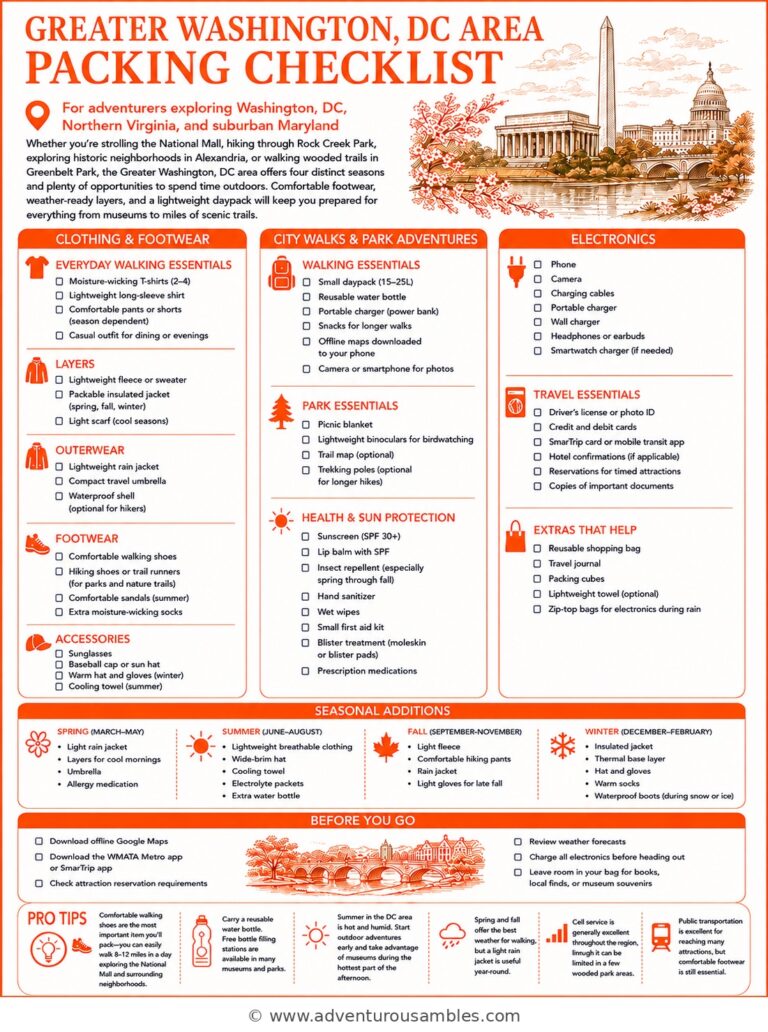
Comfort comes first in a region best experienced on foot. Pack for long museum days, changing weather, and miles of sidewalks and trails.

✓ Comfortable walking shoes (you’ll use them a lot)

✓ Light, seasonal layers for shifting weather

✓ Rain jacket or umbrella

✓ Reusable water bottle

✓ Sunscreen for open, sunny paths

✓ Small daypack for longer walks or park visits

✓ Portable charger

Print or save this free Greater Washington, DC packing checklist to prepare for museums, city walks, and scenic trails across DC, Maryland, and Northern Virginia.

04   |  BUDGET

Average Costs

Stay near a metro line in Maryland or Virginia for strong value with easy access to central DC.
Domestic Flights
$150-$400
Roundtrip
Budget Hotels
$120-$180
Per night
Mid-Range Hotels
$180-$300
Per night

National Mall Museums

Free
A remarkable value
USEFUL LINKS
Compare travel & stays
Expedia
Washington DC
Frommers
Hotels near the metro
National Mall

05   |  ON THE MOVE

Getting
around
the DMV

Getting around is part of the experience and surprisingly seamless.
By metro
The easiest way to travel between DC, Maryland, and Northern Virginia.
On foot
Monuments, museums, and many neighborhoods reward walking.
By bus
An extensive network fills the gaps between rail lines.
By train
Amtrak and MARC connect the region with nearby cities.
USEFUL LINKS
Transportation resources
The WMATA metro and bus
Smart trip app
Amtrak
MARC
Citymapper App

06  |  THE BEST WAY

On foot

The DMV unfolds at walking pace
Stroll from the Capitol to the Lincoln Memorial, follow the Potomac through Georgetown, wander Old Town Alexandria’s centuries-old streets, or step into the shade of Rock Creek Park. A few well-chosen apps turn a simple amble into a self-guided walk layered with stories and hidden corners.
rock creek park washington DC

USEFUL LINKS

Walks, trails &
destinations

Walking Town DC App
National Park Service App
Theodore Roosevelt Island
Chesapeake & Ohio Canal Park
GPS My City App
Rock Creek Park
Great Falls Park

07   |  GOOD TO KNOW

Frequently Asked Questions

Plan to spend 3–5 days to experience the highlights of Washington, DC, along with nearby destinations in Maryland and Virginia. This gives you time to visit the National Mall, explore museums and historic neighborhoods, enjoy scenic parks, and take advantage of the Metro to discover places like Old Town Alexandria, Greenbelt Park, or Great Falls. If you're a history lover or enjoy walking, a week allows for a more relaxed pace.

The best times to visit are spring (March–May) and fall (September–November). Spring brings the famous cherry blossoms, comfortable temperatures, and vibrant parks, while fall offers colorful foliage and crisp weather that's perfect for walking. Summers are warm and humid, and winters are generally quieter with fewer crowds.

No. One of the best things about the Greater Washington area is that you can explore much of it without a car. The Metrorail, Metrobus, and local transit systems connect Washington, DC, with many destinations in Maryland and Virginia. Walking, biking, and rideshare services make it easy to reach neighborhoods, parks, and attractions throughout the region.

Yes. Many of the area's most famous attractions—including the Smithsonian museums, the National Mall memorials, and numerous monuments—are free to visit. While some special exhibits and private museums charge admission, it's easy to enjoy several days of sightseeing without paying entrance fees.

Absolutely. The DMV is an outstanding destination for travelers who love exploring on foot. Beyond the iconic National Mall, you'll find walkable neighborhoods, scenic waterfronts, urban parks, forested trails, and charming historic towns connected by an extensive public transportation system. Whether you're strolling through Georgetown, hiking in Greenbelt Park, wandering Old Town Alexandria, or cycling along the Chesapeake & Ohio Canal Towpath, there's always another story waiting just around the corner.

ONE STEP AT A TIME
History unfolds just beyond the Metro.
The Greater Washington DC area rewards travelers who do not rush. Step off into a new neighborhood or a new state and find a river, forest, or centuries-old street waiting to be explored.
“A magical blend of land and water equaled nowhere else in the United States.”

James A. Michener, Chesapeake

ORIGINAL WORK
THOUGHTFULLY RESEARCHED

Written by Jacqueline Miller, founder of Adventurous Ambles. Through firsthand travel, original photography, and detailed route research, Jacqueline creates walking guides, hiking resources, destination reading lists, and travel inspiration for curious travelers. Unless otherwise noted, all content and photography on Adventurous Ambles are original works protected by copyright.


KEEP WANDERING

More Adventurous Ambles in Greater Washington DC

READING LIST

The Perfect Books to Pair With Your DC Adventures

Greater Washington DC Area,
US

Destination Reads

HIKING GUIDE

Woodland Walks and Peaceful Lakes Close to the City
Greenbelt, Maryland, Greater Washington DC Area, US
1.5 to 5.4 miles, 30 minutes to 2.5 hours, Easy
Scroll to Top